What do pre employment drug test look for? The answer depends on the employer's selected panel, the specimen type, and any rules governing the job. A typical screen may cover marijuana, cocaine, opioids, amphetamines, and PCP, while expanded panels can include additional drug categories.
Key Takeaways
- A five-panel screen commonly covers amphetamines, cocaine, opiates, PCP, and marijuana.
- An eight-panel or 10-panel drug screen may add prescription drug categories, but panel contents vary by provider.
- Urine is the most common specimen for pre-employment testing, although employers may use hair, saliva, blood, or breath.
- A drug screen generally identifies prior use or drug metabolites, not present impairment. Breath alcohol testing addresses current alcohol concentration.
- Applicants should follow collection instructions, bring required identification, and avoid products intended to dilute, substitute, or alter a specimen.
- A laboratory result and an employer's hiring decision are separate steps. The written policy and applicable law affect what happens next.
What Do Pre Employment Drug Test Look For?
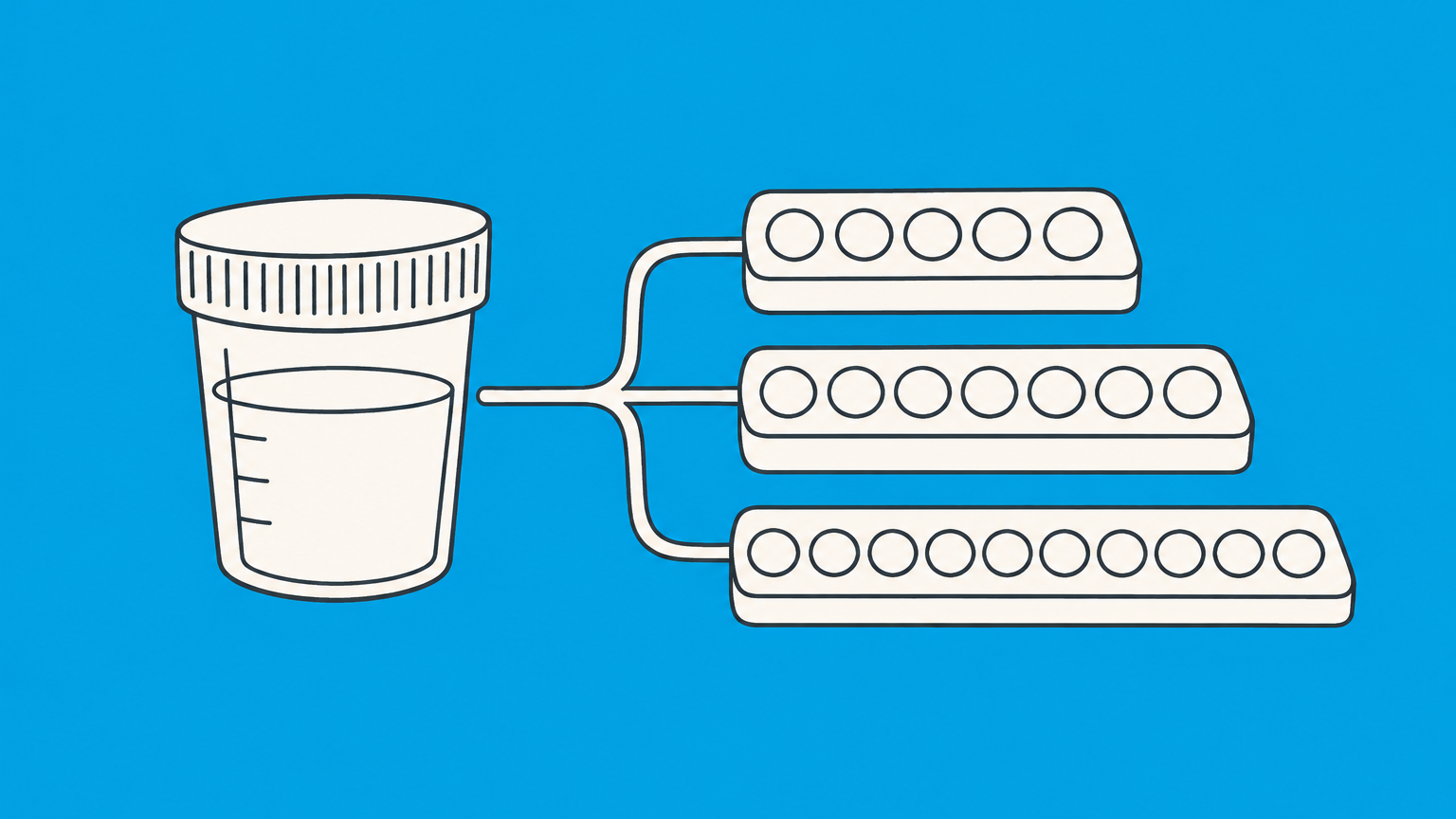
A pre-employment drug screen looks for the substances included in the panel ordered by the employer. The standard five-panel screen commonly tests for amphetamines or methamphetamine, cocaine, opiates, phencyclidine, commonly called PCP, and marijuana metabolites, commonly called THC. Employers can order broader or customized panels when permitted or required.
A 10-panel drug screen may add methadone, propoxyphene, barbiturates, and benzodiazepines. Panel structures differ, however. One laboratory may combine amphetamine and methamphetamine within one drug class, while another order may list them separately. An eight-panel drug test is even less standardized. Never assume that its name identifies every included analyte.
Other substances, such as alcohol, nicotine, MDMA, anabolic steroids, hallucinogens, or particular prescription drugs, require appropriate testing. They are not automatically included merely because an employer orders a general dope test or drug screen. Mushrooms and their active compounds are not part of the common five-panel list shown below.
The notation BUP on a drug test may refer to buprenorphine, but abbreviations and panel codes can vary. If an order says BUP drug test, ask the employer or laboratory to identify the analyte in its official documentation. The same verification is necessary for marijuana, alcohol, mushrooms, synthetic opioids, and any unfamiliar abbreviation.
| Screen | Commonly Listed Categories | What to Verify |
|---|---|---|
| Five-panel | Amphetamines or methamphetamine, cocaine, opiates, PCP, and marijuana | How the laboratory defines each category and whether THC is included |
| Eight-panel | The five-panel categories plus selected additional drugs | The complete analyte list because there is no single universal eight-panel lineup |
| 10-panel | Amphetamines, methamphetamine, cocaine, opiates, PCP, marijuana, methadone, propoxyphene, barbiturates, and benzodiazepines | Whether categories are combined, replaced, or customized by the provider |
Five-Panel, 8-Panel, and 10-Panel Drug Screen Differences
The number attached to a drug panel generally describes how many drug classes or categories the order covers. It does not guarantee that every provider uses an identical list. The employer chooses an available test based on its policy, the position, applicable state law, and any regulatory requirements.
The five-panel test is associated with the drug categories most commonly included in employment testing. An expanded eight-panel drug test can add selected categories, but you cannot identify those additions from the number alone. A 10-panel urine test commonly expands screening to drug classes such as benzodiazepines, barbiturates, methadone, and propoxyphene.
Panel labels also do not tell you which individual substances or metabolites a laboratory can detect within a broad class. An "opiates" result, for example, depends on the compounds and cutoff levels covered by that specific assay. A prescription opioid is not necessarily covered simply because an order includes an opiates category. Likewise, BUP may require a separate buprenorphine assay.
Applicants can ask the employer which panel was ordered, although the employer or provider may limit the information given before testing. If Quest Diagnostics performs the collection, Quest states that questions about the drugs screened and final results should go to the employer that ordered the test. Employers should keep the order consistent with their written policy and apply the same requirements to applicants seeking the same position.
Drug screening may be only one part of a broader pre-employment screening process. Other lawful screening steps can include identity, qualification, background, or position-related health reviews. A pre-employment physical serves a different purpose and should not be treated as interchangeable with a drug test.
What Is the Most Common Pre Employment Drug Test?
Urine testing is the most common method used for a pre-employment drug test. The applicant provides a urine specimen at a collection site, and the specimen may be screened onsite or sent to a laboratory. Urine testing generally addresses previous exposure rather than proving that someone is currently impaired.
Employers have other specimen options. Hair testing offers a longer view of prior drug use than urine but does not establish when a person was impaired. Saliva, also called oral fluid, can address more recent use and requires the collector to take a sample from inside the applicant's mouth. Blood testing can measure drugs or alcohol in the bloodstream but is more invasive. A breath test measures current alcohol concentration rather than past drug use.
| Method | Specimen Collected | General Purpose | What It Generally Addresses |
|---|---|---|---|
| Urine | Urine sample | Common employment drug screening | Prior use or metabolites, not current impairment |
| Hair | Hair sample | Longer historical view of drug use | Prior use over a longer period |
| Saliva | Oral fluid | Less-invasive testing for more recent use | Recent prior use |
| Blood | Blood sample | Direct measurement in the bloodstream | Shorter detection period than hair testing |
| Breath | Breath sample | Alcohol testing | Current alcohol concentration |
The appropriate method depends on the job and governing rules. Federally regulated transportation testing follows U.S. Department of Transportation requirements rather than an employer's ordinary private testing choices. For a deeper comparison of employer testing methods, see pre-employment drug test laws and procedures.
Pre Employment Drug Screen Procedure From Start to Finish
The process usually starts when the employer provides an authorization, appointment information, deadline, and collection location. Read every instruction before arriving. Confirm whether you need an appointment and bring the requested government-issued identification and authorization information.
- Check in: The collection site verifies your identity and the test order. If the employer uses Quest Diagnostics, an electronic appointment confirmation may be shown on a mobile device. Missing authorization information can delay or require rescheduling of the collection.
- Secure personal items: For a urine test, the collector may instruct you to empty your pockets, remove outer garments, leave bags outside the restroom, and wash your hands.
- Provide the specimen: The collector explains how to produce and return the sample. Collection sites may restrict access to water, soap, cleaning products, or other materials that could affect specimen integrity. A coloring agent may be placed in the toilet.
- Complete documentation: The specimen is labeled, sealed, and documented. Chain-of-custody records track its handling from collection through testing and disposal.
- Laboratory processing: An initial screen may be followed by more specific confirmation testing if the initial result is non-negative. Procedures vary between private and federally regulated programs.
- Result communication: The laboratory or medical review process reports the final result through the channel selected by the employer. The collection site may not be able to give the applicant a status update.
Applicants are not automatically watched while providing every pre-employment urine specimen. Ordinary procedures often protect privacy while controlling access to materials that could alter the sample. Direct observation may be required in certain regulated or problem-collection circumstances. Ask which rules apply rather than assuming the practice will be the same at every provider.
How to Prepare Without Trying to Alter the Test
The safe way to prepare is to follow the collection site's instructions, not to use detox products, synthetic urine, dilution methods, or substitution tactics. Those methods do not provide a lawful or reliable way to pass a drug test for job weed screening. They can produce an invalid, adulterated, substituted, or otherwise unacceptable specimen under the applicable process.
Bring the identification and authorization requested by the provider. Arrive with enough time to complete check-in and collection. Follow ordinary hydration habits unless a medical professional or the testing provider gives different instructions. Excessive fluid intake can create a diluted specimen and may lead to additional review or recollection.
Do not stop prescribed medication solely because of an employment test without consulting the prescribing clinician. Follow the provider's directions about where and when to disclose medications. Quest Diagnostics states that its collector does not record prescription drugs on the chain-of-custody form. In a program using medical review, the reviewer may contact you after a laboratory finding to ask whether a legitimate medical explanation exists.
Concentra and other occupational health providers use collection procedures intended to protect specimen integrity. Whether Concentra tests for synthetic urine cannot be answered for every order from the provider's general service description. Employers can select different tests, and specimen-validity procedures may vary. Check the official instructions for your location and the specific order.
You may also request the employer's written policy before testing. It can explain what constitutes a refusal, how an inconclusive result is handled, and whether retesting is available. For broader policy issues, review the rules surrounding drug testing in the workplace.
What Happens After a Positive or Unclear Result?
A positive initial screen does not always end the process. A laboratory may perform confirmation testing using a more specific method. If the program uses a medical review officer, that reviewer may consider legitimate medical explanations before reporting a verified result to the employer. Private employers do not all follow the same workflow, so applicants should ask which review process applies.
An unclear result can lead to a recollection, additional testing, or another action permitted by the employer's policy. Examples include a diluted, invalid, or insufficient specimen. A refusal to complete the collection may be treated as a failed test under some policies, but applicants should read the actual policy instead of assuming that every employer uses the same rule.
The employer makes the hiring decision. A laboratory reports findings but does not ordinarily decide whether an applicant receives the job. The employer may withdraw a conditional offer, allow retesting, request further review, or continue hiring, depending on its written policy, applicable law, the position, and the verified result. A positive marijuana result can require particular care because state protections and restrictions differ.
If the employer withdraws an offer, ask for the decision and any available review procedure in writing. Preserve the offer, testing notice, authorization, policy, result communications, medication documentation, and dates of all conversations. Also consider whether the offer itself was conditional. The principles governing a verbal job offer may matter if the parties dispute what was promised.
If you are creating or applying a testing policy, or if an offer was withdrawn after a disputed result, you can post your legal need on UpCounsel's marketplace. An employment attorney can review the written policy, current state law, regulated-job requirements, required notices, laboratory communications, and the facts surrounding the hiring decision. Responses typically arrive within a day.
Legal Rules for Applicants and Employers
Pre-employment testing laws vary by state and by job. Some positions are subject to federal testing requirements, while state law may limit when a private employer can test, which substances can influence hiring, what notice is required, and how results must be handled. Employers should check the law where the applicant will work before adopting or applying a policy.
Marijuana Rules for Applicants
Legal medical or recreational marijuana use does not automatically prevent an employment test from detecting marijuana metabolites. At the same time, a detected result does not automatically establish that the employer may reject you. State protections differ and can change. The type of position, including whether it is safety-sensitive or federally regulated, may also affect the result. Ask for the written policy and check your state's current law.
Marijuana Rules for Employers
Employers should not assume that marijuana can be handled exactly like every other five-panel substance. Review current state restrictions before deciding whether to include THC, reject an applicant, or make an exception. A policy should identify the positions covered, the testing stage, the consequences of a verified result or refusal, and any legally required review process.
Consistency, Notice, and Confidentiality
Applicants should know in advance that testing is part of the hiring process. Employers should use consistent requirements for applicants seeking the same position unless a lawful job-based reason supports different treatment. Testing only selected applicants without a defensible basis can create discrimination concerns.
Employers should also limit access to results and follow applicable confidentiality requirements. The policy should explain who receives results and how records are maintained. Testing providers, laboratories, and employers may have different roles, so the employer should not promise privacy or procedures that its vendors cannot provide.
A compliant program requires more than selecting a panel. Employers should coordinate their offer language, notices, consent process, collection instructions, laboratory procedures, review process, and final decision rules. These measures make the process more predictable for applicants and reduce inconsistent hiring decisions.
Frequently Asked Questions
What Do Pre Employment Drug Test Look For?
Pre-employment drug tests look for the drug categories in the employer's specific order. Common targets include marijuana, cocaine, opiates, amphetamines, methamphetamine, and PCP. Expanded orders can cover benzodiazepines, barbiturates, methadone, or other substances. Ask for the panel name and analyte list because a generic label does not establish exactly what the laboratory will test.
How Do You Pass a Drug Test for a Job if You Used Weed?
There is no guaranteed method to pass a job drug test after using weed. Do not attempt to dilute, replace, or adulterate the sample. Follow the collection instructions and allow the employer's normal testing and review process to occur. If you use medical marijuana, preserve your authorization records and check whether the state where you will work provides employment protections.
What Is the Most Common Pre Employment Drug Test?
A urine drug test is the most common pre-employment testing method. The particular urine panel may be a five-panel, eight-panel, 10-panel, or customized order. A urine test can detect prior exposure within applicable detection limits, but it generally cannot establish that an applicant was impaired when the specimen was collected.
Does Concentra Test for Synthetic Urine?
Concentra's general service information does not establish that every order includes the same synthetic-urine or specimen-validity testing. The employer's order, collection circumstances, and applicable program determine the procedures used. Follow the instructions issued for your appointment and ask the employer or Concentra location for official information about the specific test rather than relying on a general assumption.
Does Lowe's Drug Test?
Lowe's current testing requirements may depend on the position, location, and company policy in effect when you apply. Review the job posting, conditional offer, applicant notice, and instructions from the hiring representative. Online reports from applicants may describe different locations or outdated practices and do not reliably establish which specimen or panel your application will involve.
Does FedEx Drug Test for Weed?
FedEx testing for weed may depend on the job, employer entity, work location, and regulatory status of the position. Transportation or safety-sensitive roles may follow requirements that do not apply to other applicants. Check the current posting and hiring documents, and ask the recruiter which policy governs your position instead of assuming all FedEx applicants receive the same panel.
Do Mushrooms Come Up on a Drug Test?
Mushrooms do not ordinarily appear within the common five-panel categories, but an employer can order additional testing for hallucinogens. The phrase "drug test" alone does not reveal whether that testing is included. Only the laboratory's analyte list or the employer's confirmed panel description can establish whether a particular mushroom-related compound is part of the order.


