A DPS background check can help you review Texas criminal history information for yourself, an applicant, or another permitted purpose. The correct process depends on whether you need a public name search or identity-confirmed fingerprint results.
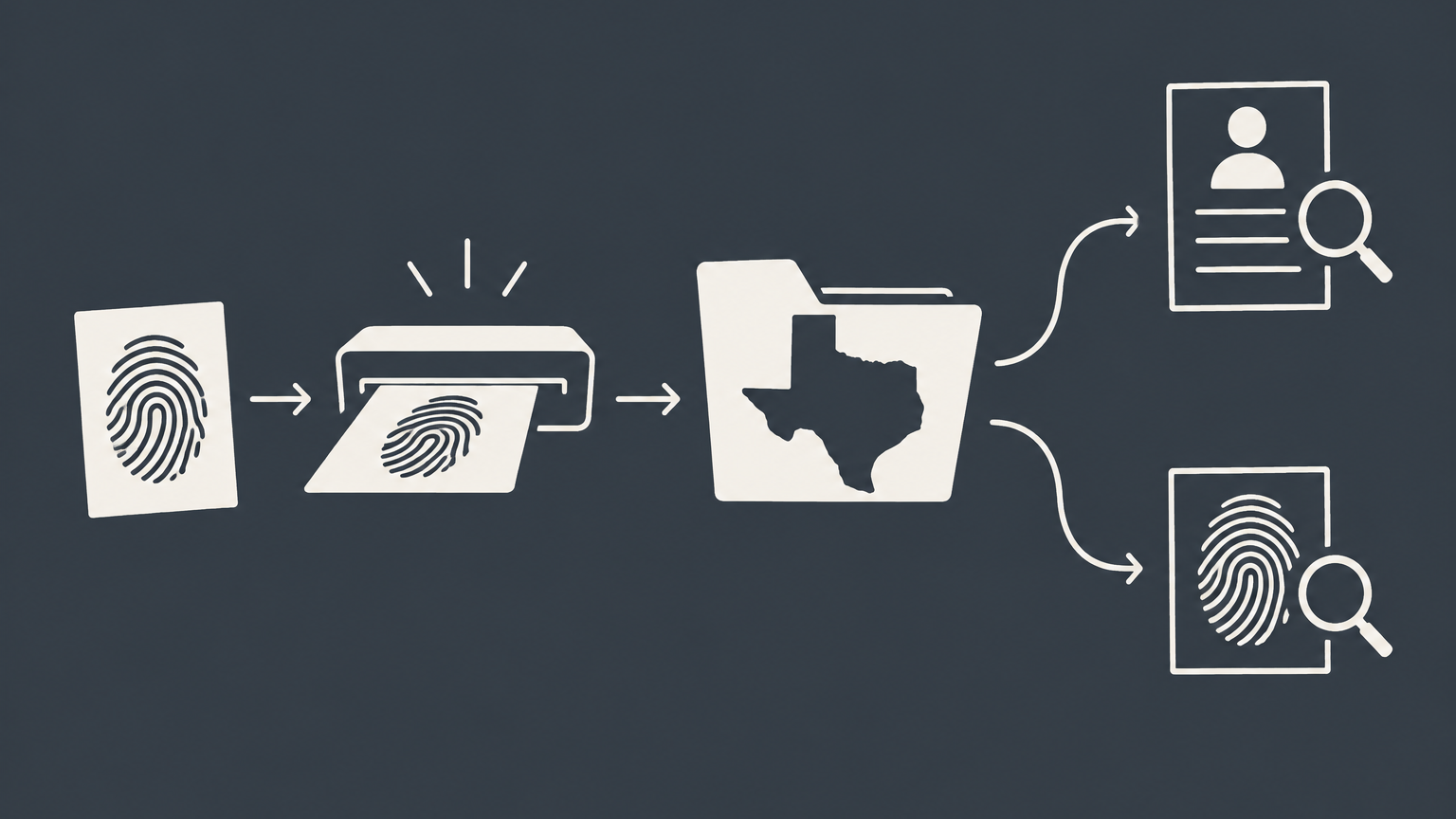
Key Takeaways
- Texas DPS offers an online Criminal History Name Search for public conviction and deferred adjudication information.
- A name-based search can return records for another person with similar identifying information. Only fingerprints provide positive identity matching.
- Employers and licensing authorities may require a specific fingerprint process, service code, or authorized account.
- The public name search costs $3 per search credit, while a personal fingerprint review generally includes a $10 fingerprint fee and $15 criminal history fee.
- DPS processing time does not include fingerprint appointment availability or an employer's internal review.
- A Texas DPS search does not automatically include driving records, credit history, employment verification, or every county court document.
- Government record retention and employment reporting limits are separate issues.
How to Get a Texas DPS Background Check Online
The official Texas DPS Criminal History Name Search is the starting point when you need publicly available Texas conviction information. This is sometimes called the TDPS criminal history search or Texas DPS background check online.
- Choose the correct search. Use the public name search for general record research. Follow the fingerprint route if an employer, licensing agency, or other authority requires identity-confirmed results.
- Create an account or sign in. The DPS portal requires a user account. A DPS background check login is not the same as access to the restricted FACT Clearinghouse used by authorized organizations.
- Purchase search credits. Each public name search uses one credit. Payment processing charges may apply based on the payment method.
- Enter identifying information. Use the person's legal first and last name and date of birth. A middle name, suffix, maiden name, or other known name can help narrow results.
- Review possible matches carefully. Compare all available identifiers. Do not assume that a matching name establishes that the record belongs to the person searched.
- Use fingerprints when identity matters. If you are reviewing your own record or need a result for an authorized purpose, follow the applicable DPS fingerprint instructions instead of relying only on a name match.
A free public-record website is not necessarily an official or complete Texas DPS background check. The DPS name search requires payment, and a fingerprint check has separate fees. Free court or registry searches may still be useful, but they answer different questions and may cover different records.
Name-Based vs. Fingerprint-Based Texas DPS Checks
The best method depends on why you need the report. A name search is convenient for reviewing public Texas criminal history information. A fingerprint check is more reliable because fingerprints link the search to a specific person.
| Feature | Name-Based Search | Fingerprint-Based Check |
|---|---|---|
| Typical purpose | Public criminal history research and preliminary screening | Personal record review, licensing, regulated employment, or another authorized purpose |
| Identity matching | Based on name, date of birth, and other entered details | Based on fingerprints submitted for the individual |
| Access route | DPS Criminal History Name Search account | FAST fingerprint process or FACT Clearinghouse instructions for authorized organizations |
| Risk of a mismatched result | Higher, especially for common names or incomplete identifiers | Lower because fingerprints confirm identity |
| Can an agency require it? | An agency may accept or request a name search for some purposes | An employer or licensing authority may require fingerprints under the rules governing the position |
For a personal review, follow the Fingerprint Applicant Services of Texas process. For employment or licensing, use the instructions supplied by the requesting organization. The organization may provide a service code or other required information that directs the results to the proper recipient.
Do not substitute a personal copy or public name search when an agency has ordered a particular fingerprint check. The scope, authorization, delivery method, and possible federal component can depend on the law or program behind the request.
Texas DPS Background Check for Employment
A Texas DPS background check for employment may be only one part of an employer's screening process. Employers can also verify work history, education, licenses, driving history, or credit information when the position and applicable law permit it. DPS criminal history results do not supply all of those categories.
If an employer uses a third-party consumer reporting agency, the federal Fair Credit Reporting Act generally requires a clear disclosure and the applicant's written authorization before the report is obtained. Before making an adverse decision based on the report, the employer generally must give the applicant a copy and information about consumer rights. A final adverse-action notice is also required if the employer proceeds with the decision.
An employer should not treat every record as an automatic disqualification. A defensible review considers the position, the conduct involved, how much time has passed, and any governing licensing or industry rules. An arrest does not establish guilt, and a name-only match should not be attributed to an applicant without adequate verification.
Fingerprint requirements vary by role and program. Regulated positions involving schools, health care, child care, security, or other sensitive duties may be subject to specific statutes or agency procedures. Employers should follow the instructions of the responsible licensing or regulatory authority rather than ordering a generic check.
Background screening is also separate from company compliance. A growing employer may need to check its LLC status, confirm its S corporation status, or determine how long business licensing takes when building a broader hiring and compliance plan.
How Long Does a Background Check Take in Texas?
There is no single processing time for every background check in Texas. Separate the timeline into three stages: obtaining identifying information or fingerprints, DPS processing, and the requesting organization's review.
An online name search can usually be run after you create an account and buy the required credit. The time needed to evaluate the results depends on how many possible matches appear and whether you need additional records to verify them.
Fingerprint-based results are commonly processed within 24 to 72 hours after fingerprints are submitted. That estimate does not include the time needed to obtain an appointment. Appointment availability can vary by location, and prints that do not meet quality standards may need to be taken again. A record requiring additional review can also take longer.
For a job, the employer's timeline may extend beyond DPS processing. The screening provider may search other jurisdictions, verify employment or education, wait for a court to supply records, or ask the applicant to clarify identifying information. The employer may then conduct its own review before deciding how to proceed.
How Much Does a Background Check Cost in Texas?
The following official fees were last verified against published Texas DPS and FAST information on September 16, 2026. Confirm the quoted total when scheduling because payment charges, vendor services, federal searches, or program-specific requirements can change the amount.
| Route | Published Fee | Possible Additional Cost |
|---|---|---|
| DPS online name search | $3 per search credit | Payment processing charges may apply |
| FAST fingerprint collection | $10 | Additional vendor or program charges may apply |
| Personal criminal history review | $15 criminal history fee | The fingerprint collection fee is separate |
What a Texas Criminal Background Check Covers
The DPS Computerized Criminal History system is Texas's central repository for criminal history information reported by law enforcement agencies, prosecutors, and courts. The public name-search system provides conviction and deferred adjudication information that Texas law makes publicly available. A displayed record can include related arrest, prosecution, offense, court, and disposition details.
A public DPS search is not a complete investigation of every public record associated with a person. It may not answer questions about cases that were not properly reported, records outside Texas, or information excluded from public access. Sealed records, expunged records, confidential juvenile information, and other protected material generally are not available through a public search.
Use the correct official source for each additional category:
- County and state court information: The Texas court records portal and individual court clerks may provide docket or case information that differs from the DPS criminal history record.
- Driving records: Driving history is a separate record category. Follow the appropriate TxDMV official resources or other state instructions for the record you need.
- Sex offender information: The DPS public registry is a separate search from the Criminal History Name Search.
- Credit, education, and work history: These items do not come from a DPS criminal history search.
- Federal or out-of-state records: A Texas public name search should not be treated as a nationwide check.
If a decision depends on a particular case, obtain records from the court or reporting agency and confirm the final disposition. A database entry can be incomplete if a later court action has not yet reached DPS.
How Far Back Do Background Checks Go in Texas?
How far a background check goes depends on the database, the type of report, the requester, and the law governing the purpose. Do not confuse the age of information retained in a government criminal history system with the information a private employer may receive or lawfully use.
A DPS record is maintained under criminal history laws and reporting rules. It does not automatically remove a public conviction merely because seven years have passed. Sealing, expunction, nondisclosure, juvenile confidentiality, and record-correction rules operate separately from an employer's reporting limits.
Texas Business and Commerce Code restrictions can limit criminal history information that a consumer reporting agency supplies for employment. A commonly discussed rule restricts reporting certain adverse information older than seven years, subject to statutory exceptions. One exception applies when the position is reasonably expected to pay at least $75,000 annually. Other laws or industry-specific rules may require broader screening or create different treatment for particular jobs.
Federal law also distinguishes convictions from other adverse information, while state law may impose additional restrictions. Because the interaction between federal law, Texas law, licensing requirements, and the specific job can change the result, employers should not rely on a blanket statement that every Texas employment check stops at seven years.
Applicants should ask what type of report the employer ordered and which company prepared it. If an old record appears, determine whether the entry is accurate, whether the report identified the final disposition, and whether the reporting or use of that information complies with the rules applicable to the position.
Correcting an Inaccurate or Mismatched DPS Record
Start by determining where the error originated. A name-based result may belong to another person, while a fingerprint-confirmed record may contain an incorrect charge, missing disposition, or outdated court information.
- Save the report and related notices. Keep copies of the search result, the employer's communications, and any case information that appears incorrect.
- Confirm identity through fingerprints. If the issue is a possible name mismatch, request a personal fingerprint-based review through the DPS FAST process.
- Compare the record with court documents. Contact the clerk for the court that handled the case if you need a certified disposition or order showing the actual outcome.
- Follow the DPS challenge procedure. Submit the information required by DPS to dispute or update Texas criminal history data. DPS may need the reporting law enforcement agency, prosecutor, or court to verify a correction.
- Dispute a consumer report separately. If a screening company supplied the report, send that company a written dispute with supporting documents. Notify the employer that the information is under review.
An accurate record generally cannot be removed merely because it caused a hiring problem. Depending on the case, a person may instead need advice about expunction, an order of nondisclosure, identity theft, or another available remedy.
If a disputed record affects a job opportunity, or your company needs a compliant screening policy, you can post your legal need on UpCounsel's marketplace. An attorney can review the report and applicable rules, pursue corrections or other available remedies, and assess the employer's authorization, notices, and decision process. Responses typically arrive within a day.
Frequently Asked Questions
How Long Does a Background Check Take in Texas?
A Texas background check can take from an immediate online search to several days or longer, depending on the method. Weekends, fingerprint appointment availability, print quality, court responses, and extra jurisdiction searches may affect completion. Ask the requesting organization which stages remain outstanding before assuming that DPS is causing the delay.
How Much Does a Background Check Cost in Texas?
An official DPS name search costs $3 per search credit, while a personal fingerprint review generally combines a $10 collection fee with a $15 criminal history fee. Your total may be higher if payment processing, a federal component, or another program-specific service applies. Check the current amount shown during the official transaction before paying.
How Do I Get a DPS Background Check?
Use the DPS Criminal History Name Search for publicly available conviction information, or follow FAST fingerprint instructions for a personal or authorized check. If an employer or licensing authority requested the check, obtain its exact instructions before scheduling. Using the wrong service code or recipient information may prevent the organization from receiving acceptable results.
How Far Back Do Criminal Background Checks Go in Texas?
Texas criminal background checks do not all use one fixed lookback period. The answer depends on the record source, employer, reporting company, expected salary, industry, and applicable law. A record's presence in a government database does not necessarily mean a private employer may report or use it for every hiring decision.
What Will Disqualify You on a Texas Background Check?
No single criminal record automatically disqualifies a person from every Texas job. A licensing law may bar specific offenses for a regulated position, while another employer may assess the offense, elapsed time, job duties, and evidence of rehabilitation. Applicants should request the stated reason for a decision and promptly dispute any inaccurate or mismatched information.


