A WO patent is commonly understood to mean a published international application filed under the Patent Cooperation Treaty, but the WO publication itself is not a granted worldwide patent. Its legal significance depends on the application record and any later national or regional patents.
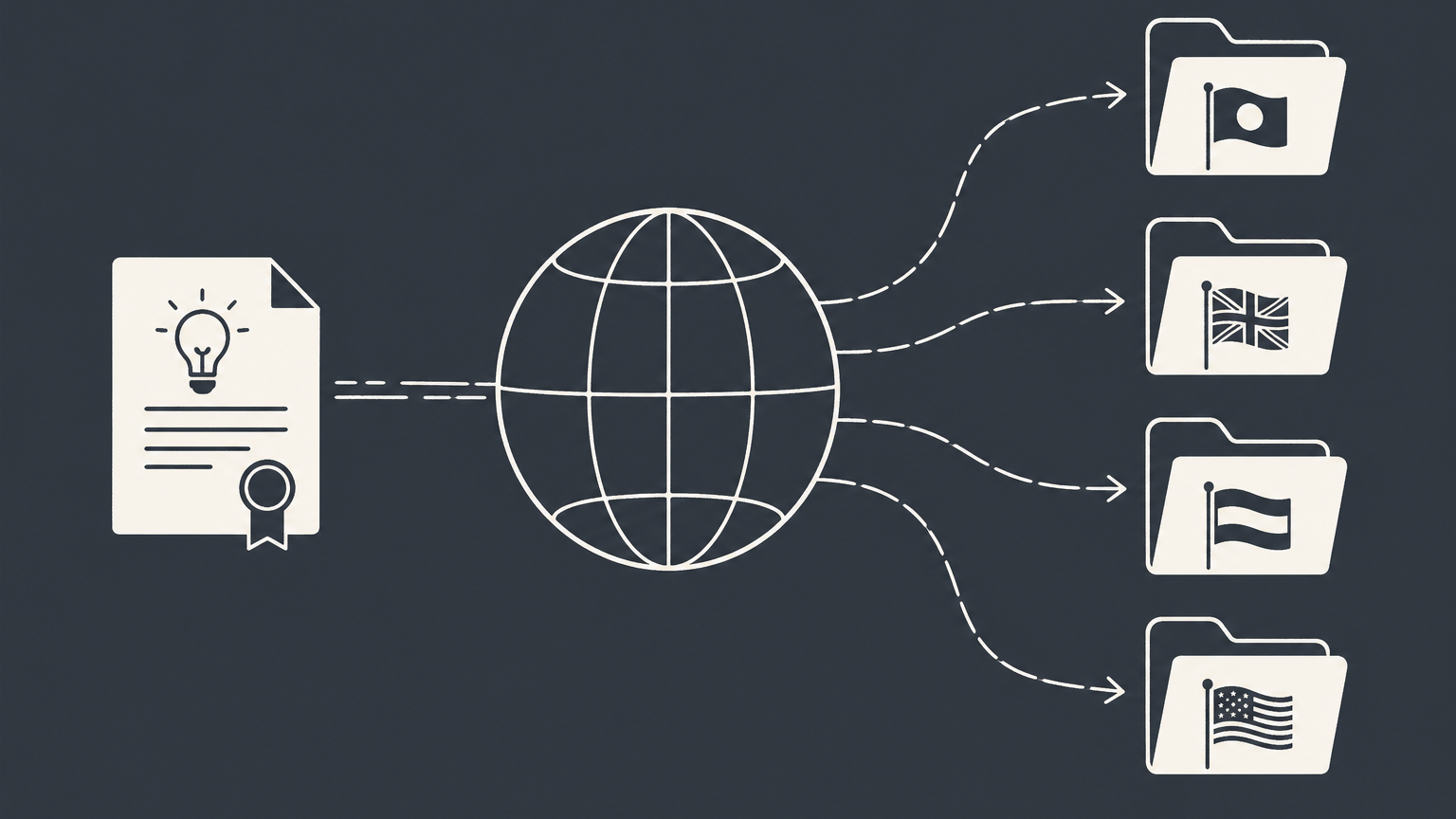
Key Takeaways
- WO identifies an international publication under the Patent Cooperation Treaty, not a patent issued by a particular country.
- A WO publication does not grant enforceable patent rights. National or regional patent offices decide whether to grant patents.
- A publication number usually contains the WO code, a four-digit publication year, a serial number, and a kind code such as A1 or A2.
- WIPO's PATENTSCOPE database lets you search WO publications and review available bibliographic, publication, search, and related application information.
- The PCT process creates one international application framework, but applicants must enter selected national or regional phases to pursue enforceable rights.
- Do not treat the WO publication date, application status, or search report as proof that a patent has been granted.
What Is a WO Patent?
The phrase WO patent usually refers to a patent document published by the World Intellectual Property Organization, or WIPO, during the international stage of a Patent Cooperation Treaty application. More precise terms are WO publication, PCT international application, or international application publication.
The distinction matters because no single worldwide patent results from the PCT process. WIPO administers the international system and publishes applications, but it generally does not grant patents that an owner can enforce against competitors. Patent rights arise only if a national or regional patent office examines the application and grants a patent under its own law.
A WO publication can still be highly significant. It discloses the invention, identifies the applicant and inventors, presents the claims as published, and may include an international search report. It can also help you identify related applications filed in individual jurisdictions. If you are reviewing a competitor's technology, the WO document is often the starting point rather than the end of the analysis.
For applicants, a PCT filing offers a coordinated route for seeking protection in multiple jurisdictions. It does not eliminate local requirements or guarantee approval. For a broader explanation of the filing framework, see the international patent application process and requirements.
WO Patent Meaning Compared With Other Patent Records
A WO publication, a PCT international application, and a national or regional patent are related but not interchangeable. One application may generate several records as it moves from the international stage into different patent systems.
| Record | What It Represents | Who Handles It | Does It Grant Rights? | Likely Next Step |
|---|---|---|---|---|
| WO publication | The published version of a PCT international application | WIPO publishes it under the PCT system | No, publication alone creates no granted worldwide patent | Review the claims, search report, related documents, and national-phase records |
| PCT international application | A single international filing used to pursue patent protection in participating jurisdictions | A receiving office, an international searching authority, WIPO, and other PCT authorities may handle different stages | No, the international application itself is not an enforceable global patent | Evaluate the search findings and decide where to enter the national or regional phase |
| National or regional patent | A right granted under the law of a country or regional patent system | The relevant national or regional patent office | Yes, if granted and maintained, subject to the governing law and territorial limits | Monitor fees, validity, ownership, and enforcement within the covered territory |
The same invention may therefore appear under a WO number and several later publication or patent numbers. A WO record marked as published does not tell you that corresponding rights exist in the United States, India, Europe, China, or another market. You must examine each relevant jurisdiction's record.
How to Read a WO Patent Application Number
A WO publication identifier generally appears in a format such as WO 2024/123456 A1. Each part serves a different purpose:
- WO: The publication code used for international applications published under the PCT. It is not a country abbreviation.
- 2024: The four-digit year in which the international application was published.
- 123456: The publication's assigned serial number for that year.
- A1: A kind code describing the publication format and accompanying material.
For PCT records, A1 generally indicates publication of the international application with the international search report. A2 generally indicates publication without that report, often because the report was not ready at publication. If the search report is published separately later, it may appear with an A3 kind code. Always review the actual record because corrected or later documents may also be listed.
Do not confuse the WO publication number with the international application number. A record may show an application identifier beginning with PCT and a separate publication identifier beginning with WO. It may also list a priority application filed earlier in another patent office. Each number identifies a different event or record.
The kind code does not grade the invention or show that the claims are valid. It tells you about the document's publication. Likewise, an international search report is not a patent grant. For more context on when applications become public, review the rules on patent application publication.
How to Search WO Patents in PATENTSCOPE
The free official tool for a WO patent search is WIPO's PATENTSCOPE database. It contains published PCT applications and provides access to available bibliographic data, documents, classifications, search material, and related records.
- Open PATENTSCOPE and select the appropriate search option.
- Enter the WO publication number. Remove unnecessary punctuation if the first format produces no result.
- Confirm the title, applicant, inventor, priority date, and publication date so you know you have the correct record.
- Read the abstract and published claims, then open the available documents and international search materials.
- Review national-phase or related application information, if available, and verify important details with the relevant patent office.
You can also search by applicant name, inventor, keywords, classification, or other available fields. Name searches may produce incomplete results when ownership changed, names were entered differently, or translations vary. Technical keywords can also miss documents that use different terminology. Combining fields usually produces a more useful result.
PATENTSCOPE is an effective discovery tool, but do not assume every displayed status answers the legal question you face. A national application may have been granted, refused, withdrawn, abandoned, transferred, or allowed to lapse after the international record was created. For a freedom-to-operate, acquisition, licensing, or enforcement decision, check the current national or regional register and consider the scope of the claims that actually issued.
How a WO Application Moves Through the PCT Process
A WO application begins as a PCT international application filed with a competent receiving office. The filing uses a standardized framework that can preserve the applicant's ability to seek patents across PCT contracting states. It does not replace substantive examination by the offices that may later grant rights.
During the international stage, an international searching authority conducts a search and issues written findings addressing relevant prior art and certain patentability considerations. These findings can help an applicant assess the invention before committing to the expense of national filings. They are informative, but they do not bind every national or regional patent office.
The application is ordinarily published after the applicable international publication period, commonly around 18 months from the earliest priority date. Publication makes the technical disclosure available to the public. The exact timing and any exceptions should be checked against the current PCT rules and the application's record.
The PCT route can give applicants more time to evaluate commercial markets, potential partners, prior art, and filing budgets than immediate separate filings in every jurisdiction. Costs are deferred rather than eliminated. International filing, search, translation, local counsel, national fees, and prosecution costs may all affect the final budget. See PCT filing fees and international patent costs for the major cost categories.
WIPO provides the system and publishes the international record. The relevant receiving office, searching authority, and national or regional offices perform their assigned procedural or examination functions.
From WO Publication to National or Regional Patent Rights
To pursue enforceable rights, the applicant generally must enter the national or regional phase in each desired jurisdiction. This step converts the international filing path into separate proceedings governed by the selected offices' laws.
National-phase requirements may include local forms, official fees, translations, claim amendments, powers of attorney, and the appointment of local patent counsel. Deadlines commonly run from the priority date, but the applicable period, extensions, reinstatement options, and exceptions vary. Check the current instructions for every selected office rather than relying only on the date shown in the WO publication.
Each patent office applies its own substantive standards and procedures. One office may grant claims while another requires narrower claims or refuses the application. The resulting patents can have different claim language, legal status, owners, and expiration dates. This is why a patent WO search should continue into the national and regional records.
Jurisdiction selection should reflect where you sell, manufacture, license, face competitors, or expect commercially meaningful activity. Filing everywhere is rarely practical. Translation costs, prosecution expenses, enforcement options, and market value can change the analysis. A focused filing plan can be more valuable than a long list of countries without a business reason.
If you need to choose jurisdictions, assess deadlines, interpret search findings, or enter national phases, you can post your legal need on UpCounsel's marketplace. A patent attorney can review the application and prior art, develop a filing strategy, coordinate local requirements, and prepare or manage the required submissions. Responses typically arrive within a day.
For a closer look at this transition, see the PCT national phase application filing guide.
How to Evaluate the Legal Significance of WO Patents
Start by identifying why you are reviewing the WO document. An inventor may want to track an application and plan national filings. A founder may be evaluating a competitor. An investor may be checking whether a company's claimed patent portfolio includes pending applications or granted rights. The same publication supports each task, but the legal questions differ.
Use the following checks to avoid common errors:
- Confirm the document type: Determine whether you are reading a published application, search report, written opinion, amended claims, or later national patent.
- Check ownership carefully: The applicant named at publication may not be the current owner. Review available assignment or national register records.
- Follow the priority chain: Earlier priority filings may affect relevant dates and help connect related applications.
- Compare claim sets: Claims in the WO publication may differ substantially from claims later granted by a national office.
- Verify territorial coverage: Rights granted in one jurisdiction generally do not create patent rights in another.
- Check current status: Publication proves that a document became public, not that an application remains pending or a resulting patent remains in force.
A WO publication can provide useful technical and strategic information even if it never produces a patent. It can reveal an applicant's development direction, identify cited prior art, and establish when technical material became public. Still, conclusions about infringement, validity, ownership, or freedom to operate require analysis of the relevant jurisdiction and enforceable claims.
Frequently Asked Questions
What Is a WO Patent?
A WO patent is an informal name for a published PCT international application, not a worldwide patent. The publication shows that an international application was made public through WIPO's system. Any enforceable rights must come from patents later granted by national or regional patent offices.
What Does WO Mean in a Patent?
WO is the publication code used for PCT international application publications. It identifies the document as an international publication administered through WIPO's PCT system. It should not be read as proof of grant, validity, ownership, or enforceability in any particular jurisdiction.
What Country Is WO?
WO is not a country. Unlike codes such as US, CN, or IN, it identifies an international PCT publication rather than a national patent authority. To determine territorial rights, find the related national or regional applications and check their current records with the responsible patent offices.
How Long Do WO Patents Last?
A WO publication does not have a patent term because it is not a granted patent. Any resulting national or regional patent has a term determined under the applicable law, often measured from the relevant filing date and subject to maintenance requirements, adjustments, extensions, and other jurisdiction-specific rules.
What Does WIPO Stand For?
WIPO stands for the World Intellectual Property Organization. It is a United Nations agency that administers international intellectual property systems and treaties, including the Patent Cooperation Treaty. In the PCT system, WIPO performs international administrative and publication functions rather than granting one patent enforceable throughout the world.
What Are the Four Types of Patents?
There is no universal list of four patent types because categories differ by jurisdiction. In the United States, commonly discussed statutory categories include utility, design, and plant patents. A provisional application is sometimes described as a fourth type, but it is an application method and does not itself become a granted patent.


