PCT filing fees generally include a receiving-office transmittal fee, an international filing fee, and an international search fee. Because amounts and currency equivalents change, confirm your total with the official fee schedules immediately before filing.
Key Takeaways
- A PCT application starts an international filing process. It does not create a single worldwide patent.
- The initial cost usually combines a transmittal fee, international filing fee, and international search fee.
- Your receiving office, search authority, application length, filing format, currency, and eligibility for reductions can change the total.
- Some reductions apply only to a particular fee. Small-entity status does not automatically reduce every PCT charge.
- National-phase filing, translation, local counsel, prosecution, and renewal costs are separate from the initial PCT fees.
- Use current WIPO, USPTO, and relevant search-authority tables rather than relying on an old all-in estimate.
PCT Filing Fees and Fee Schedule
The following breakdown identifies the main charges at the start of a PCT application. The published 2025 reference figures below help illustrate how the calculation works, but they should not be treated as a guaranteed 2026 quote. Currency equivalents and authority-specific charges can change. Check the linked official resources on the day you calculate or pay your fees.
| Fee | Who Charges It | When Payable | Published Reference Amount | Official Source |
|---|---|---|---|---|
| Transmittal fee | The receiving office, such as the USPTO | At filing or within the applicable payment period | Prior published USPTO figures generally ranged from $240 to $400, depending on status and the applicable schedule | USPTO fee schedule |
| International filing fee | WIPO's International Bureau, usually collected through the receiving office | At filing or within the applicable payment period | For 2025, CHF 1,435 for up to 30 pages, plus CHF 16 for each page over 30 | WIPO PCT fees |
| International search fee | The selected International Searching Authority | At filing or within the applicable payment period | Prior published figures included approximately $2,180 for a USPTO search and EUR 1,875 for an EPO search | EPO international fees |
| Excess-page fee | WIPO's International Bureau | With the international filing fee | For 2025, CHF 16 for each page over 30 | WIPO PCT fee tables |
The three principal charges have historically produced an initial government-fee total of roughly $3,000 to $4,000 in many filings, although a particular case may fall outside that range. Attorney charges for preparing or revising the application are separate. If you first need a U.S. utility application, review the steps for filing a utility patent with the USPTO.
How to Calculate Current PCT Application Fees
Build your estimate from individual fees instead of starting with a single advertised PCT application cost. First, identify the receiving office through which you are eligible to file. Next, determine which International Searching Authorities are available through that office. Then calculate the international filing fee based on the current currency equivalent, page count, and filing method.
- Select the receiving office. Its transmittal fee and payment procedures apply to your filing.
- Select an available search authority. Search fees can differ substantially by authority. You cannot assume that every authority is available for every application.
- Count all relevant pages. The international filing fee covers the first 30 pages under the referenced schedule. Additional pages increase the fee.
- Identify the filing format. An eligible electronic filing may receive a reduction in the international filing fee. The amount depends on the accepted format and current rules.
- Check applicant-based reductions. Eligibility can depend on nationality, residence, income-related criteria, or other conditions stated in the current schedule.
- Add professional costs. Include drafting, review, drawings, sequence listings when applicable, corrections, and filing coordination.
WIPO publishes current fee tables and currency equivalents through its PCT fee resources. U.S. applicants should compare those figures with the current USPTO PCT and general fee entries. Recalculate shortly before payment because exchange-rate adjustments can change the amount due in local currency.
A provisional application can establish an earlier U.S. filing date, but it does not replace the later nonprovisional or PCT filing. If that route is part of your plan, compare the separate provisional patent costs and filing considerations before creating your international budget.
What Is a PCT Filing?
A PCT filing is a single international application submitted under the Patent Cooperation Treaty. It creates a standardized international phase that can preserve the applicant's ability to seek patents in participating countries. It does not result in one patent enforceable throughout the world. Patent rights ultimately come from national or regional offices.
The international phase generally includes formal processing, an international search, publication, and an opportunity to request preliminary examination. The search authority issues a search report and written opinion. These materials can help you evaluate prior art and decide where further patent prosecution may be commercially justified. They do not guarantee that any national office will grant a patent.
If you claim priority to an earlier application, the PCT application ordinarily must be filed within the applicable priority period. The common priority period for a patent application is 12 months, but you should verify the deadline and any available remedy for your facts. Filing errors can affect the priority claim and later rights.
The PCT route can defer much of the expense associated with separate foreign applications. Applicants commonly use the international phase to investigate markets, approach investors, review the search results, and decide which countries are worth the cost. An overview of the international patent application process can help you compare the PCT route with direct foreign filing.
A PCT publication often carries a number beginning with "WO." That publication identifies an international application, not an issued worldwide patent. The guide to WO patent publications explains what the number means and how the application proceeds after publication.
USPTO PCT Fees Versus Filing Through WIPO
A qualifying U.S. applicant may file through the USPTO as receiving office. The applicant pays the USPTO transmittal fee, the international filing fee collected for WIPO, and the search fee for the selected available authority. Payment instructions, accepted currencies, available search authorities, and filing systems depend on the receiving office's current rules.
An eligible applicant may also be able to file with WIPO's International Bureau as receiving office. This can be useful when more than one applicant is involved, applicants have connections to different PCT member states, or the International Bureau is otherwise an available receiving office. Eligibility still matters. Filing directly with WIPO does not allow an applicant to disregard national security or foreign-filing requirements.
| Issue | USPTO as Receiving Office | WIPO International Bureau |
|---|---|---|
| Eligibility | Depends on applicable U.S. nationality or residence requirements | Depends on PCT nationality or residence requirements |
| Transmittal charge | USPTO transmittal fee | International Bureau transmittal terms and current schedule |
| Search authority | Must be available through the USPTO for the application | Availability depends on applicable PCT arrangements |
| Payment | Follow USPTO payment instructions and fee schedule | Follow WIPO payment instructions and accepted currencies |
| Electronic filing | Use an accepted USPTO filing method | WIPO's ePCT system may be available |
Do not choose a receiving office solely because one listed fee appears lower. Consider eligibility, available search authorities, payment logistics, foreign-filing restrictions, correction procedures, and counsel's ability to manage the submission.
What Changes the PCT Application Cost?
The selected International Searching Authority often creates the largest variation in the initial PCT application fees. Each authority sets its own search fee, and not every authority is available through every receiving office. A lower fee may be attractive, but applicants may also consider technical subject matter, language, search practices, and the countries likely to receive the later national-phase applications.
Application length also matters. Under the referenced WIPO schedule, the base international filing fee covers up to 30 pages. Each additional page carries a separate charge. The page count can include more than the written description, so check the current counting rules before estimating the fee.
The number of claims does not independently increase the standard PCT international filing fee in the same way that excess pages do. A large claim set can still increase the page count, drafting expense, search issues, and later national fees. Some national or regional offices charge claim-related fees after national-phase entry.
Electronic-filing reductions may apply to the international filing fee when an application uses an eligible system and format. Applicant-based reductions may also be available under WIPO rules for qualifying individuals from listed countries. Those reductions have specific conditions and do not necessarily reduce the receiving-office or search fee.
Likewise, USPTO small-entity or micro-entity treatment applies only where the governing USPTO fee entry provides a reduced amount. Do not apply a percentage reduction across the entire PCT invoice. Confirm eligibility and the affected line item separately.
If preserving priority, selecting a receiving office or search authority, or choosing national-phase countries presents a material risk, you can post your legal need on UpCounsel's marketplace. A patent attorney can check eligibility and deadlines, revise the application, coordinate the PCT filing, and prepare a country-specific national-phase budget. Responses typically arrive within a day, helping you compare advice before a filing or payment deadline.
PCT Fee Timeline and National-Phase Costs
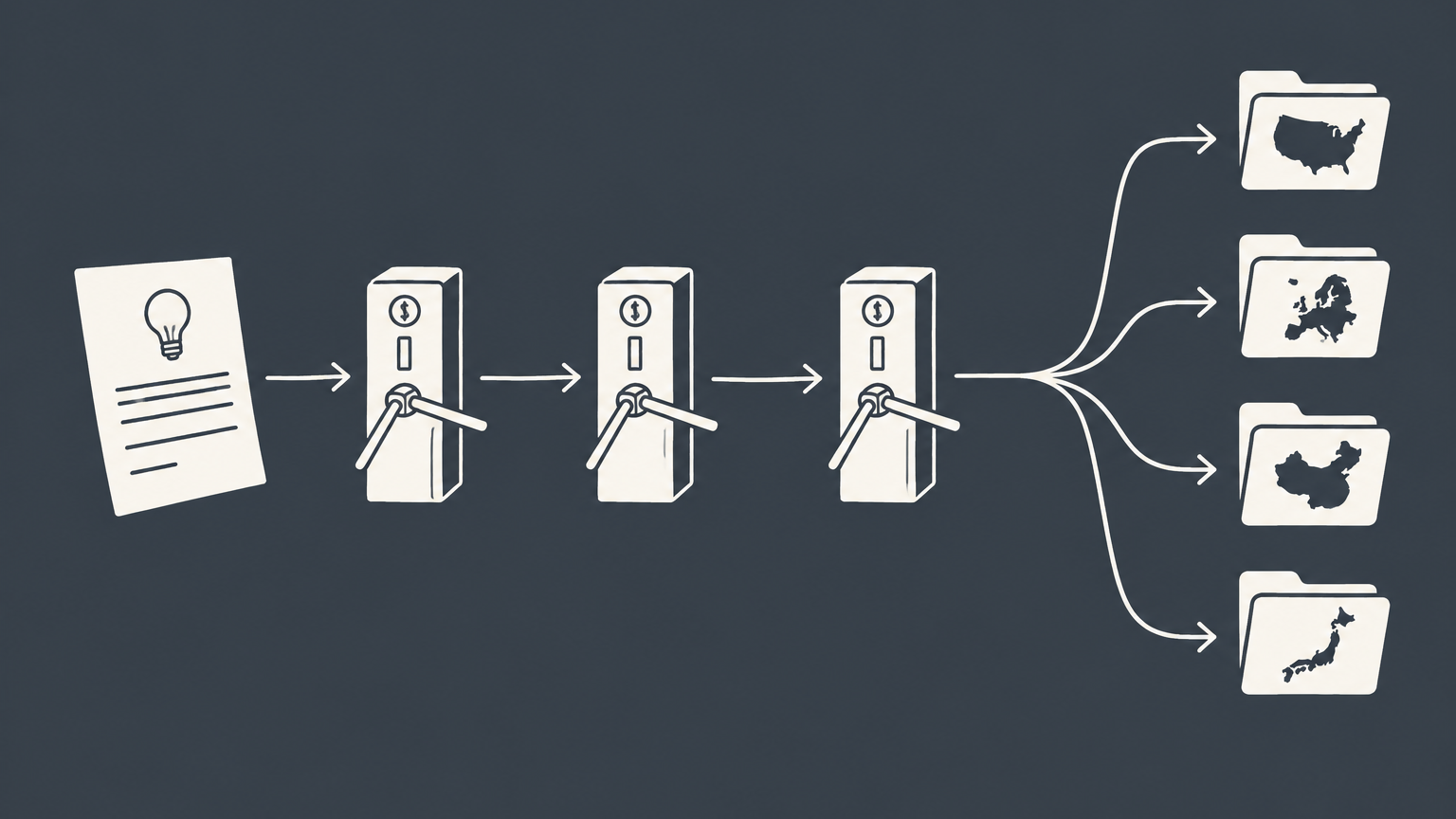
The initial PCT fees are only the first part of an international patent budget. Separate the expenses by stage so that the later country-selection decision does not come as a surprise.
| Stage | Typical Cost Categories | Budgeting Issue |
|---|---|---|
| Before filing | Patent drafting, revision, drawings, translations, and priority review | A weak or incomplete application may be difficult to repair later |
| Initial PCT filing | Transmittal, international filing, search, and excess-page fees | Fees are paid under the applicable receiving-office procedures |
| International phase | Possible amendment work, supplementary search, preliminary examination, and professional advice | Some services are optional and authority-specific |
| National-phase entry | National filing fees, translations, local counsel, claim fees, examination requests, and validation costs | Costs arise separately in each selected country or region |
| Prosecution and grant | Office-action responses, issue or grant fees, and local representation | Search results do not eliminate later examination |
| After grant | Maintenance fees or annuities | Payment schedules and amounts vary by jurisdiction |
National-phase entry is commonly required around 30 months from the priority date, but the exact time and available extensions depend on the jurisdiction and circumstances. Check each target office's current rules. For the U.S. process, the PCT national-phase filing guide explains how an international application moves into USPTO examination.
Translations can become a major expense for a long, highly technical application. Local attorney fees, official fees, claim charges, and later prosecution can also exceed the initial PCT filing cost. A useful budget therefore lists each proposed country, required language, local representative, expected filing fee, examination procedure, and renewal obligations.
How to Control International Patent Costs
Start with the countries that support a realistic business objective. Consider where you expect to manufacture, sell, license, or face meaningful competition. Filing broadly without a commercial reason can create translation, prosecution, and renewal obligations that continue for years.
Use the international search report and written opinion as decision tools. Favorable results do not guarantee national patents, but they can help identify stronger claims. Unfavorable prior art may support revising the strategy, narrowing the country list, or stopping further spending before national-phase fees become due.
Control page count without sacrificing necessary disclosure. Removing accidental duplication or formatting inefficiencies may avoid excess-page fees. Do not shorten the technical description merely to save a filing charge. Inadequate disclosure can create a much larger legal problem than the amount saved.
Compare only the search authorities actually available for your filing. Review both the current fee and the authority's suitability for the technology. Also confirm whether any later national office provides credit or procedural benefits based on the search performed, rather than assuming the cheapest search is always the least expensive overall.
Finally, maintain a deadline and currency worksheet. Record the priority date, PCT filing date, fee-payment status, publication timing, optional international-phase actions, and national-phase dates for each country. Add a contingency for currency movements, corrections, translations, and office-specific charges. This produces a more reliable estimate than asking only how much an international patent costs.
Frequently Asked Questions
How Do I Get a Patent?
You get a patent by filing an application with the national or regional patent office that has authority to grant it and successfully completing examination. A PCT application can coordinate later filings, but WIPO does not grant a worldwide patent. Before filing, document the invention, review public disclosures, identify the inventors and owner, and decide where protection has commercial value.
How Much Does It Cost to File an International PCT Patent Application?
Initial government charges have commonly totaled about $3,000 to $4,000, but your actual amount depends on the current fee schedule, receiving office, search authority, page count, currency, and reductions. That estimate excludes application drafting, drawings, translations, legal advice, and later national filings. Obtain a current calculation immediately before filing rather than treating the range as a quote.
How Much Does an International Patent Cost?
There is no single price because an international patent does not exist as one worldwide right. Your total depends on the countries selected, translation requirements, local counsel, prosecution, grant charges, and renewals. A PCT application delays some of those choices, allowing you to assess commercial prospects before committing to multiple national or regional applications.
How Much Does It Cost to File a Patent?
The cost depends on the application type, jurisdiction, invention, number and type of claims, applicant status, and professional services required. A U.S. provisional application, U.S. nonprovisional application, and PCT application each have different fees and legal effects. Government charges are only one part of the budget because drafting and prosecution can require substantial technical and legal work.
What Are the Fees for Filing a PCT Application With WIPO?
The principal charges are the international filing fee, a transmittal fee, and the fee charged by the selected International Searching Authority. WIPO's International Bureau administers the international filing fee, while the receiving office collects or directs payment under its procedures. Excess-page charges and optional services may add costs, so use WIPO's current tables and payment instructions.
Can You File a Continuation of a PCT Application?
You generally do not file a U.S. continuation directly from a pending PCT application as a substitute for national-phase entry. Continuation practice depends on establishing the required relationship to a qualifying U.S. application, which may include a U.S. national-stage or related U.S. filing. Because priority, disclosure, inventorship, and timing control the available route, obtain case-specific advice before relying on continuation status.


