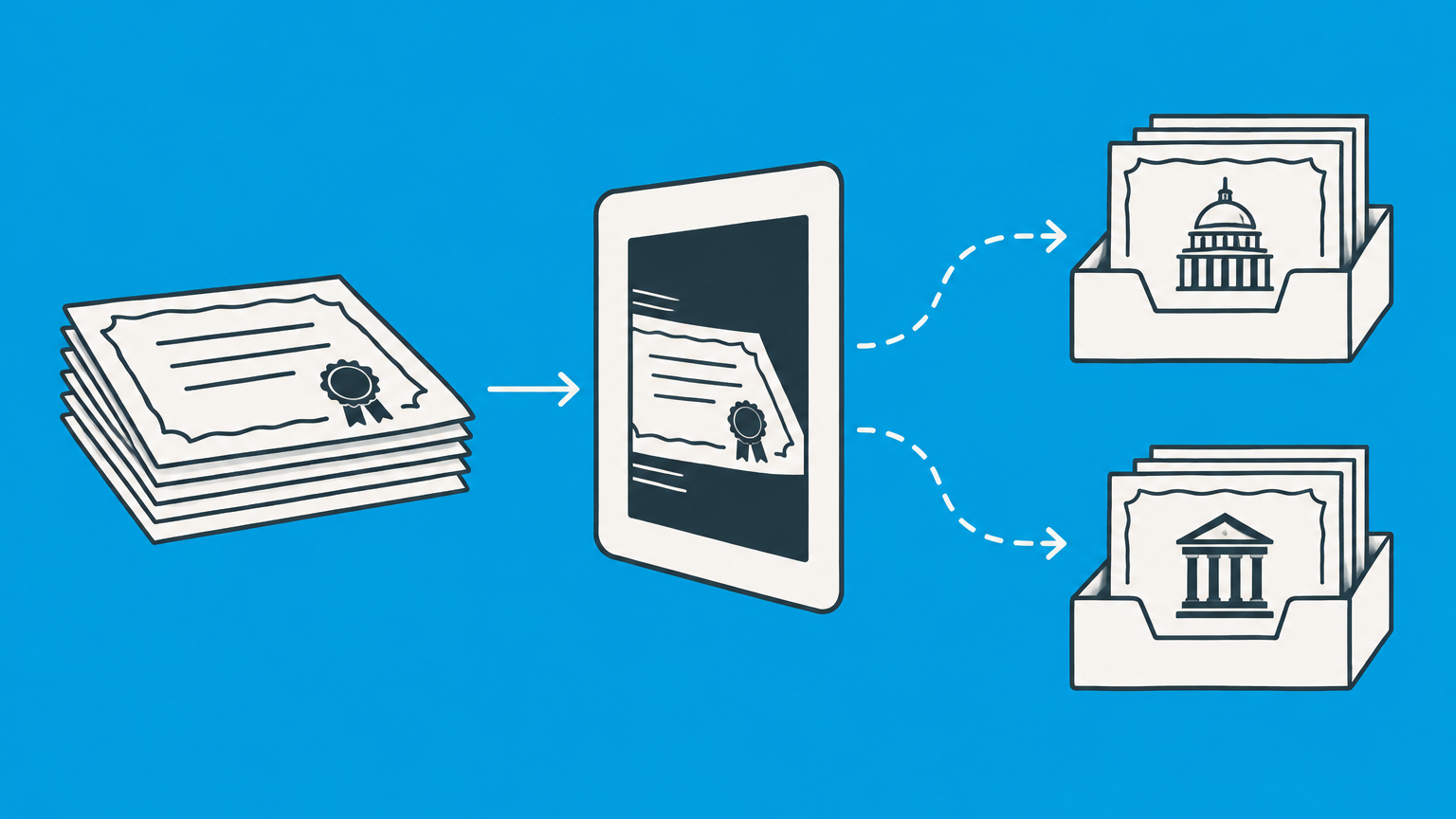
Form D is a public notice filed with the Securities and Exchange Commission for certain exempt securities offerings. It reports an offering, but it does not register the securities, secure SEC approval, or create the exemption itself.
Key Takeaways
- Form D is a notice filing for offerings relying on Regulation D or Securities Act Section 4(a)(5).
- An issuer generally files within 15 calendar days after the first sale, not 15 business days.
- The first sale usually occurs when the first investor becomes irrevocably contractually committed to invest.
- Rule 506(b) and Rule 506(c) have different solicitation, investor, disclosure, and verification requirements.
- Issuers file Form D electronically through EDGAR, and the SEC does not charge a filing fee.
- A federal filing may not satisfy state notice, consent-to-service, or fee requirements.
- Investor names are not requested, but substantial information about the issuer and offering becomes public.
What Is SEC Form D, and What Does It Do?
SEC Form D is a short notice about a securities offering conducted without full registration under the Securities Act of 1933. Issuers commonly use it when relying on Rule 504, Rule 506(b), or Rule 506(c) of Regulation D. The form also covers offerings under Section 4(a)(5), which was formerly numbered Section 4(6).
The filing identifies the issuer and provides information about its industry, entity type, related persons, claimed exemption, securities, offering size, investors, and sales compensation. It gives regulators and the public a record of the offering. It is considerably narrower than a registered offering document.
A Form D filing does not make an offering lawful by itself. You must independently satisfy every condition of the exemption you claim. Those conditions may govern solicitation, purchaser eligibility, offering limits, disclosure, resale restrictions, and bad-actor disqualification. Filing also does not mean that the SEC reviewed, endorsed, or approved the offering.
Form D is not required for every private securities transaction. Other federal exemptions may have different filings or no Form D requirement. Digital assets can also raise threshold questions about whether an instrument is a security, as explained in this overview of SEC compliance for token offerings. Public reporting companies may have separate disclosure duties, including the requirements discussed in the guide to SEC Form 8-K reporting.
Because Form D reports reliance on an exemption rather than granting one, select the exemption and structure the offering before accepting the first binding investment commitment.
What Triggers a Form D Filing and When Is It Due?
A Form D filing is triggered when an issuer makes its first sale in an offering relying on Regulation D or Section 4(a)(5). Under the SEC instructions, the first sale is the date on which the first investor becomes irrevocably contractually committed to invest. Whether a commitment is irrevocable depends on the agreement and the surrounding facts, not merely the date money reaches the issuer's bank account.
The federal Form D filing deadline is generally 15 calendar days after that first sale. The deadline is not 15 business days. If the due date falls on a Saturday, Sunday, or federal holiday, the filing may be made on the next business day. Issuers often file before the first sale to avoid a missed deadline, although offering details may still need to be finalized carefully.
Consider the events leading to a sale. Sending a pitch deck, discussing proposed terms, or collecting a nonbinding indication of interest may not be the first sale. Signing an enforceable subscription agreement or another instrument that irrevocably commits an investor can be. The exact point can vary when an agreement includes closing conditions, cancellation rights, escrow terms, or multiple closings.
Do not calculate the deadline separately from the offering structure. An issuer might conduct one continuous offering or several separate offerings, and that distinction can affect the filing analysis. The exemption's integration rules may also determine whether transactions should be treated together.
Missing the deadline does not automatically convert the offering into a registered offering or necessarily destroy an otherwise available exemption. It can still create federal compliance issues, affect state filings, and complicate due diligence or later financing. File promptly and address the reason for the delay rather than assuming that no corrective action is available.
Regulation D Filing Requirements: Rule 506(b) vs. 506(c)
Rule 506(b) and Rule 506(c) both provide federal registration exemptions, but they support different fundraising methods. Choosing between them before soliciting investors is critical because an issuer generally cannot use public advertising under Rule 506(b) and then disregard that activity when claiming the exemption.
| Issue | Rule 506(b) | Rule 506(c) |
|---|---|---|
| General solicitation | Not permitted. | Permitted. |
| Accredited investors | May participate, and the issuer generally may rely on reasonable representations unless facts create concerns. | All purchasers must be accredited investors. |
| Non-accredited investors | Up to 35 purchasers may participate if they, alone or with a purchaser representative, have sufficient financial and business knowledge. | Not permitted as purchasers. |
| Disclosure | Specific information must be provided when non-accredited investors participate. Anti-fraud rules apply in every offering. | No prescribed disclosure package solely because of Rule 506(c), but anti-fraud rules still apply. |
| Verification | No mandatory reasonable-verification process for accredited status. | The issuer must take reasonable steps to verify that each purchaser is accredited. |
| Form D | Filed as a notice identifying Rule 506(b). | Filed as a notice identifying Rule 506(c). |
Neither path permits misleading statements or omissions of material facts. Rule 506 securities are also restricted securities, so investors generally cannot freely resell them without registration or another exemption.
Rule 504 is another Regulation D path, but it has its own offering limit and state-law considerations. Section 4(a)(5) is a separate statutory exemption with distinct conditions. Review the SEC's Regulation D resources before selecting a box on Form D. The form records your claimed exemption, but it does not resolve whether your solicitation methods, investor pool, disclosures, or verification procedures satisfy that exemption.
How to File Form D Online Through EDGAR
You must file Form D online through the SEC's EDGAR system. The process begins before you complete the form because the issuer needs active EDGAR filing access. Allow time for access requests and authentication rather than waiting until the filing deadline.
- Confirm the issuer and exemption. Identify the legal entity offering the securities, the applicable exemption, the first-sale date, and the states connected to the offering.
- Obtain EDGAR access. An issuer without access must apply through the SEC's filer-management process and follow the current Form ID, identity-verification, account, and authorization instructions.
- Collect the required information. Gather the issuer's legal name, prior names, jurisdiction, entity type, addresses, related persons, security types, offering amount, investor information, and sales-compensation details.
- Prepare the form. Review the official SEC Form D and instructions before entering information online. Resolve inconsistent names, dates, and offering amounts first.
- Submit through EDGAR. Use the SEC's EDGAR filing system, select the Form D submission, complete each applicable item, review the filing, and submit it electronically.
- Save proof and check the public record. Retain the acceptance message and accession information. Confirm that the filing appears in the SEC's EDGAR company search under the correct issuer.
- Complete state notices. Determine where offers or sales occurred and check each state's current instructions, deadlines, fees, and filing system.
The SEC does not charge a fee for filing Form D. State regulators may charge fees for their related notices. If you formed a new entity for the offering, keep its organizational records consistent with the filing. This overview of LLC formation and required forms explains separate entity-level paperwork that Form D does not replace.
Completing Form D for Convertible Debt and Other Securities
Form D asks the issuer to identify the type or types of securities offered. Available categories include equity, debt, options or warrants, securities to be acquired upon exercise, pooled investment fund interests, and other securities. The form permits more than one selection when appropriate.
A convertible note commonly has debt features and a right or mechanism to convert into equity. Do not classify it based only on its title. Review the instrument's repayment obligation, conversion terms, contingencies, maturity, interest provisions, and the security investors are entitled to receive. Depending on those terms, the applicable Form D selections may include debt and another security category. If the instrument does not fit the listed choices, the form provides an other category with space for a description.
The classification should agree with the subscription documents, board approvals, capitalization records, and investor communications. Form D also requests the total offering amount, amount sold, amount remaining, minimum investment if any, number of investors, sales commissions, finder's fees, and specified uses of proceeds. Amounts attributed to a convertible instrument should be reported consistently with the offering's legal documents and the form instructions.
Form D does not ask for a list of investor names. The public filing does disclose the issuer's identity and address, executive officers, directors, promoters, claimed exemption, security types, offering amounts, number of investors, and certain sales-compensation recipients. It can therefore reveal meaningful financing information without identifying each purchaser.
If a broker, finder, placement agent, or consultant will receive transaction-based compensation, examine broker-dealer issues separately. Listing compensation on Form D does not authorize an unregistered person to perform activities that require registration.
Before the first sale, a securities attorney can confirm the exemption, classify a convertible note or other instrument, review or prepare Form D, and coordinate notices in every applicable state. If those issues remain unresolved, you can post your legal need on UpCounsel's marketplace. Responses typically arrive within a day, which can help you address the offering documents and filing plan before an investor becomes contractually committed.
Form D Amendments, Ongoing Offerings, and Late Filings
An initial filing may not be the last Form D submission for an offering. The SEC instructions call for amendments to correct material mistakes or errors as soon as practicable. Amendments are also required as soon as practicable for certain changes to previously reported information.
Not every change requires an immediate amendment. The instructions provide exceptions for specified changes, including some limited changes to addresses, related-person information, offering amounts, investor counts, and compensation amounts. Because those exceptions contain conditions and percentage thresholds, compare the change with the current instructions instead of relying on a general assumption that only major changes matter.
An issuer must also file an annual amendment for an offering that continues for more than one year. The annual amendment is due on or before the first anniversary of the most recent previously filed Form D or amendment. It must update the filing's information as required by the form instructions. An amendment does not restart the original 15-day deadline or cure defects in the underlying exemption.
If the initial filing was late, submit it promptly with accurate information. Do not change the first-sale date to make the filing appear timely. Preserve records explaining how the date was determined and review related state notices, since a federal delay may also mean that a state deadline was missed.
Failure to file Form D does not necessarily eliminate a valid Regulation D exemption by itself. However, willful or repeated failures can create additional consequences under SEC rules. A missing filing can also delay financing, concern investors, complicate legal opinions, and affect state-law compliance. Correct the record rather than waiting for the next financing round to expose the issue.
State Notice Filings and California Form D Requirements
A federal Form D filing does not necessarily complete state securities compliance. Federal law limits state registration requirements for certain covered securities, including many Rule 506 offerings, but states can still require notice filings, consent-to-service documents, fees, and enforcement of anti-fraud laws.
Start by identifying where offers and sales occurred and where each investor resides. Then check the current instructions of each relevant state regulator. State deadlines and electronic filing procedures do not have to match the SEC process. Filing on EDGAR does not automatically send every required document or payment to each state.
For a California Form D scenario, an issuer selling to a California investor should determine whether a notice must be submitted to the California Department of Financial Protection and Innovation, what supporting information is required, and what fee and deadline currently apply. The answer can depend on the federal exemption claimed and the facts of the transaction. Check California's current official instructions rather than assuming that the SEC acceptance completes the state filing.
Track state compliance in a schedule that lists each investor's state, first relevant offer or sale, federal exemption, notice deadline, required documents, fee, submission status, and confirmation number. Update the schedule when a new investor enters the offering. This is especially useful for rolling closings because a new purchaser may introduce a state that was not part of the original filing plan.
State notices do not replace the federal filing, and the federal filing does not replace state notices. Keep both sets of confirmations with the subscription agreements, investor questionnaires, verification records, disclosures, and board approvals. That combined file can support later audits, acquisitions, financing diligence, and amendment decisions.
Frequently Asked Questions
How Do You File Form D?
You file Form D electronically through the SEC's EDGAR system. The issuer needs active filing access, accurate offering information, and an authorized person to sign the submission. After filing, retain the SEC acceptance notice and verify the public entry. Separately document every state submission because an EDGAR confirmation proves only that the federal filing was accepted.
What Is Form D Used For?
Form D is used to notify regulators and the public about an offering made under specified federal registration exemptions. It also gives states a standardized document they may use for notice-filing purposes. Investors, lenders, and acquisition counsel often review it during due diligence to compare the issuer's public filing with its capitalization records and financing documents.
How Do You File Form D With the SEC?
You file with the SEC by submitting the electronic Form D under the issuer's EDGAR account. The signer certifies the filing on the issuer's behalf, so internal authorization should be documented. If outside counsel or a filing service enters the information, the issuer should still review names, dates, exemption selections, amounts, and related-person information before submission.
How Is Convertible Debt Shown in SEC Form D Filings?
Convertible debt is shown using the security categories that match the instrument's legal features. A note may involve the debt category and, where applicable, another category associated with its conversion rights. The issuer should avoid labeling the investment as ordinary equity merely because conversion may occur later, and its Form D treatment should remain consistent with the governing note and offering documents.
Where Can I Get a Form D?
You can obtain Form D and its instructions from the SEC's forms materials, but the actual filing must be completed electronically through EDGAR. A paper or PDF copy is useful as a preparation worksheet. Confirm that you are using the current version because SEC access procedures, form instructions, and technical filing requirements can change.
Does a Form D Filing Make Investor Names Public?
No, Form D does not require the issuer to list each investor's name. It can still reveal the number of investors, amounts offered and sold, issuer leadership, promoters, and people receiving sales compensation. Other agreements, court records, company filings, or separate regulatory requirements may disclose additional ownership information outside Form D.


