Mutatis mutandis means "with the necessary changes having been made." In a contract, it applies an existing provision to a comparable situation while changing details that no longer fit.
Key Takeaways
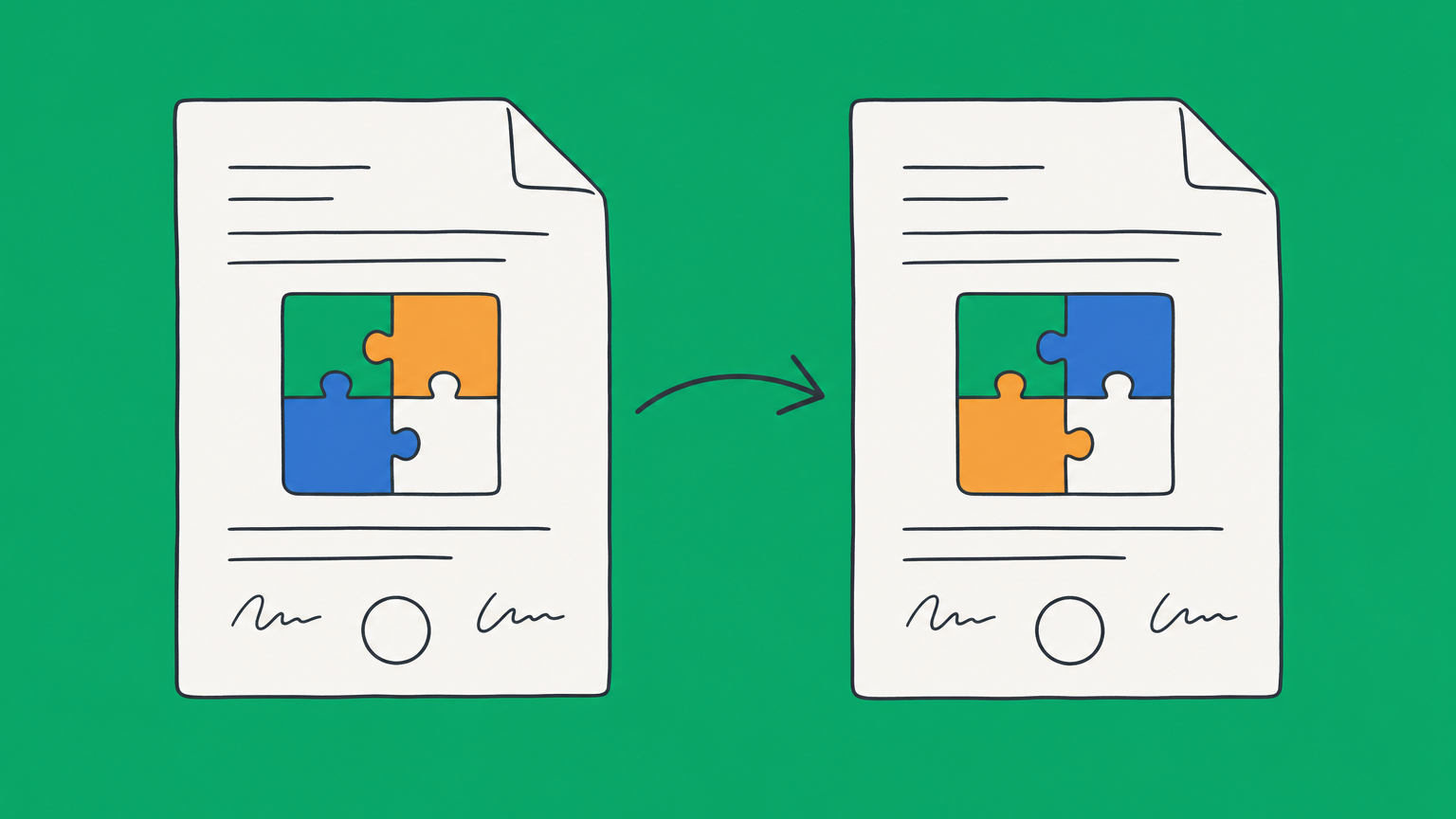
- Mutatis mutandis preserves the core effect of a referenced provision while allowing necessary or appropriate adjustments.
- Common changes include party names, titles, addresses, dates, defined terms, and references to particular documents.
- The phrase does not mean that earlier wording applies without modification.
- A reader should identify the referenced provision, what remains unchanged, and every detail requiring substitution.
- The clause can save space, but unclear references or unstated changes may create uncertainty.
- Plain-language drafting or restating the provision may be clearer in an important or heavily negotiated contract.
Mutatis Mutandis Meaning in Law
The mutatis mutandis meaning in law is "with the necessary changes" or "after making the appropriate modifications." It is a Medieval Latin phrase used when a rule, provision, comparison, or legal result should carry over to a similar situation, but some details must change to make it fit.
The phrase has two connected parts. "Mutatis" refers to things that have been changed, while "mutandis" refers to things that must or should be changed. The practical meaning matters more to most contract readers than the literal grammar: make the changes required by the new context, then apply the underlying rule.
This instruction involves both change and continuity. Names, dates, locations, titles, or defined terms may change. The referenced provision's basic purpose and effect should remain intact. A clause using the phrase therefore does not authorize every change a party might prefer. It calls for adjustments needed to transfer the provision to the stated situation.
Context controls which adjustments are necessary. If a contract applies a notice provision mutatis mutandis to termination notices, the parties may need to substitute the relevant notice type, recipient, or timing reference. They would not ordinarily treat the phrase as permission to rewrite unrelated obligations. The agreement's definitions, cross-references, and structure help establish the intended result.
The phrase also does not determine whether the overall agreement is enforceable. That question depends on the contract and applicable law. Review the elements of a legally binding contract separately from interpreting this particular drafting instruction.
What Mutatis Mutandis Means in a Contract
A mutatis mutandis clause directs you to take identified terms and use them in another part of the contract, another transaction, or a later agreement after making the changes needed for that application. The clause should provide enough context to determine both the source provision and the new situation.
For example, an agreement might state: "Section 8 applies mutatis mutandis to notices delivered under this renewal." You would first read Section 8. If it addresses notices under the original term, you would adapt references that apply only to that term. The delivery method, required contents, and other operative rules would continue to apply unless the renewal or surrounding language indicates otherwise.
The phrase may also connect related documents. A renewal, amendment, loan document, or partnership agreement might apply terms from an earlier agreement with necessary substitutions. Before treating those terms as part of the new arrangement, confirm exactly which document, version, section, and date the clause identifies.
Do not assume that mutatis mutandis means "copy this language exactly." Exact copying could produce an illogical result if the source provision names the wrong party or refers to an expired period. At the same time, do not assume that every term is open for renegotiation. The normal function is narrower: adjust what must change while preserving the provision's core intent.
If the parties want to change substantive rights rather than adapt existing language, they can describe those revisions expressly. An addendum to a contract may be appropriate when the parties need to document specific additions or modifications instead of relying on implied substitutions.
Mutatis Mutandis Example With Before-and-After Terms
Consider a service agreement between North Company and South Company. Its original notice clause says: "North Company must send any renewal notice to South Company's Contract Manager at 10 Market Street no later than June 1, 2026." A later provision says that the notice clause applies mutatis mutandis to a service extension involving East Company.
The intended application might look like this:
| Detail | Original Provision | Adapted Application |
|---|---|---|
| Sending party | North Company | North Company, if it remains responsible for notice |
| Receiving party | South Company | East Company |
| Recipient title | Contract Manager | East Company's designated recipient |
| Address | 10 Market Street | East Company's stated notice address |
| Relevant action | Renewal notice | Extension notice |
| Date | June 1, 2026 | The deadline established for the extension |
The delivery requirement and general notice procedure remain in place. The party, recipient, address, notice type, and deadline change only as needed for the extension. This is the basic operation of mutatis mutandis: preserve the structure and purpose, but replace details that cannot sensibly carry over.
The example also shows why a vague clause can cause problems. If the extension does not identify East Company's address or establish a deadline, the phrase alone may not supply those missing facts. A reader should not invent a material term merely because some adaptation is expected.
When timing affects cancellation or termination rights, compare the cross-reference with the agreement's actual notice language. A clause involving a 90-day contract termination notice, for example, should make clear which event starts the notice period and which party must receive the notice.
How to Read a Mutatis Mutandis Clause
Start by locating the exact language the clause incorporates or reapplies. Do not stop at the section heading. Read the full provision, its defined terms, related exceptions, and any schedules or exhibits it references. A short cross-reference can carry several connected obligations.
Use this review sequence:
- Identify the source. Confirm the agreement, section, version, and date being referenced.
- Identify the destination. Determine the transaction, party, event, or later period to which the source provision will apply.
- List the required substitutions. Check names, roles, addresses, dates, monetary references, notice types, and defined terms.
- Mark what remains unchanged. Preserve procedures, conditions, remedies, and limitations unless the context requires a change.
- Test the adapted language. Read the provision as if every substitution had been written out. Look for contradictions, gaps, or impossible obligations.
- Check controlling language. Determine whether another clause states that an amendment, renewal, schedule, or later document takes priority.
Pay particular attention to words such as "shall," "may," "before," "after," and "unless." Changing a party name may be mechanical, but changing a deadline, condition, or remedy can alter substantive rights. If more than one adaptation is plausible, the phrase may not provide enough precision on its own.
If a mutatis mutandis clause does not clearly identify what changes, what remains binding, or which earlier document applies, you can post your legal need on UpCounsel's marketplace. An attorney can compare the documents, identify intended substitutions, assess the provision in context, and redraft it in clearer language. Responses typically arrive within a day.
Common Uses in Renewals, Leases, Loans, and Other Agreements
Mutatis mutandis commonly appears where parties want similar rules to govern related situations without reproducing an entire section. Its suitability depends on how closely the situations match and how easily a reader can identify the required changes.
- Renewals and extensions: A later term may retain notice, payment, confidentiality, or operational provisions while updating dates and the length of the term.
- Leases: A renewal or related occupancy arrangement may carry forward provisions about notices, permitted use, or administration after changing the relevant period, rent terms, or party details.
- Employment agreements: An employer may use a common form for different roles or locations, with changes to names, titles, duties, and terms required by the applicable circumstances. Employment requirements vary, so local law and current agency instructions still require separate review.
- Loan agreements: Related transactions may use similar notice, payment, security, or administrative language while changing the borrower, amount, dates, or other deal-specific information.
- Partnership and business agreements: Terms governing one partner, business unit, or region may apply to another after appropriate substitutions.
The phrase can reduce duplication and help related documents use consistent language. It works best when the source provision is easy to locate and the changes are limited and apparent. It works poorly when the source contains multiple exceptions, the referenced document has been amended several times, or the parties disagree about which terms are merely contextual.
Contract labels also matter. A schedule, exhibit, or attachment may perform a different function depending on the agreement. Understanding the distinction between a schedule and an exhibit in contracts can help you trace a mutatis mutandis reference to the correct material.
Mutatis Mutandis vs. Incorporation by Reference and Restatement
Mutatis mutandis, incorporation by reference, and full restatement can all reduce or manage repeated language, but they do not communicate the same instruction. The best choice depends on how much adaptation is needed and how much uncertainty the parties can tolerate.
| Drafting Method | Primary Function | Clarity | Main Uncertainty |
|---|---|---|---|
| Mutatis mutandis | Applies a provision after necessary changes | Clear when substitutions are obvious and limited | Which changes are necessary and which terms remain fixed |
| Incorporation by reference | Brings identified material into the operative agreement without reproducing it | Depends on an exact, accessible reference | Which document or version was incorporated and how it interacts with the new text |
| Full restatement | Writes the operative provision directly into the new document | Usually easiest to read in one place | Whether rewritten language unintentionally differs from the earlier provision |
Incorporation by reference does not inherently instruct the reader to make all necessary contextual changes. Mutatis mutandis expressly signals adaptation. The concepts can appear together, but the drafter should still identify the source and explain any material substitutions.
Restating the complete provision uses more space, but it lets readers see the operative rule without switching between documents. This approach may be preferable when the clause governs significant payment duties, deadlines, remedies, or termination rights. It also gives the parties an opportunity to remove obsolete references.
If you retain the Latin phrase, pair it with precise drafting. For example: "Section 12 applies to each extension, with references to the Initial Term replaced by references to the applicable Extension Term." That language identifies at least one required substitution. Plain English such as "with the necessary changes" can also make the instruction more accessible, but it will not cure an unclear source reference.
Pronunciation, Spelling, and Similar Latin Phrases
Mutatis mutandis is commonly approximated in English as "myoo-TAH-tis myoo-TAN-dis," although accepted pronunciations vary. Another pronunciation uses a long "a" sound in "mutatis." In ordinary speech, clarity and consistency matter more than reproducing a particular Latin accent.
The correct phrase is mutatis mutandis. "Mutandis mutatis" reverses the established word order. "Mutatis mutandi" drops the final "s" from the second word and is not the standard phrase. "Mutatis" or "mutandis" alone does not express the established legal instruction. In formal drafting, use the complete phrase or replace it with a clear English equivalent.
The phrase usually functions adverbially and may be set off with commas. A general sentence example is: "The notice procedure applies, mutatis mutandis, to each renewal period." In a contract, direct wording may be stronger: "The notice procedure applies to each renewal period, with the dates and party information changed as necessary."
Questions written as "mutatis mutandis ne demek" or "mutatis mutandis nedir" ask for the phrase's meaning in Turkish. "Mutatis mutandis en derecho" asks about its use in law in Spanish. In each case, the central legal meaning remains applying a rule or provision after making the necessary changes.
Do not confuse mutatis mutandis with ceteris paribus. Mutatis mutandis calls for necessary changes when moving from one situation to another. Ceteris paribus means holding other factors constant, or "all other things being equal." One permits contextual adjustment, while the other describes an analysis that keeps other relevant conditions unchanged.
Frequently Asked Questions
What Does Mutatis Mutandis Mean?
Mutatis mutandis means "with the necessary changes having been made." Outside contracts, a writer may use it to compare two people, arguments, procedures, or situations while acknowledging that their different details must be taken into account. It signals a qualified analogy rather than a claim that the two subjects are identical.
What Is Mutatis Mutandis?
Mutatis mutandis is a Medieval Latin adverbial phrase derived from forms of the Latin verb meaning "to change." English writers have retained the Latin wording rather than converting it into an English expression. It appears in law, economics, mathematics, philosophy, and other settings involving comparisons or adapted applications.
What Does Mutatis Mutandis Mean in Law?
In law, mutatis mutandis means that a legal rule or analysis applies to another situation after adjusting the details that differ. Its effect always depends on context, including the document's definitions and governing law. It is an interpretive direction, not an independent rule that resolves missing or disputed terms.
What Is Mutatis Mutandis in Contracts?
In contracts, mutatis mutandis is shorthand for applying specified language to a related circumstance with appropriate substitutions. If the adaptation would affect a material obligation, the surrounding text should indicate the intended result. Courts and parties may otherwise need to interpret the clause using the agreement as a whole.
How Do You Use Mutatis Mutandis?
Use mutatis mutandis after identifying the rule, terms, or comparison that will carry over to a new context. In careful business writing, explain any non-obvious differences instead of making the reader infer them. The phrase is most useful when the similarities are substantial and the required adjustments are limited.
How Do You Pronounce Mutatis Mutandis?
Mutatis mutandis may be pronounced approximately "myoo-TAH-tis myoo-TAN-dis" in English. Some speakers use "TAY" rather than "TAH" in the first word, and pronunciation can vary by region or legal tradition. If using the phrase in a presentation or negotiation, speaking slowly helps listeners recognize both words.


