Business functions are categories of related work that an organization performs to achieve its objectives. They provide a stable way to describe work even when job titles, reporting lines, and departments change.
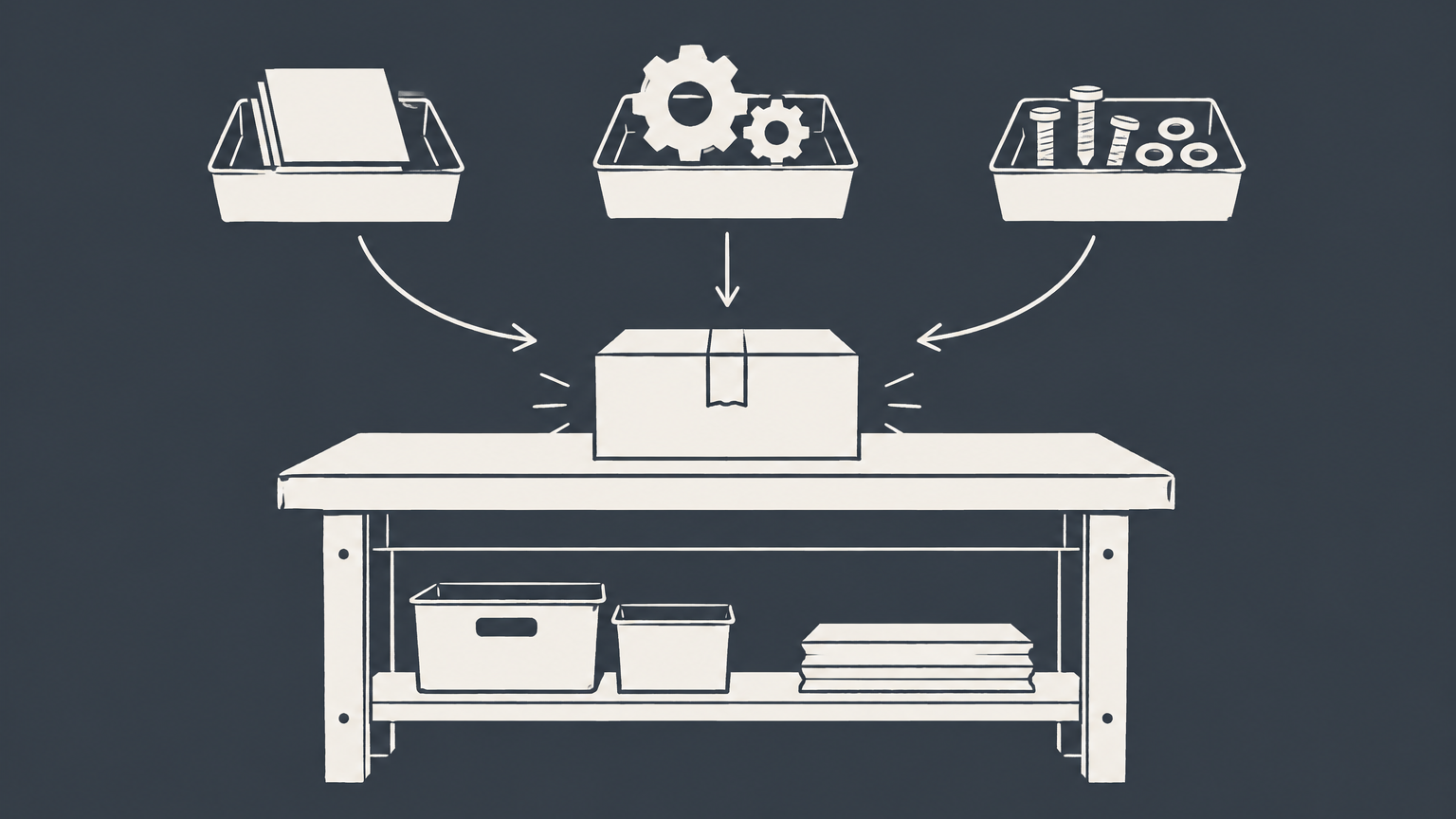
Key Takeaways
- A business function identifies a category of work, such as operations, finance, marketing, or human resources.
- There is no universal number of functions. Lists of four, five, six, seven, or eight use different levels of detail.
- Classify a role by its primary responsibilities, decisions, outputs, and stakeholders, not its title alone.
- Core functions create and deliver customer value, while support functions enable, protect, or govern that work.
- Functions differ from departments, job roles, processes, and capabilities.
- A function map can reveal missing ownership, duplicated work, and conflicting authority.
What Are Business Functions?
A business function is a broad category of recurring activities performed for a common organizational purpose. Operations produces goods or delivers services. Finance manages financial planning, reporting, and controls. Marketing creates demand and communicates value. Human resources manages workforce activities such as recruitment, training, and employee administration.
A function describes what type of work the business performs. It is not the same as the person, team, or workflow performing that work. This distinction matters:
- Function: A category such as financial management.
- Job title: A position such as payroll specialist.
- Department: An organizational unit such as the finance department.
- Task: An individual action such as approving an invoice.
- Process: A connected sequence such as purchasing and paying for supplies.
A small company may assign finance, HR, compliance, sales, and strategy to one founder. Those functions remain conceptually distinct even though one person performs them. A larger company may distribute one function across several teams or locations. For example, marketing work may occur within brand, content, demand generation, and regional teams.
Functions also help describe a company without relying on its current organization chart. For a related overview of how leaders coordinate these areas, see business management roles and systems.
Common Business Function Categories and Why the Number Varies
Organizations commonly use some combination of executive management, operations, product or service development, marketing and sales, customer service, finance and accounting, human resources, information technology, legal and compliance, and procurement or supply chain. These categories can be combined, divided, or renamed to fit the organization.
There is no authoritative rule that every business has exactly four, five, six, seven, or eight functions. The count depends on the framework's purpose and level of detail. One framework may combine marketing and sales, while another treats them separately. A manufacturer may distinguish procurement, production, logistics, and quality assurance. A consulting firm may group most of that work under service delivery. A regulated financial business may give risk, compliance, and wealth management their own categories.
Business function categories for executives may also differ from categories used by HR or operations teams. Executives often want a high-level view for allocating resources and setting accountability. HR may need more detailed categories for workforce planning and job classification. Technology teams may classify systems according to the functions they support.
Business function categories for founders are usually broader because early-stage companies have fewer people. A founder may lead strategy, financing, hiring, product development, and sales without creating five separate departments. As the company grows, those responsibilities can be delegated while the underlying functions remain.
Put simply, business is about deliberately managing business functions, but the right taxonomy depends on how the company creates value. For another simplified framework, review the core functions of a business.
Core Versus Support Business Functions
A useful starting point divides functions into core and support categories. Core functions directly create, sell, deliver, or support the company's product or service. Support functions provide the people, money, systems, governance, and resources required for core work.
| Category | Purpose | Common Examples | Typical Outputs | How Classification Can Vary |
|---|---|---|---|---|
| Core functions | Create and deliver value to customers | Operations, product development, marketing, sales, distribution, and customer service | Products, delivered services, sales, customer support, and product improvements | IT may be core for a software company. Logistics may be core for a delivery business. |
| Support functions | Enable, govern, fund, or protect core work | Finance, HR, legal, compliance, procurement, administration, and internal IT | Budgets, hires, policies, contracts, controls, systems, and purchased resources | Legal or compliance may become central to the customer offering in a specialized professional-services business. |
The classification should reflect the business model rather than the perceived status of a team. Calling a function supporting does not make it optional or less valuable. Payroll, cybersecurity, legal review, and regulatory compliance may be essential even though they do not directly produce the product.
Some work also belongs to more than one analytical view. Customer research can support marketing, product development, and strategy. Payroll includes workforce administration and financial control. The company should assign primary ownership while recording meaningful secondary relationships. For a closer look at workforce responsibilities, see human resource management functions.
How to Classify a Job Title Into a Business Function
Do not classify a position from title words alone. Titles vary by company, industry, seniority, and geography. A director may manage a function, advise executives, or lead a business unit. An executive manager could oversee operations in one company and sales in another.
Use this five-step method:
- List primary responsibilities. Identify the activities that take most of the role's time or carry the greatest accountability.
- Identify decisions. Determine what the person can approve, prioritize, spend, hire, publish, or change.
- Examine outputs. Look for concrete results such as campaigns, financial plans, hires, software releases, policies, or delivered services.
- Identify stakeholders. Determine who receives or relies on the work, including customers, employees, executives, regulators, or investors.
- Assign primary and secondary functions. Choose the function that best matches the role's main purpose, then record substantial cross-functional duties separately.
This method supports consistent business function classification for marketing roles, recruitment roles, executives, and specialized positions. For example, a content job title does not automatically belong to marketing. A content marketer likely does, but a technical documentation writer may belong to product or customer enablement. An internal policy writer may sit within legal, compliance, or HR.
Classify authority as carefully as activity. A person who provides recommendations may support a function without owning it. A managing director who approves strategy, budgets, hiring, and major commercial decisions probably has general management as the primary function, with several secondary functions. Formal board and officer positions require a separate governance analysis, including the distinctions described in board member titles and roles.
Worked Business Function Classification Examples
The following examples show how primary duties can control classification. Actual assignments may change when the same title carries different responsibilities.
| Role or Team | Likely Primary Function | Classification Reason |
|---|---|---|
| Press office | Communications or marketing | A press office that manages media relations, public statements, and reputation usually fits communications. Government or investor relations duties may create secondary classifications. |
| Marketing role | Marketing and sales | Campaigns, brand management, market research, and demand generation support customer acquisition and market communication. |
| Wealth manager | Operations or client service | Providing portfolio-related services and managing client relationships usually aligns with service delivery. Sales, compliance, and financial analysis may be secondary functions. |
| Recruiter | Human resources | Sourcing, evaluating, and coordinating the hiring of employees are workforce-management activities. |
| Director of strategy | Strategic or executive management | Long-term planning, investment analysis, organizational priorities, and cross-functional initiatives support enterprise direction. |
| Content specialist | Depends on the output | Marketing content fits marketing, product documentation fits product or technology, and employee communications may fit HR or corporate communications. |
| Retail technology role | Information technology or operations | Maintaining retail systems generally fits IT. Owning digital store operations, checkout performance, or customer fulfillment may place the role closer to operations. |
| Managing director | General or executive management | Company-wide decision authority suggests executive management. A managing director responsible for one service line may instead belong to that line's operating function. |
| Founder | Executive management, with multiple secondary functions | A founder commonly combines strategy, financing, product, hiring, and sales, especially before specialized teams exist. |
| Executive manager | Depends on decision scope | Enterprise-wide authority points to executive management. Responsibility for one operational area points to that specific function. |
These examples also explain why automated title matching can produce poor results. A sound classification records the evidence behind the selection and permits more than one function when the duties genuinely span categories.
Business Function vs. Capability, Process, Department, and Role
Business terminology often overlaps in everyday use, but each concept answers a different management question. Separating them produces clearer organization charts, job descriptions, system requirements, and accountability records.
| Concept | Question It Answers | Simple Example |
|---|---|---|
| Business function | What category of work do we perform? | Human resources management |
| Business capability | What must we be able to do effectively? | Recruit qualified employees |
| Business process | How does work move from a trigger to an outcome? | Candidate application through onboarding |
| Department | Which organizational unit houses people and resources? | People operations department |
| Job role | What is one person's position and responsibility? | Recruiting manager |
A process may cross several functions. Hiring an employee can involve HR, finance, IT, legal, and the hiring manager's operating team. A capability can depend on people, processes, technology, policies, and outside providers. A department may perform several functions, while one function may be distributed across multiple departments.
Functional and divisional structures also use different organizing principles. A functional structure groups people by expertise, such as finance or marketing. A divisional structure groups them by product, geography, customer segment, or business line. Each division may contain its own functional roles. The company can therefore use a divisional organization chart while maintaining an enterprise-wide function map.
How to Create a Basic Business Function Map
A function map shows the major categories of work and their ownership. Start at a high level. Too much detail turns the map into a task inventory, while too little detail hides meaningful gaps.
- Inventory recurring activities. Review what the company repeatedly plans, produces, approves, sells, delivers, records, and monitors.
- Group activities by shared purpose and output. Place recruiting and employee training under HR, for example, rather than grouping them solely by the office where they occur.
- Name each function clearly. Use stable labels such as financial management or customer service rather than temporary project names.
- Assign primary ownership. Identify the leader or organizational unit accountable for each function.
- Record overlaps and handoffs. Note where a process crosses functions or one role performs several kinds of work.
- Separate core and enabling work. Use the business model to determine which functions directly create customer value.
- Review decision rights. Confirm who recommends, approves, executes, and monitors important actions.
The finished map can support hiring plans, job descriptions, budgets, internal controls, technology decisions, and reorganizations. Review it when the company adds products, enters new markets, changes leadership, or finds that multiple teams believe they own the same decision. A small business does not need a separate department for every function, but it should know who handles each responsibility.
If growth or reorganization requires formal assignments of governance, employment, legal, or compliance authority, you can post your legal need on UpCounsel's marketplace. An attorney can review governing documents, contracts, policies, decision rights, and responsibility assignments to identify gaps or conflicting authority. Responses typically arrive within a day, helping you evaluate the structure before formalizing new roles or approvals.
Frequently Asked Questions
What Are the 8 Business Functions?
An illustrative eight-function model includes executive management, operations, product development, marketing and sales, customer service, finance and accounting, human resources, and information technology. This is a practical framework, not a universal rule. Legal, compliance, procurement, and communications may operate as separate functions or be grouped within one of these eight.
What Are the 5 Core Business Functions?
A common five-function model uses operations, marketing and sales, finance, human resources, and strategic management. It gives students and small companies a manageable overview rather than a detailed organization design. Product development, technology, customer support, procurement, and legal work can be assigned within those broad categories or separated as the business grows.
What Are the Six Main Functions of Business?
One six-function framework includes operations, marketing and sales, finance and accounting, human resources, information technology, and product or service development. Other frameworks substitute management or customer service for one of those categories. The useful question is not which list is universally correct, but which list accurately describes the work being analyzed.
What Are the 7 Types of Business and Their Functions?
There is no standard list called the seven types of business and their functions. The phrase often combines two separate subjects: legal or ownership classifications of businesses and the operational functions performed inside them. A seven-function model might cover operations, product development, marketing and sales, customer service, finance, HR, and IT, but that model does not determine the company's legal form.


