Terms of service explain the rules, rights, and responsibilities that apply when someone accesses a website, app, platform, or online service. The document may become a contract when users receive adequate notice and validly agree to its provisions.
Key Takeaways
- Terms of service define how users may access and use a service.
- Terms of service, terms of use, and terms and conditions are often different labels for similar agreements.
- Enforceability depends partly on notice, assent, presentation, and applicable law.
- Your agreement should reflect your actual accounts, payments, content, and cancellation practices.
- A privacy policy addresses personal information and does not replace terms of service.
- Affirmative acceptance generally provides clearer evidence of agreement than a passive footer link.
Terms of Service Definition and Meaning
A terms of service agreement is a set of contractual rules established by a service provider for its users. It typically explains who may use the service, what conduct is prohibited, what the provider offers, and when access may be suspended or terminated. It can also allocate risks involving payments, intellectual property, user content, warranties, liability, and disputes.
The phrase most often applies to websites, apps, software-as-a-service products, marketplaces, subscription platforms, and online communities. Some businesses use the singular phrase "term of service," but the agreement normally contains multiple provisions, so "terms of service" is the standard label. People also sometimes search for "terms and services," although that phrase is less precise.
The title does not determine the agreement's legal effect. Courts and contracting parties focus on the substance of the provisions, how the terms were presented, and how the user indicated agreement. A document called "Community Rules" or "Membership Conditions" could still contain contractual provisions if it was presented and accepted as an agreement.
Terms of service are also different from a negotiated contract for professional work. A service agreement commonly describes specific deliverables, fees, and responsibilities between identified parties. For more on that distinction, see the legal difference between a contract and an agreement.
Terms of Service vs. Terms of Use and Terms and Conditions
Terms of service, terms of use, and terms and conditions frequently perform the same basic function. Each can set rules for a relationship between a business and its customers or users. Industry convention may influence the title, but there is no universal rule that makes each label a separate type of contract.
| Document | Typical Purpose | Common Context |
|---|---|---|
| Terms of service | Govern access to and use of a service | Apps, platforms, subscriptions, and online services |
| Terms of use | Set acceptable-use rules and access conditions | Websites, digital content, and online communities |
| Terms and conditions | Cover broader transactional and contractual provisions | E-commerce, memberships, promotions, and sales |
| Service agreement | Define work, payment, performance, and responsibilities | Business-to-business and professional services |
| Privacy policy | Explain personal information practices and individual rights | Websites, apps, and businesses handling personal information |
| EULA | License software and restrict its use | Downloaded or installed software |
A business can combine several functions in one document or maintain separate policies. For example, paid service terms might include subscription, billing, cancellation, and acceptable-use provisions. A separate privacy policy can then describe how the business collects, uses, shares, and retains personal information.
Do not assume the labels are interchangeable in every transaction. Read the actual provisions and any documents incorporated by reference. If you are evaluating obligations outside an online platform, reviewing terms and conditions in business contracts can help distinguish operational terms from general website rules.
Do You Need Terms of Service on Your Website?
U.S. websites are not subject to a single general rule requiring every operator to publish terms of service. Even so, terms can be valuable whenever your website or app creates accounts, charges users, renews subscriptions, licenses content, accepts user submissions, or provides interactive features.
The agreement can define acceptable conduct and give your business a stated basis for responding to spam, fraud, harassment, unauthorized access, or other misuse. It can explain account security responsibilities, payment obligations, cancellation procedures, and circumstances that may lead to suspension. It may also identify who owns the platform's content and what permission users grant when they upload their own material.
A simple informational website may have fewer contractual issues than a marketplace or paid platform. Your need for terms depends on what users can do, what you promise, and which risks the service creates. Regulated products, services offered to minors, and operations spanning multiple jurisdictions require additional analysis.
Do not treat terms as a replacement for a privacy policy. Privacy notice obligations depend on applicable federal, state, sector-specific, and international laws, as well as the data collected and the people served. Your privacy policy should accurately describe your information practices. Your service terms should govern the commercial and operational relationship. Linking the two documents does not make them interchangeable.
Are Terms of Service Legally Binding?
Terms of service can be legally binding, but posting a document online does not automatically make every provision enforceable. A court may examine whether the user received reasonably conspicuous notice, had an opportunity to review the agreement, and took an action that objectively indicated assent. Applicable contract law and the facts of the transaction also matter.
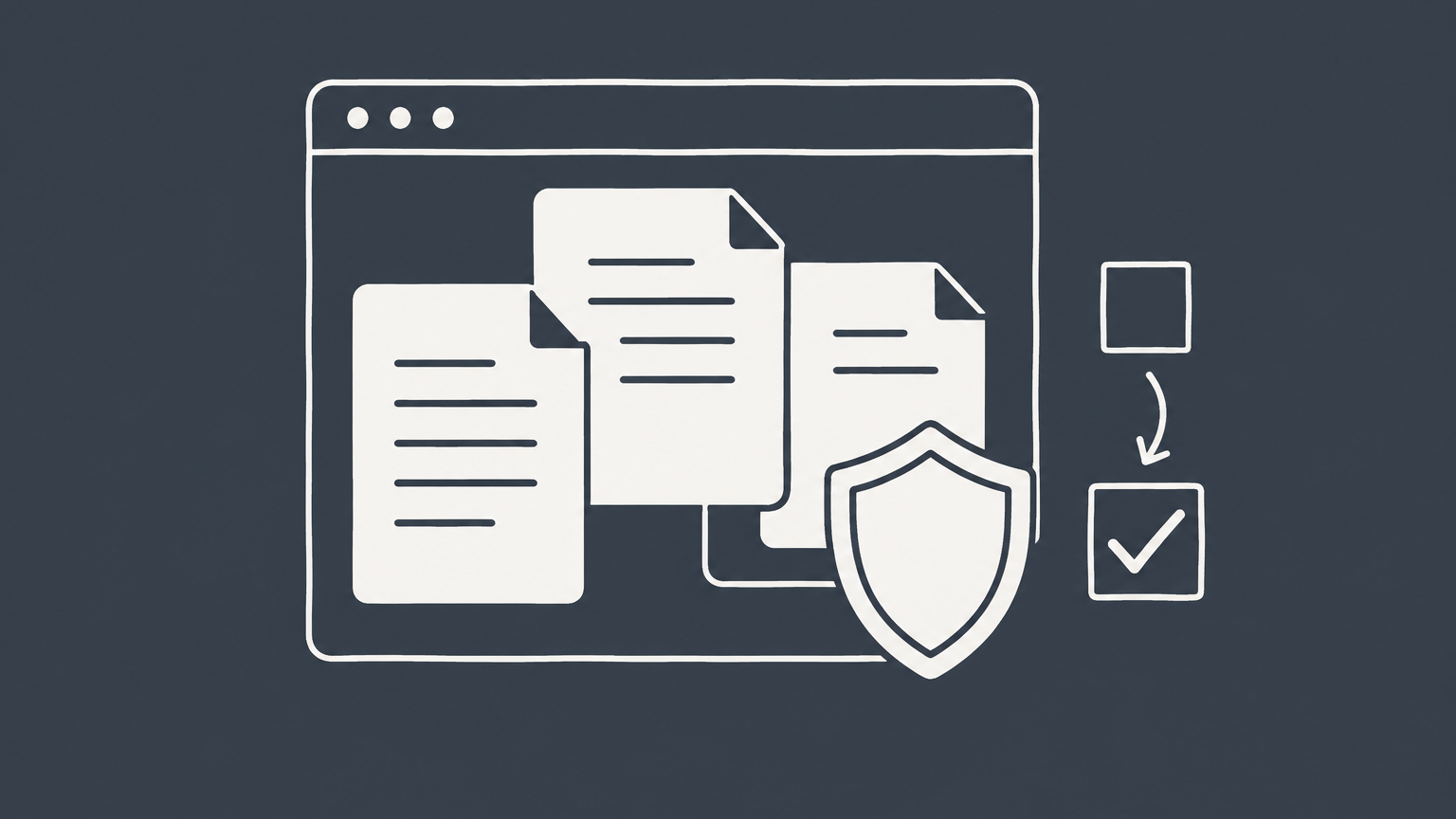
An affirmative acceptance process usually creates clearer evidence than a passive link. For example, a registration page can display a visible link to the terms beside an initially unchecked box stating that the user agrees. The system can prevent registration until the user checks the box. The business can then retain the agreement version, date, time, account, and acceptance record.
By contrast, placing a terms link only in a website footer and treating continued browsing as acceptance may create disputes about notice and assent. The surrounding page design, wording, link placement, and user's actions can affect the analysis. Hiding material provisions or making the link difficult to notice weakens the business's position.
Specific clauses may face separate scrutiny even when the overall agreement was accepted. Arbitration provisions, class-action waivers, liability limitations, automatic renewal terms, and unilateral modification clauses may be affected by jurisdiction-specific rules. Clear drafting cannot cure a process that fails to provide adequate notice or obtain valid assent. Businesses should review both the agreement and the technical acceptance flow.
Clauses to Include in a Terms of Service Agreement
Your agreement should match the service instead of copying a generic template. A practical clause checklist includes:
- Eligibility: State age, authority, location, or other requirements for using the service.
- Acceptable use: Identify prohibited conduct, content, access methods, and security violations.
- Accounts: Address registration accuracy, credentials, account responsibility, and unauthorized access.
- Payments: Explain prices, billing authorization, taxes, trials, and recurring charges where applicable.
- Cancellations and refunds: State how users cancel and when refunds or credits may be available.
- Intellectual property: Identify ownership of the service, trademarks, software, and business content.
- User content: Define ownership, licenses, moderation rights, and prohibited submissions.
- Termination: Explain when either party may end access and which provisions survive.
- Disclaimers and liability: Allocate appropriate risks without claiming protections that applicable law does not permit.
- Dispute resolution: Address claims, venue, arbitration, or other procedures when appropriate.
- Governing law: Identify the chosen jurisdiction while accounting for mandatory laws that may still apply.
- Changes and notices: Explain how updates become effective and how users will receive notice.
- Contact information: Provide a channel for legal notices, support questions, and complaints.
Liability language should reflect the product's risks and applicable law. An errors and omissions clause may be relevant when a service supplies information or professional output. You can also review different types of contract conditions when deciding which obligations depend on specific events.
If your service accepts payments, renews subscriptions, hosts user content, serves multiple jurisdictions, or relies heavily on liability and dispute provisions, you can post your legal need on UpCounsel's marketplace. An attorney can tailor the clauses, review the sign-up and update process, and align the agreement with your product and applicable law. Responses typically arrive within a day.
How to Create a Terms of Service Page
Start with your actual business rules, not a template. Interview the people responsible for product design, billing, support, security, and content moderation. Document how accounts work, what users purchase, how subscriptions renew, how cancellations occur, and which conduct can result in enforcement.
- Map the service. List features, user types, payment flows, data practices, third-party integrations, and user-generated content.
- Identify the parties. Name the legal entity providing the service and define terms such as "user," "account," and "content."
- Draft operational provisions. Convert real policies for payments, cancellations, accounts, and acceptable use into clear language.
- Add risk provisions. Address intellectual property, disclaimers, liability, disputes, governing law, and termination based on legal advice appropriate to the service.
- Coordinate related documents. Check that the privacy policy, refund policy, community guidelines, and service terms do not conflict.
- Build acceptance. Present a conspicuous link, require an affirmative action when appropriate, and preserve acceptance records.
- Publish and test. Make the page accessible before acceptance and confirm that links, version dates, and registration controls work.
A drafting checklist helps prevent omissions, but it is not a one-size-fits-all terms of service template. An online store needs transaction and shipping provisions that may not apply to a free discussion forum. A subscription platform needs renewal and cancellation language that a static website may not need. If your relationship involves negotiated commercial performance rather than public website access, a commercial service agreement may be the better starting point.
Terms of Service Examples and Review Practices
Established platforms offer useful terms of service examples, but their provisions reflect distinct products and risks. Google's terms provide an example of platform-wide rules. The YouTube Paid Service Terms show how general platform terms can work with additional payment rules. The Starbucks Rewards Terms of Use address a membership and rewards program, while OpenAI's Terms of Use address access to technology services.
Use these documents to study structure, not to copy clauses. A rewards program, video platform, and software service have different users, payment models, intellectual property issues, and legal obligations. Borrowed wording may describe features your business does not offer or allocate risks in ways that do not fit your operations.
No single review schedule applies to every terms page. Review the agreement when you launch a material feature, change prices or billing practices, enter a new jurisdiction, alter user-content rules, adopt a new dispute process, or encounter a legal development affecting the service. An operational review can also confirm that customer support, product design, and billing behavior still match the published terms.
When updating terms, follow the existing modification clause and applicable law. Keep prior versions, identify effective dates, decide what notice users will receive, and determine whether fresh acceptance is appropriate. A governing-law clause selects law for contractual issues, but it does not necessarily eliminate mandatory rules in places where the business operates or users reside.
Frequently Asked Questions
How Do You Make a Terms of Service Agreement Page?
Create a standalone, accessible page that identifies the provider and displays the full agreement in readable text. Add an effective date, working links to incorporated policies, and a permanent footer link. Before users register or pay, connect the page to an acceptance mechanism that lets them open the terms and clearly indicates what action constitutes agreement.
Are Terms of Service Legally Binding?
Yes, terms of service may be legally binding when ordinary contract requirements are satisfied. Enforceability can vary by clause, user, jurisdiction, and presentation method. A user's electronic acceptance can form a contract, but the business should preserve evidence showing which version was presented and which action the user took to accept it.
How Do You Write Terms of Service in Plain Language?
Write terms of service by stating each rule before describing its exceptions or consequences. Use defined terms only when they reduce repetition, keep sentences focused, and group related topics under descriptive headings. Plain language improves comprehension, but it should not remove details needed to explain billing, licenses, enforcement decisions, or dispute procedures accurately.
Do I Need Terms of Service on My Website?
You may need terms as a practical risk-management tool even when no general law requires your website to publish them. Consider the consequences of operating without stated rules. If users can purchase products, create accounts, post material, communicate with others, or rely on information you provide, written terms can document expectations that would otherwise remain unclear.
How Often Is Terms of Service Content Legally Required to Be Reviewed?
There is no universal review interval for all terms of service agreements. A particular law, regulation, contract, or industry may create specific obligations, so check the rules governing your service. Assign an owner to monitor legal and product changes, document each review, and obtain approval before revised language is released.
Does My Business Already Have Terms?
Your business may already have contractual terms in order forms, checkout screens, app-store listings, proposals, invoices, or customer agreements. Inventory every document shown before and after purchase, including policies incorporated by reference. Conflicting documents can create uncertainty over which provision controls, so identify their order of precedence and consolidate overlapping rules where practical.


