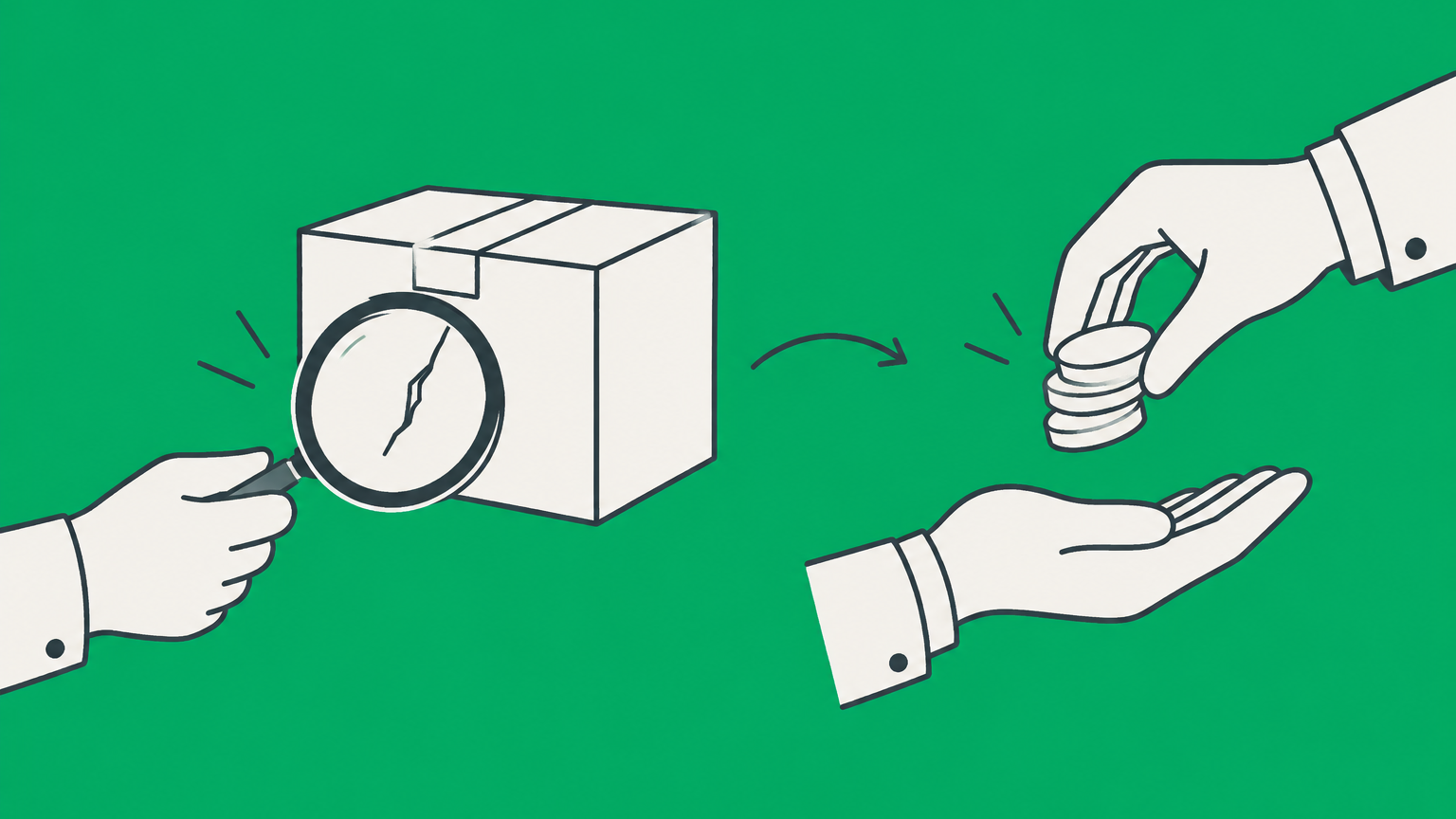
Caveat emptor is a Latin phrase meaning "let the buyer beware." The doctrine may require a buyer to inspect a purchase, investigate its condition, and understand the transaction before agreeing to it.
Key Takeaways
- Caveat emptor means "let the buyer beware," not that every buyer automatically accepts every risk.
- The doctrine generally encourages buyers to inspect property or goods and investigate material facts before purchasing.
- Fraud, concealment, misrepresentation, inaccurate descriptions, warranties, and contractual promises may prevent or limit its application.
- Modern consumer laws and disclosure requirements often shift some responsibility back to sellers.
- The applicable rules differ among real estate, consumer, goods, and business-to-business transactions.
- An "as is" clause may affect warranties, but it does not necessarily excuse deceptive conduct.
Caveat Emptor Meaning and Definition
The literal caveat emptor definition is "let the buyer beware." In practical terms, it tells a buyer not to assume that the seller guarantees an item's condition, quality, value, or suitability unless the seller makes such a promise or the law supplies one. The buyer may need to inspect the item, ask questions, review records, and evaluate whether the purchase meets the buyer's needs.
The word "caveat" does not mean "exception." It refers to a warning or caution. "Emptor" refers to the buyer. An exception to caveat emptor is a separate legal rule or fact that can limit the buyer-beware doctrine. Common online spellings such as "caveat empor" and "caveat emptir" are misspellings of caveat emptor.
The doctrine developed under common law when buyers often had fewer legal protections concerning defective property or goods. It reflected the view that a buyer should use personal judgment instead of assuming the seller would stand behind the purchase. Modern law is more protective in many settings, so the phrase alone rarely answers a dispute. The contract, type of transaction, seller's conduct, applicable warranties, and governing jurisdiction all matter.
How the Doctrine of Caveat Emptor Allocates Risk
The doctrine of caveat emptor may place the risk of discoverable problems on a buyer who had a reasonable opportunity to investigate before purchasing. For example, a buyer who can inspect used equipment but declines to do so may have difficulty complaining about an obvious condition later. The result can differ if the seller promised that the equipment worked, concealed damage, or supplied false maintenance records.
Caveat emptor does not eliminate the normal requirements of an enforceable agreement. The parties still must determine what is being sold, the price, the promised condition, and any remedies or limitations. Rules such as the doctrine of consideration in contract law address contract enforceability, while caveat emptor concerns how the transaction may allocate the risk of defects or unsuitability.
A court considering a caveat emptor dispute may examine what the buyer could reasonably discover, what the seller knew, what each party said, and what the written agreement provides. A sophisticated commercial buyer with access to records and inspection rights may face different expectations than an individual consumer buying a packaged product. The phrase is therefore a starting principle, not a substitute for reviewing the complete transaction.
Caveat Emptor Exceptions and Seller Conduct
Caveat emptor exceptions commonly involve conduct or legal protections that make it unfair or unlawful to leave the entire risk with the buyer. Their precise operation depends on the governing law. The following table identifies issues that frequently change the analysis.
| Situation | Possible Effect |
|---|---|
| The buyer could inspect an obvious condition and received no contrary promise | Caveat emptor may place the risk on the buyer. |
| The seller makes a material false factual statement | A misrepresentation claim or defense may be available if the required elements are satisfied. |
| The seller actively hides a material defect | Concealment may prevent the seller from relying on buyer beware. |
| The contract promises a particular condition or performance level | The express contract language may control instead of the general doctrine. |
| Goods do not match their description or an approved sample | The buyer may have contractual or statutory remedies. |
| An express or implied warranty applies | The warranty may give the buyer rights despite the buyer-beware principle. |
| A disclosure law requires the seller to reveal specific information | Failure to provide a required disclosure may create liability or another remedy. |
Silence is not automatically fraud, but a seller may have a duty to disclose in particular circumstances. A party accused of misleading conduct also may face equitable arguments, including principles related to the unclean hands doctrine. Because elements and remedies vary, verify the relevant statutes, court decisions, and contract language before relying on any listed exception.
Does Caveat Emptor Still Apply Today?
Yes, caveat emptor still applies in some modern transactions, but it is not a universal rule governing every purchase. Its importance often increases when parties negotiate at arm's length, the buyer receives meaningful inspection rights, and the agreement disclaims warranties or describes the property as being sold "as is." Even then, the wording and enforceability of those terms depend on applicable law.
Sales of goods in the United States may be governed by a state's version of Article 2 of the Uniform Commercial Code. Depending on the facts, express warranties or implied warranties of merchantability and fitness for a particular purpose may apply. A seller may attempt to disclaim or limit warranties, but the disclaimer must satisfy the governing legal requirements. Consumer protection laws can create additional rights that cannot always be waived.
Contract rights also can change hands. If a purchase agreement, warranty, or related claim is transferred, the rules governing assignability in contracts may determine who can enforce it.
If a material defect, disputed disclosure, alleged misrepresentation, or significant contract term could determine who bears the loss, you can post your legal need on UpCounsel's marketplace. An attorney can review the agreement and communications, identify applicable warranties or disclosure rules, evaluate claims and defenses, and advise you about a demand, negotiation, or litigation. Responses typically arrive within a day.
What Is Caveat Emptor in Real Estate?
In real estate, caveat emptor may require a buyer to investigate the property's physical and legal condition before closing. That investigation can include professional inspections, title review, surveys, zoning questions, repair records, environmental concerns, and confirmation that the property's permitted uses match the buyer's plans. A buyer should also track inspection and termination deadlines stated in the purchase agreement.
Seller responsibilities vary by state and transaction. Some jurisdictions require residential sellers to provide disclosures covering specified known conditions. Contract language may create additional representations concerning matters such as systems, boundaries, leases, code compliance, or pending claims. A seller's false statement or active concealment can produce a different result from a buyer's failure to notice a condition that was open to inspection.
An inspection report does not necessarily transfer every risk to the inspector or release the seller from separate obligations. Buyers should compare the report with the seller's disclosures and representations. They should raise inconsistencies before closing and document requests for repairs, credits, or additional investigation in writing.
Real estate rules are especially jurisdiction-specific. The property's location, whether it is residential or commercial, whether the seller built the property, and the exact contract terms may affect the outcome. If ordinary contract remedies are inadequate, principles of equity law may also become relevant to the relief a party requests.
Caveat Emptor for Goods, Business Deals, and Collectibles
Caveat emptor can affect used goods, specialized equipment, inventory purchases, business assets, and collectibles. A commercial buyer often has greater bargaining power and more opportunity to negotiate inspections, testing procedures, representations, indemnities, and remedies. Consumer buyers may receive stronger statutory protections. The identity of the seller also matters because some implied warranty rules apply specifically to merchants.
An ungraded baseball card illustrates why the details matter. If the buyer knows the card is ungraded, that fact alone may reduce the buyer's ability to claim that grading was promised. It does not resolve disputes about authenticity, alterations, ownership, condition, or false factual statements. Liability would depend on the listing, messages, photographs, agreed terms, available evidence, and governing law.
Before making a significant purchase, use this checklist:
- Inspect or test the property or goods, using a qualified professional where appropriate.
- Save advertisements, written descriptions, photographs, reports, and seller communications.
- Ask direct questions about defects, repairs, ownership, authenticity, and intended use.
- Identify every express warranty and determine whether an implied warranty may apply.
- Review "as is," disclaimer, limitation-of-liability, notice, and dispute-resolution provisions.
- Put promised repairs, performance standards, and condition requirements in the agreement.
- Document known defects and confirm which party accepts each identified risk.
Caveat venditor, meaning "let the seller beware," describes the modern expectation that sellers may need to disclose information or stand behind their products. Neither Latin phrase decides a case by itself.
| Principle | Primary Focus | Modern Limitation |
|---|---|---|
| Caveat emptor | The buyer investigates before purchasing. | Warranties, disclosures, promises, and seller misconduct may shift risk. |
| Caveat venditor | The seller provides accurate information and may bear product responsibility. | The buyer may still have inspection and due diligence obligations. |
Frequently Asked Questions
What Is Caveat Emptor in Business Law?
In business law, caveat emptor is a risk-allocation principle that may hold a buyer responsible for evaluating a transaction before committing to it. Businesses can address uncertainty by negotiating audit rights, acceptance testing, representations, indemnification, escrow arrangements, or price adjustments. These negotiated protections are often more useful than relying on the Latin maxim after a loss occurs.
What Is Caveat Emptor in Real Estate?
In real estate, caveat emptor signals that a buyer should independently verify facts that affect the property's value or intended use. Beyond physical inspections, that may include checking access rights, restrictions, tenants, permits, taxes, and planned developments. Which inquiries are appropriate depends on the property and the information available before closing.
Does Caveat Mean Exception?
No, "caveat" does not mean "exception." In legal and ordinary usage, a caveat is a warning, caution, or stated qualification. A caveat emptor exception is instead a circumstance, such as an applicable warranty or actionable deception, that may keep the buyer-beware doctrine from determining the outcome.
Is Caveat Emptor Still Relevant Today?
Yes, caveat emptor remains relevant because buyers still must make informed decisions and protect themselves through investigation and negotiation. Its practical force is strongest where legal protections are limited or validly disclaimed. It is less decisive when mandatory consumer rights, disclosure duties, safety rules, or specific contractual remedies govern the transaction.
Does Caveat Emptor Still Apply to an As-Is Sale?
It may, but an "as is" label does not automatically end every dispute. A court may consider whether the clause effectively disclaimed relevant warranties, whether the buyer had an opportunity to inspect, and whether the seller made inconsistent promises. Fraud, concealment, and nonwaivable statutory rights may remain significant despite the clause.
Is a Seller at Fault for Selling an Ungraded Baseball Card?
Not necessarily, because selling a card as ungraded is different from guaranteeing its grade, authenticity, or condition. The central questions include what the seller represented, what the buyer already knew, and whether either party withheld material facts. Marketplace terms and payment-service protections may also affect the parties' practical options.
What Does Buyer Beware Mean?
"Buyer beware" means you should not rely on assumptions when deciding what to purchase. Confirm the facts that matter to you and obtain important promises in writing. The phrase encourages caution, but it does not grant sellers permission to lie, conceal information they must disclose, or ignore binding warranties and contract terms.


