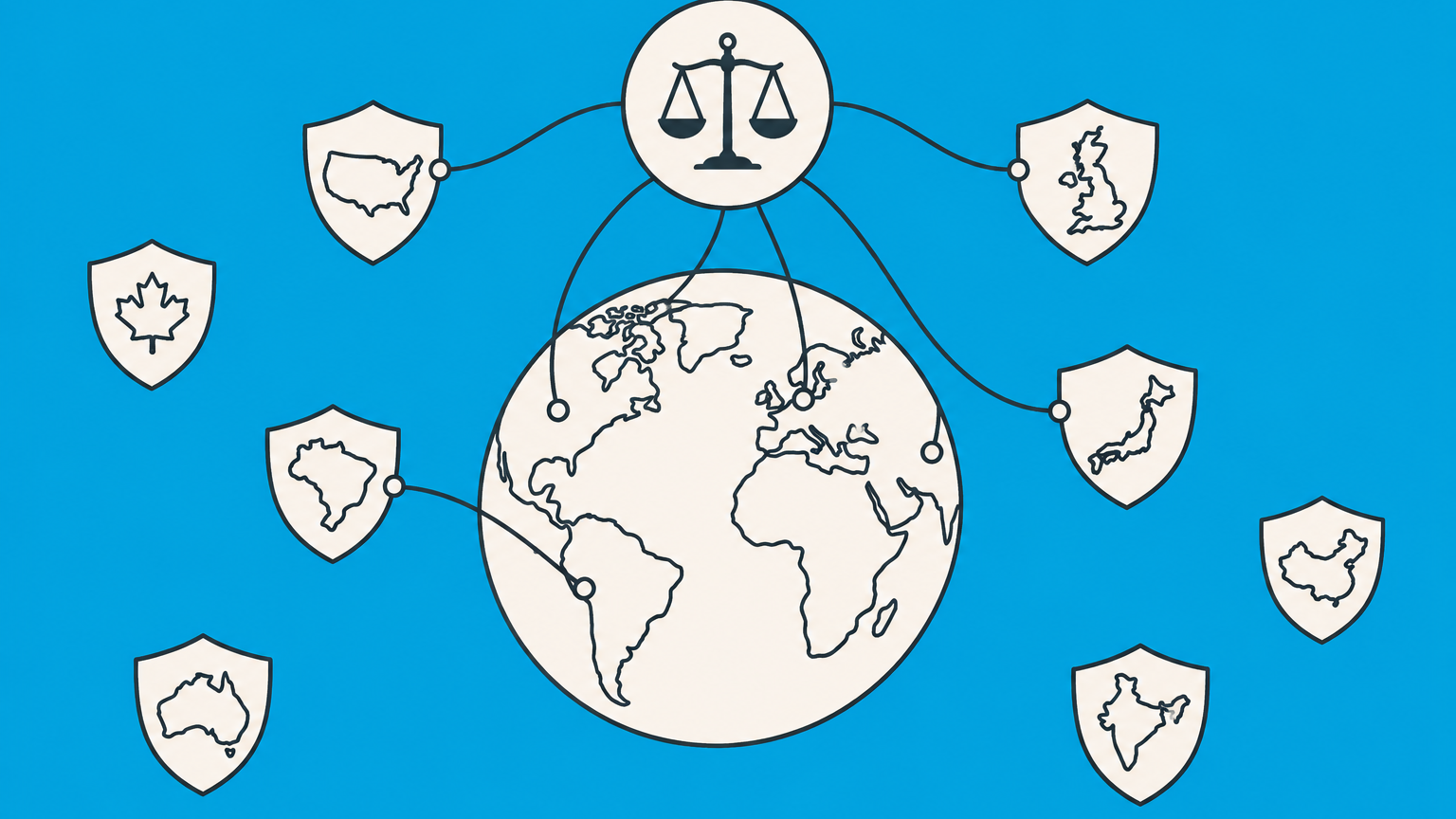
International trademark registration can protect your name, logo, or other brand identifiers in selected foreign markets. It does not create one automatically enforceable worldwide trademark, so your strategy must account for country-specific rights.
Key Takeaways
- Trademark rights are territorial, and a U.S. registration generally does not protect your brand in another country.
- The Madrid System streamlines applications for selected member countries, but each designated trademark office decides whether to grant protection.
- Regional options include the European Union Trade Mark, while other regions may use coordinated national systems.
- Direct national applications may be necessary or strategically preferable in certain countries.
- Your filing plan should reflect where you sell, manufacture, license, franchise, or expect to expand.
- Registration does not monitor the market or automatically stop infringement. Those tasks require a separate enforcement plan.
International Trademark Registration Does Not Create Worldwide Rights
A trademark registration gives you rights within the territory covered by the issuing authority. For example, a registration from the U.S. Patent and Trademark Office generally provides U.S. rights. It does not automatically prevent another company from using or registering the same brand in another country.
You also cannot register a trademark globally through one filing that produces identical rights everywhere. The Madrid System, administered by the World Intellectual Property Organization, lets eligible applicants submit one international application and designate participating countries or regions. However, each designated office applies its own trademark law. One office may approve your mark while another refuses it because of an earlier local registration, lack of distinctiveness, or another legal issue.
This distinction matters when planning international brand registration. A centralized application can simplify filing and portfolio administration, but the resulting protection remains a collection of territorial rights. Enforcement also occurs under the applicable national or regional law.
Early filing may be especially valuable where registration determines priority or where your public visibility creates a risk that another party will apply first. Consider countries where you already have customers, distributors, manufacturers, licensees, or significant online sales. Future launch markets may also deserve attention. You can review broader principles of protecting intellectual property globally before deciding which assets and jurisdictions belong in your plan.
Madrid, EU, Regional, and National Filing Routes Compared
The best filing route depends on your home-country eligibility, target markets, budget, and tolerance for portfolio risk. A centralized route may reduce administrative work, while direct applications can provide independent national registrations and more flexibility under local practice.
| Route | Geographic Scope | Filing and Administration | When It May Fit |
|---|---|---|---|
| Madrid System | Countries and intergovernmental organizations participating in the Madrid System | An eligible applicant files through its office of origin. WIPO reviews formal requirements, and each designated office examines the request under local law. | You want protection in several participating markets and prefer centralized filing, renewal, and record changes. |
| European Union Trade Mark | All 27 European Union member states | A single application seeks one unitary registration administered by the European Union Intellectual Property Office. | Your business needs broad EU coverage rather than protection in only one or two member states. |
| Andean regional framework | Bolivia, Colombia, Ecuador, and Peru | Common rules coordinate trademark law, but applicants generally seek rights through the relevant national offices rather than receiving one Andean registration. | You need protection in one or more Andean Community countries and can coordinate national filings. |
| Direct national application | One country per application | You file with the country's trademark office, often with assistance from local counsel. | The country is outside your available centralized route, or local strategy favors an independent application. |
An EU Trade Mark, formerly called a Community Trade Mark, can provide uniform EU-wide coverage. A national application remains available if your business needs rights in only one EU country or if a unitary application presents avoidable risk. Check current membership, filing rules, and designation options through WIPO's Madrid System resources before filing.
How to Register a Trademark Worldwide From the United States
To register a trademark worldwide in the practical sense, you must build a portfolio covering your selected countries. A U.S.-based applicant commonly uses the following process:
- Define the mark. Decide whether you need protection for a word or name, a logo, or both. A word-mark registration may address the wording itself, while a design-mark registration protects the particular visual presentation shown in the application.
- Identify the owner. Confirm whether an individual, corporation, limited liability company, or another entity owns and uses the brand. Inconsistent ownership information can create filing problems.
- Search relevant markets. Review federal U.S. records and conduct appropriate searches in each priority country. Searching only identical wording is rarely enough because similar marks may create conflicts.
- Establish the U.S. basis. A Madrid application submitted through the USPTO must be based on a qualifying U.S. application or registration. The international application must correspond to that basic mark and cannot exceed its listed goods or services.
- Select countries and classes. Designate participating markets through Madrid where appropriate. Prepare direct or regional applications for other territories.
- Submit the application. For the Madrid route, the USPTO certifies qualifying information before transmitting the application to WIPO. WIPO reviews formalities and records the international registration if the requirements are satisfied.
- Respond to each office. Designated offices conduct their own examinations. A refusal in one country does not necessarily prevent protection elsewhere, but responding may require local counsel.
The USPTO's trademark resources provide current U.S. filing instructions. Confirm the latest procedural requirements before submitting an application.
Choosing Countries, Classes, and the Right Version of Your Brand
You do not necessarily need registration in every country. Prioritize markets according to commercial and legal risk. Start with places where you sell or plan to launch. Then consider where you manufacture, source products, license the brand, operate franchises, maintain distributors, or face meaningful counterfeiting exposure.
Your goods and services determine the scope of an application. Trademark offices group goods and services into international classes, but classification does not eliminate the need for precise descriptions. Filing in too few classes may leave important products uncovered. Filing broad descriptions without a legitimate business basis can increase costs, invite conflicts, or create future use issues. Review international trademark classes when mapping your current and planned offerings.
Names and logos may require separate applications because they protect different elements. If a logo changes frequently, a word mark may offer more durable coverage for the brand name, assuming the wording qualifies for protection. A distinctive logo may still merit its own filing. You should also assess slogans, product names, packaging, and local-language versions that customers will encounter.
Translations and transliterations require special attention. A transliteration represents a word in another writing system, while a translation conveys its meaning in another language. Search both where relevant. Confirm that the proposed wording is distinctive, culturally appropriate, and not already associated with another business in the target market.
Costs, Examination, and Common Filing Requirements
The cost of international trademark registration depends on the filing route, countries selected, number of classes, office fees, translation needs, and professional assistance. Oppositions, examiner refusals, and local representation can add substantial expense. Because official fees and currency conversions change, obtain current figures from the applicable offices before setting a budget.
A Madrid filing involves fees connected to the international application and the designated jurisdictions. Some members charge individual fees. Direct national and regional applications use their own fee structures. Compare the complete portfolio cost rather than relying only on the initial application fee.
Timing also varies. WIPO's formal review does not replace examination by each designated office. National examiners may evaluate distinctiveness, prohibited matter, prior rights, classification, and other local requirements. Applications may also be published so third parties can oppose them.
For a Madrid registration, the international rights initially depend on the basic home application or registration for a defined period under Madrid rules. A successful challenge to the basic mark during that dependency period can affect the international registration. Direct national applications do not share that same dependency, which may influence the route chosen for a valuable or contested brand.
If you need help selecting jurisdictions and classes, evaluating conflicting marks, answering an office action, or addressing infringement abroad, you can post your legal need on UpCounsel's marketplace. An international trademark attorney can develop the filing strategy, coordinate Madrid or local applications, respond to examiners, and work with foreign counsel on enforcement. Responses typically arrive within a day.
Common Challenges in International Trademark Protection
Earlier local rights are among the most common obstacles. A mark available in the United States may conflict with a registration, pending application, trade name, or protected unregistered right elsewhere. Search depth should reflect the importance and risk of each market.
Weak marks create another challenge. Generic terms generally cannot function as trademarks for the relevant goods or services, and descriptive wording may receive limited protection or face refusal. Distinctive branding usually provides a stronger foundation for global trademark protection. A broader overview of trademark protection strategies can help you evaluate the strength and scope of a proposed mark.
Other cross-border complications include:
- Different examination rules: Trademark offices may reach different conclusions about the same mark.
- Translation and cultural issues: A name may carry an unintended meaning or resemble an existing local brand.
- Ownership inconsistencies: Applications filed by the wrong affiliate or founder may require correction or transfer.
- Use requirements: Some registrations can become vulnerable if the owner does not use the mark as required under local law.
- Missed maintenance: Renewal and declaration requirements vary by jurisdiction.
- Overbroad planning: Filing everywhere can consume funds that would be better directed toward commercially important markets.
Create a docket for deadlines, ownership changes, licenses, renewals, and evidence of use. Revisit the portfolio when you launch products, enter countries, change logos, add local-language branding, or restructure the business.
Global Trademark Registration, Monitoring, and Enforcement
Registration and enforcement are separate activities. A trademark office does not continuously search stores, domain registrations, social media, online marketplaces, or new applications to protect you. Global trademark registration and monitoring should therefore operate as related but distinct parts of your brand strategy.
A monitoring program can watch for similar trademark applications, unauthorized marketplace listings, counterfeit products, confusing domain names, and misuse by distributors or former partners. The appropriate scope depends on your brand's value, exposure, and enforcement budget. Preserve screenshots, listings, invoices, packaging, correspondence, and information identifying the seller before content disappears.
Global trademark enforcement solutions may include marketplace complaints, opposition or cancellation proceedings, cease-and-desist letters, negotiated coexistence or licensing terms, customs recordation, and court action. The available remedy depends on the country, your registrations, the alleged use, and the likelihood of consumer confusion. Local counsel may need to handle administrative actions or litigation.
Prioritize cases according to harm. Counterfeit goods, safety risks, misuse by a major distributor, or a conflicting application in a core market may demand quick action. A minor use with no realistic customer overlap may justify monitoring rather than immediate litigation. Consistent decision-making helps conserve resources and avoids positions that could weaken later enforcement.
Licensing agreements should define territory, permitted goods or services, quality controls, approved branding, online sales, sublicensing, and termination rights. Manufacturing and distribution contracts should also address ownership, unauthorized production, and the handling of branded inventory after the relationship ends.
Frequently Asked Questions
How Do I Register a Trademark Worldwide?
You cannot obtain one trademark that automatically applies worldwide. Build coverage by combining Madrid designations, regional registrations, and direct national applications based on your priority markets. A phased plan can reserve funds for launches and enforcement instead of filing immediately in countries with no realistic business connection.
How Do I Trademark a Name?
You trademark a name by using it to identify goods or services and applying for registration in the territories where you need protection. Before adopting it, review similar spellings, pronunciations, meanings, and commercial impressions. Registering a company or domain name alone does not necessarily establish the same rights as a trademark registration.
How Do I Register a Trademark Name Internationally?
You can register a trademark name internationally by selecting a filing route for each target jurisdiction and submitting applications that identify the owner, mark, and covered goods or services. Keep the spelling and ownership consistent across filings. If customers use a translated or transliterated version, consider searching and protecting that version separately.
How Do I Register a Trademark in Argentina?
To register a trademark in Argentina, verify the current filing route with WIPO and Argentina's official trademark authority before applying. If Argentina is not available through your Madrid filing, you will generally need a direct national application. Local requirements may affect representation, acceptable descriptions, examination, opposition, and evidence needed to maintain the registration.
How Can I Protect My Brand Name Globally?
You can protect your brand name globally by combining targeted registrations with contracts, monitoring, customs measures where available, and prompt enforcement. Control how manufacturers, distributors, franchisees, and licensees use the mark. Maintain records showing ownership and authorized use, especially when several affiliated companies operate under the same brand.
How Much Does It Cost to Trademark Internationally?
International trademark costs vary according to the number of jurisdictions, classes, marks, translations, searches, and legal issues involved. Budget separately for filing, examination responses, oppositions, renewals, monitoring, and enforcement. Request current official fees and professional estimates for each planned market, since a low initial filing cost may not reflect the portfolio's total expense.


