A payment agreement contract records the parties' payment obligations for services, products, loans, installment purchases, or existing debts. A useful agreement identifies the transaction, states when and how money changes hands, and addresses late, partial, disputed, or failed payments.
Key Takeaways
- A payment agreement is not limited to loans. It can cover services, products, existing debts, personal lending, or installment purchases.
- State the amount, payment trigger, due date, method, and recipient for every required payment.
- Match the payment structure to the transaction, such as lump-sum, installment, milestone, or variable payments.
- Explain what happens after a late, partial, disputed, or failed payment.
- Document schedule or scope changes in a written amendment signed by the affected parties.
- Check applicable state rules before imposing interest, late charges, collection costs, or other remedies.
What Is a Payment Agreement Contract?
A payment agreement contract is a written agreement that creates and describes payment duties between two or more parties. One party may promise to provide money in return for services, goods, transferred property, repayment of a debt, or another agreed performance. The other party may promise to perform work, deliver a product, extend credit, or accept scheduled repayment.
The document is not automatically enforceable merely because it is titled a payment agreement. Enforceability depends on the facts, the contract's terms, applicable law, and ordinary contract requirements such as mutual agreement, legal capacity, a lawful purpose, and consideration where required. The parties should clearly accept the same material terms and sign the final version.
A payment contract also does more than serve as a receipt. A receipt generally confirms that a transaction occurred. An agreement establishes obligations that may continue into the future, including payment deadlines, performance conditions, notice procedures, and remedies. Keeping the signed agreement, invoices, payment confirmations, notices, and amendments together creates a clearer transaction record.
The correct document depends on the underlying deal. A service provider may need a contract connecting fees to deliverables. A lender may need a loan agreement or promissory note. Parties settling an unpaid invoice may need an agreement acknowledging and restructuring money owed. For a focused comparison, see this explanation of a payment contract between two parties.
Terms Every Payment Agreement Should Address
Start with enough detail to identify the parties and eliminate uncertainty about the transaction. Use each party's full legal name, address, and role, such as customer, service provider, buyer, seller, lender, or borrower. If a business is involved, use its correct legal entity name rather than only a trade name.
The payment terms agreement should then cover these core points:
- Underlying obligation: Describe the product, service, loan, purchase, invoice, or existing debt that supports the payment obligation.
- Total amount: State the fixed total or provide an objective formula for calculating a variable amount.
- Payment timing: List exact dates or objectively verifiable triggers, such as delivery or written acceptance of a milestone.
- Payment method: Identify permitted methods, currency, payment destination, and responsibility for transaction fees.
- Interest and charges: State whether interest, late fees, or returned-payment charges apply, subject to applicable law.
- Performance duties: Explain what the receiving party must provide and any acceptance procedure.
- Default and remedies: Define default, required notice, any opportunity to cure, and available contractual responses.
- Effective date and signatures: State when the agreement begins and provide signature blocks for all parties.
Also address prepayment, partial payments, taxes, invoicing, payment application, and final balances when relevant. If another contract already governs the transaction, say how the documents interact and which provision controls if they conflict. Parties starting from a broader form may also consult a legal agreement template between two parties.
How to Write a Contract Agreement for Payment
Write the agreement in the order a reader will use it. First identify the parties and transaction. Next state the payment promise and schedule. Then cover performance, problems, changes, and signatures. Define any term that has a special meaning, and use that term consistently throughout the document.
The following payment agreement template outline is copyable, but it is not universally valid and should be adapted to the transaction and governing law:
- Title and effective date: Name the document and state when it takes effect.
- Parties: Insert each legal name, address, entity type if applicable, and contractual role.
- Purpose: Describe the product, service, loan, installment purchase, invoice, or debt.
- Payment obligation: Insert the total amount or calculation formula and applicable currency.
- Schedule: List each amount, exact due date or objective trigger, and final payment date.
- Method: State where and how payment must be delivered and when it counts as received.
- Additional terms: Address interest, permitted charges, prepayment, partial payment, taxes, and allocation.
- Payment problems: Define notice, cure rights, default, termination, dispute resolution, and remedies.
- General provisions: Cover governing law, amendments, notices, assignment, and the complete agreement.
- Signatures: Provide dated signature blocks for each party and authorized representatives.
Review names, figures, dates, cross-references, and exhibits before signing. Remove unused alternatives from any payment agreement form. For service transactions, connect fees to a defined scope and acceptance process. This guide to payment for services contracts explains terms specific to client and provider relationships.
Choosing Payment Plans and Building a Clear Schedule
The payment structure should reflect how performance occurs and which party carries financial risk. Avoid using a milestone merely because it appears on a template. The trigger must be measurable enough for both parties to determine when payment becomes due.
| Structure | Payment Trigger | Amount Certainty | Scheduling Need | Common Drafting Risk |
|---|---|---|---|---|
| Lump-sum | Signing, delivery, completion, or a stated date | Usually fixed | One deadline | Unclear meaning of completion or acceptance |
| Installment | Recurring dates or scheduled stages | Usually fixed by installment | Numbered payments and final date | Totals, interest, or remaining balance do not reconcile |
| Milestone-based | Completion or approval of defined work | Fixed or percentage-based | Objective milestone and review process | A disputed milestone delays payment indefinitely |
| Variable | Usage, hours, sales, units, or another formula | Calculated later | Measurement and reporting periods | Missing data source, cap, audit right, or calculation rule |
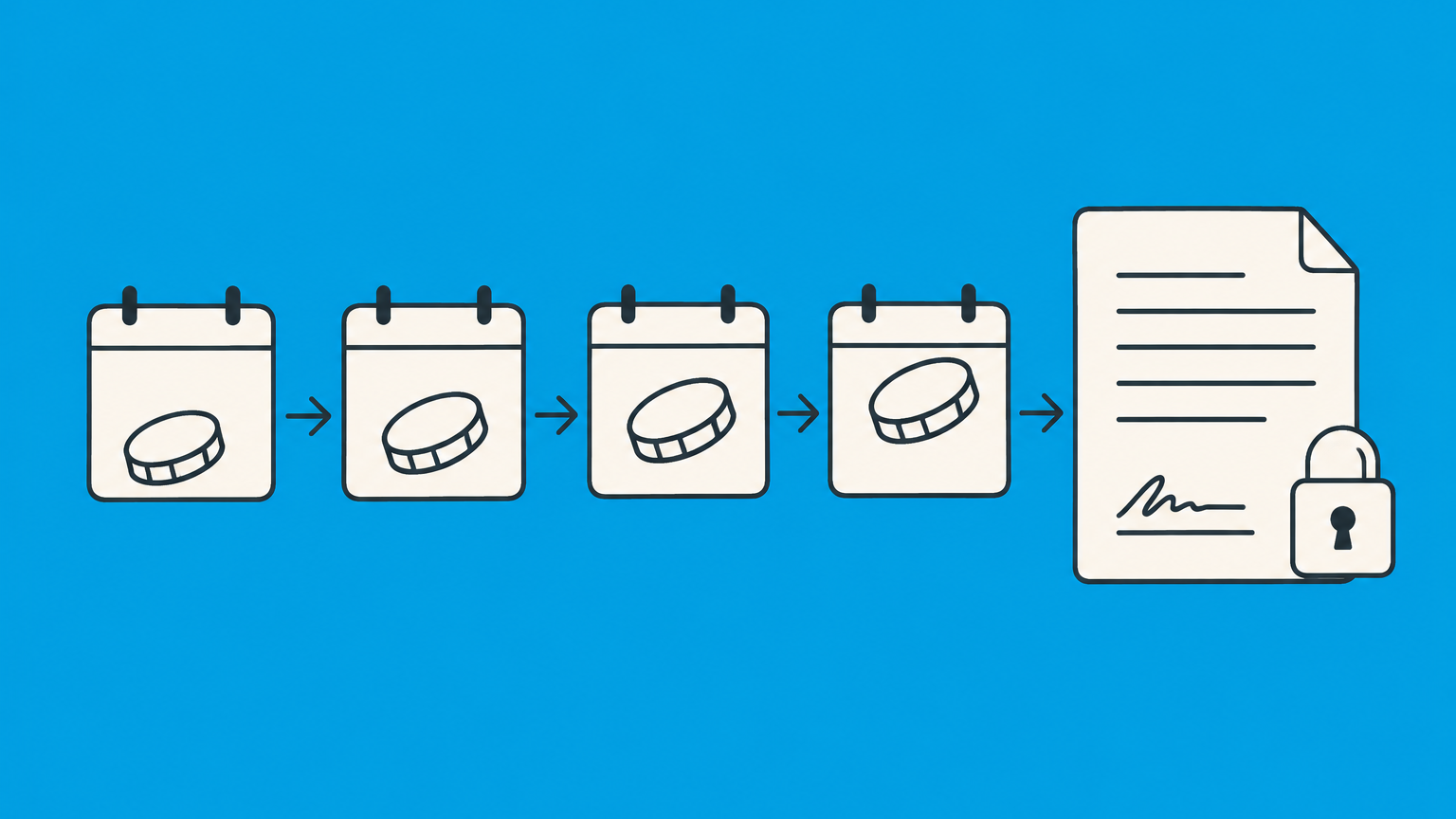
For installments, number each payment and state its amount, due date, and remaining balance. If interest applies, explain the rate and how payments are allocated between principal, interest, and authorized charges. State the final payment date instead of relying only on a phrase such as "12 monthly payments." Confirm that all installments add up to the expected total.
For milestones, describe the deliverable, who decides whether it meets the requirements, the review period, and how objections must be raised. If project scope changes, specify how the parties will approve a revised price and schedule. An installment payment contract may be appropriate when the transaction requires several scheduled payments.
Business, Service, Debt, and Payment Processing Agreements
The phrase payment agreement can describe several different documents. Selecting the right type helps prevent a form designed for one transaction from creating gaps in another.
- Business or service agreement: Connects payment to work, deliverables, reimbursable expenses, acceptance, and scope changes.
- Product purchase agreement: Coordinates price with delivery, inspection, acceptance, title transfer, and any installment arrangement.
- Existing-debt agreement: Records an acknowledged balance and a repayment plan, sometimes as part of a settlement or forbearance arrangement.
- Personal loan agreement: Documents money advanced by a lender and the borrower's repayment obligations, including interest if applicable.
- Installment contract: Divides the price or debt into scheduled payments and may address when ownership or other rights transfer.
If money is already due, avoid language suggesting that a new advance is being made unless that is accurate. Identify the original obligation, the balance the parties recognize, and the effect of the new schedule on existing rights. See how to draft an agreement for money owed for that situation.
A payment processing agreement is different. It governs how a processor or financial service provider authorizes, transmits, settles, reverses, or handles electronic transactions and account information. A debt-repayment template usually will not address processing authorization, settlement timing, chargebacks, reserves, security responsibilities, or account access. If your goal is legal document payment processing, first determine whether you need a customer payment obligation, a processor agreement, or both.
Missed Payments, Edge Cases, and State-Law Issues
Define what happens when payment does not arrive as promised. The agreement should state when a payment becomes late, how notice must be sent, whether the payer receives time to cure, and what constitutes default. If the contract permits termination, accelerated payment, suspended services, collection costs, interest, or late fees, describe the remedy clearly and check whether applicable law restricts it.
Plan for less obvious problems as well. State whether early payment is allowed and whether it changes interest or other charges. Explain how partial payments are applied and whether accepting one waives the remaining balance. Address failed transfers, returned checks, incorrect account information, and who bears permitted processing costs. For disputed milestones, create a process for objections and payment of any undisputed amount.
Changed work can also undermine an otherwise clear schedule. Require a written amendment or change order when the scope, price, milestones, or due dates change. The amendment should identify the original agreement, list the revised terms, and be signed by authorized parties. Informal emails can create factual disputes about what the parties intended.
When an agreement involves substantial money, interest or late charges, collateral, disputed obligations, multiple jurisdictions, or an existing default, an attorney can select the appropriate document, customize payment and remedy clauses, check state requirements, and negotiate or document revisions. You can post your legal need on UpCounsel's marketplace, where responses typically arrive within a day.
Signature rules, interest limits, late-fee restrictions, electronic-contract requirements, governing-law rules, and available remedies can differ by state and transaction. Before relying on a clause, verify the current law through the applicable state legislature, attorney general, and court resources. Consumer, lending, employment, construction, and real estate transactions may require additional terms or disclosures.
Signing, Managing, and Amending the Payment Contract
Before signing, compare the payment contract against the quote, invoice, purchase order, loan records, project scope, and related agreements. Resolve inconsistent totals, dates, acceptance standards, or remedies. Each party should receive the same final version, including all schedules and exhibits referenced in the agreement.
Confirm that the signer has authority to bind any business entity. Date each signature and follow any agreed procedure for electronic or handwritten execution. Electronic signatures may be valid in many transactions, but requirements and exceptions can vary. Check the law and any industry-specific rules that apply to your agreement rather than assuming every document can use the same process.
After execution, keep a complete record of invoices, receipts, account statements, payment confirmations, notices, approvals, and correspondence. Update an internal balance after every installment, but do not alter the signed document itself. If the parties agree to extend a deadline or revise the schedule, use a signed amendment that states which terms change and confirms that the remaining provisions continue.
Avoid silently accepting repeated deviations from the schedule. A course of conduct may complicate later disagreements about strict enforcement. Send required notices using the contract's stated method and preserve delivery evidence. If a payment is disputed, separate the disputed portion from amounts the payer agrees are due, when the contract and applicable law allow it. Clear records help the parties resolve mistakes before they become larger contract disputes.
Frequently Asked Questions
How Do You Write a Contract Agreement for Payment?
Write a contract agreement for payment by matching the final document to the actual transaction records. Reconcile the contract with proposals, invoices, purchase orders, account statements, and prior communications, then state which document controls if terms conflict. This prevents an otherwise careful draft from creating two different prices, deadlines, or acceptance standards.
How Do You Write a Payment Contract Without a Lawyer?
You can write a basic payment contract by using plain language and removing every unused or inapplicable template clause. Have the other party review the complete draft before signing, and do not leave blanks to fill in later. Legal review becomes more valuable when the arrangement includes regulated lending, collateral, consumers, disputed debt, or significant financial exposure.
How Do You Make a Payment Agreement Letter?
Make a payment agreement letter by addressing it to the other party, identifying the obligation, stating the agreed payment arrangement, and requesting acceptance through a dated signature. A letter can be practical for a straightforward arrangement, but both parties should retain the signed version and evidence showing when and how it was delivered.
What Is a Payment Agreement?
A payment agreement is a mutual arrangement defining how one party will pay another in connection with a transaction or obligation. It may appear as a standalone contract, a clause within a broader contract, a signed letter, or a settlement document. Its title matters less than the actual promises, surrounding facts, and applicable law.
How Can My Business Agree to a Spot Contract for a Payment?
Your business can arrange a spot contract by working with its bank or foreign-exchange provider to document the currencies, amount, exchange rate, settlement date, destination accounts, and fees. Because spot foreign-exchange transactions differ from ordinary customer payment agreements, review the provider's cancellation, authorization, and settlement terms before confirming the trade.
What Is a Payment Schedule?
A payment schedule is a record of the separate payments required under an agreement and the event or date that makes each one due. A useful schedule also explains how weekends, holidays, disputed calculations, and payment-processing delays affect timeliness. It can be included in the contract or attached as a referenced exhibit.


