Patent eligibility asks whether an invention is the kind of subject matter that can qualify for a U.S. patent. It is only the first threshold, so an eligible invention can still fail the separate requirements for utility, novelty, nonobviousness, or adequate disclosure.
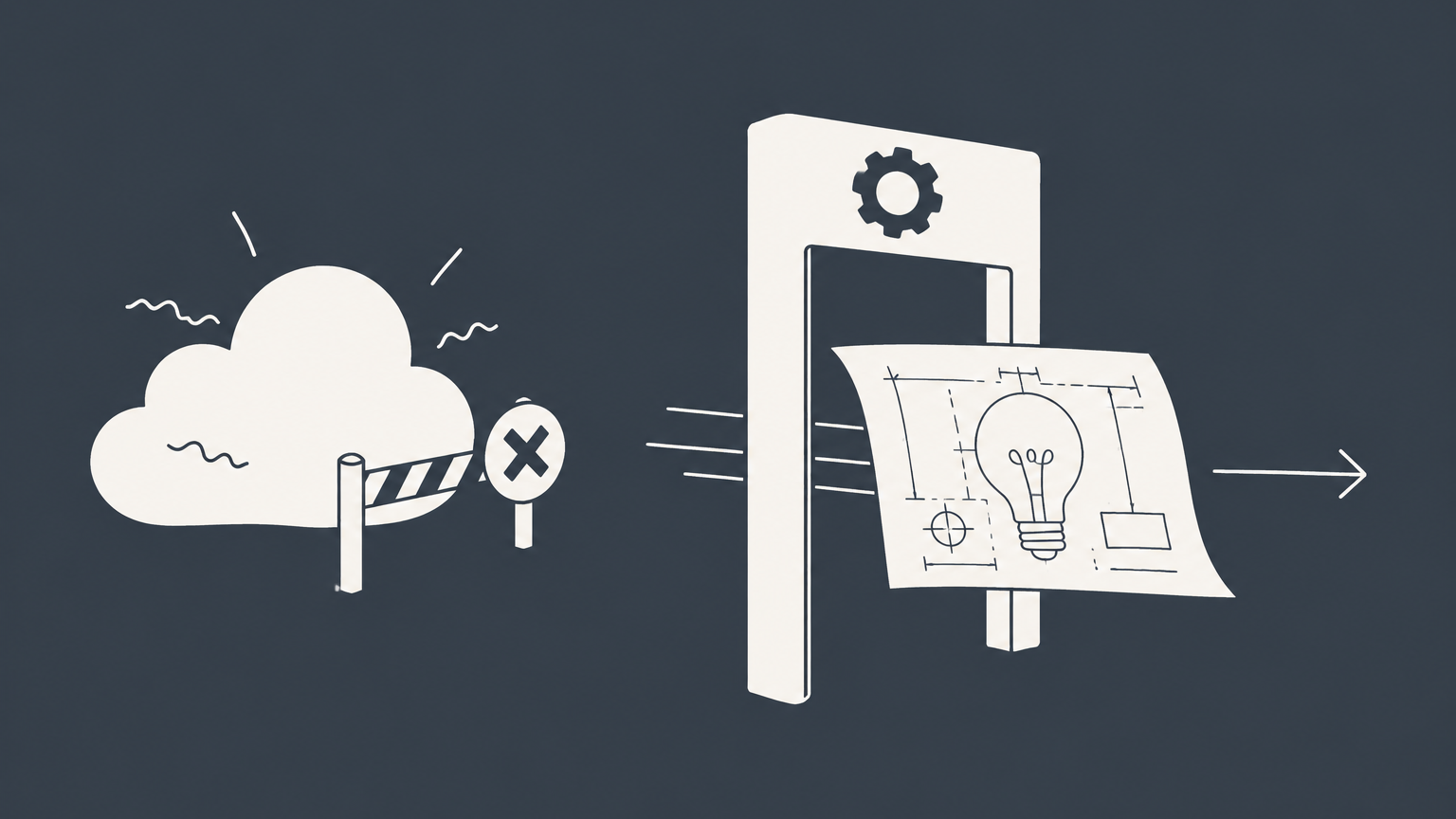
Key Takeaways
- Section 101 recognizes processes, machines, manufactures, compositions of matter, and improvements as statutory categories.
- Laws of nature, natural phenomena, and abstract ideas are judicial exceptions to patent eligibility.
- The Alice framework asks whether a claim is directed to an exception and, if so, whether it contains an inventive concept.
- Software is not automatically eligible or ineligible. Specific technological improvements are generally stronger than desired results implemented on a generic computer.
- A patent search can uncover prior art, but it does not independently answer the Section 101 eligibility question.
- Trade secrets and confidentiality agreements may offer alternatives when patent protection does not fit.
What Is Patent Eligibility?
Patent eligibility is the threshold inquiry under 35 U.S.C. Section 101. The statute covers any new and useful process, machine, manufacture, or composition of matter, as well as a new and useful improvement to one of those categories. An invention must first fit within a statutory category before the USPTO considers the remaining patentability requirements.
Courts have long recognized three exceptions: laws of nature, natural phenomena, and abstract ideas. Examples can include a mathematical relationship by itself, a naturally occurring phenomenon merely discovered in nature, or a fundamental economic practice claimed at a high level. A practical application of an underlying principle may qualify, but simply adding conventional steps or saying to perform an idea on a computer may not be enough.
Eligibility concerns the claimed invention, not the inventor's occupation, citizenship, or business status. The common question, "Who cannot be patented?" uses the wrong subject. A person cannot be patented. The legal question is what claimed subject matter can receive patent protection and whether the proper inventor or inventors are named.
This page addresses U.S. federal patent law. Other countries may use different terminology and standards. Also, eligibility has different meanings outside patent law. For unrelated requirements, see the separate guides to FMLA eligibility requirements, green card requirements, and 501(c)(3) nonprofit eligibility.
Patent Eligibility Versus the Other Patent Requirements
Eligibility does not establish that an invention deserves a patent. It identifies the kinds of subject matter the patent system may consider. The USPTO can reject an eligible machine or process because someone disclosed it earlier, the differences from prior art would have been obvious, it lacks a specific and substantial utility, or the application does not adequately teach and claim the invention.
| Requirement | Main Question | Typical Legal Focus |
|---|---|---|
| Subject-matter eligibility | Is this a type of invention patent law can protect? | Section 101 and the judicial exceptions |
| Utility | Does the claimed invention have a credible and specific use? | Section 101 |
| Novelty | Was every element already disclosed in qualifying prior art? | Section 102 |
| Nonobviousness | Would the claimed differences have been obvious to a person of ordinary skill? | Section 103 |
| Disclosure and claim requirements | Does the application adequately describe, enable, and distinctly claim the invention? | Section 112 |
People sometimes describe these as the five requirements for a patent. That shorthand groups eligibility, usefulness, novelty, nonobviousness, and adequate disclosure. The exact analysis is more detailed because an application must also comply with procedural rules, and Section 112 contains several distinct requirements.
The phrase "three criteria" often refers internationally to novelty, inventive step, and industrial applicability. In U.S. practice, "inventive step" is generally called nonobviousness. Those three concepts do not replace the separate U.S. inquiries into eligible subject matter and adequate disclosure. Passing one requirement never guarantees that you will pass the others.
How Section 101 and the Alice Test Work
The Supreme Court's Mayo and Alice decisions provide a two-step framework for claims involving a possible judicial exception. Before applying it, ask whether the claim falls within a statutory category such as a process, machine, manufacture, or composition of matter.
- Determine whether the claim is directed to a judicial exception. The decision-maker considers whether the claim, viewed as a whole, focuses on a law of nature, natural phenomenon, or abstract idea. Common abstract-idea concerns include mathematical concepts, certain methods of organizing human activity, and mental processes.
- Look for an inventive concept. If the claim is directed to an exception, consider the elements individually and as an ordered combination. The additional features must transform the claim into a patent-eligible application. Merely instructing a generic computer to carry out an abstract idea ordinarily does not supply that transformation.
The word "inventive" in this test can cause confusion. The inventive-concept analysis under Section 101 is not identical to the nonobviousness inquiry under Section 103. Eligibility focuses on whether the claim does more than monopolize an excluded building block. Nonobviousness compares the claimed invention with prior art from the perspective of a person having ordinary skill in the field.
Claim characterization often controls the result. A claim should not be reduced to isolated verbs such as "receiving," "analyzing," or "generating." Courts examine the claim's character as a whole while still considering what each limitation contributes. At the same time, technical-sounding language cannot save a claim that merely states a goal and directs an ordinary computer to achieve it.
Software Patent Eligibility After Alice and McRO
Software is not categorically excluded from patent protection. The strongest eligibility position usually identifies a specific technological problem, the particular mechanism used to solve it, and how the claimed combination improves technology. Claims that recite only a business result, data analysis goal, or manual practice performed with generic computer functions face greater Section 101 risk.
Parker v. Flook involved a method for updating alarm limits using a mathematical formula. The Supreme Court concluded that limiting the formula to a field and adding conventional post-solution activity did not make the claim eligible. In contrast, Diamond v. Diehr treated claims as a whole and upheld a rubber-curing process that used a mathematical formula as part of an industrial process. Together, the cases illustrate the difference between claiming a formula and claiming a concrete application.
McRO, Inc. v. Bandai Namco Games America Inc. provides a useful software example. The claims concerned automated lip synchronization and facial expressions for animated characters. The Federal Circuit focused on the claimed rules that evaluated phoneme sequences and generated animation data. Those specific rules differed from the subjective process previously used by human animators and limited how the result was achieved.
McRO does not mean that every rule-based algorithm is eligible. Its practical lesson is that a claim should identify the means that produce the improvement instead of claiming every way to reach a desired result. The specification should explain the prior technical problem, the operation of the proposed solution, meaningful claim limitations, and alternative implementations. Specificity can support eligibility, although the application must also provide enough disclosure and avoid unnecessary limitations that make enforcement impractical.
If you must draft claims around a possible abstract idea or answer a Section 101 rejection, you can post your legal need on UpCounsel's marketplace. A patent attorney can assess the invention, identify its claimed technological improvement, revise the claims, and prepare arguments for the USPTO. Responses typically arrive within a day, helping you compare attorneys before deciding how to proceed.
Patent Eligibility Examples and Warning Signs
The outcome depends on the actual claim language, not the invention's label. The following examples illustrate common differences, but they do not predict how the USPTO or a court will decide a specific application.
- Potentially stronger software claim: A defined data-processing technique changes how a computer stores, retrieves, or processes information and recites the structures or steps responsible for that improvement.
- Potentially weaker software claim: A claim states a commercial objective, such as managing a transaction or recommending a product, and adds ordinary computer components without explaining a technological solution.
- Potentially stronger manufacturing claim: A process uses measurements and controls as part of a specific operation that transforms material or improves industrial equipment.
- Potentially weaker mathematical claim: A claim covers a formula, calculation, or relationship and adds only data collection or insignificant activity after the calculation.
- Potentially stronger life-sciences claim: A claim applies a natural relationship through additional steps or materials that meaningfully limit the practical application.
- Potentially weaker discovery claim: A claim attempts to control a naturally occurring product or natural relationship without a qualifying application.
Warning signs include describing the invention only by its intended outcome, using generic computer terms as placeholders, and failing to explain how the components interact. Other concerns include claims broad enough to cover substantially every practical use of an idea and a specification that calls conventional functions innovative without describing the asserted improvement.
Drafting must balance specificity and scope. A claim that is too abstract may fail Section 101, while an unnecessarily narrow claim may be easy to avoid. Detailed disclosure can support carefully layered claims, including claims directed to different implementations, while also helping satisfy Section 112.
How to Conduct a Patent Search
A patent search helps you find issued patents and published applications that may affect novelty or nonobviousness. It can also show how others describe similar technology. It does not, by itself, determine patent eligibility because Section 101 asks a different legal question.
The USPTO provides the free Patent Public Search system. Start with keywords describing the invention's function, components, inputs, outputs, and technical field. Review the claims, drawings, cited references, classifications, and related applications for the closest results. Then refine the search using synonyms and patent classifications rather than relying on a product's marketing name.
For a U.S. patent search by inventor name, use the inventor field available in the USPTO search system. Search name variations because records may contain initials, full names, changed names, or different formatting. An inventor-name search may locate known work, but it will not find every relevant reference because prior art is organized by technology, not just by inventor.
Broaden the review beyond issued U.S. patents. Published U.S. applications and relevant foreign patent documents may matter. Non-patent materials, including technical publications, product documentation, conference papers, and public uses, can also affect patentability. A professional search and legal opinion can provide more context, but no search can guarantee that every relevant reference has been found or that the USPTO will grant the application.
Alternatives When Patent Protection Does Not Fit
If an invention appears ineligible, is difficult to detect in a competitor's product, or would require disclosing valuable confidential details, consider other protection strategies. These options perform different functions and do not create the same rights as a patent.
- Trade secret protection: Information may qualify if it derives economic value from not being generally known and you take reasonable measures to keep it secret. Trade secret law does not prevent independent development or lawful reverse engineering.
- Confidentiality agreements: Nondisclosure provisions can restrict how employees, contractors, investors, vendors, or business partners use and share confidential information. They bind the parties to the agreement rather than the public generally.
- Copyright: Copyright may protect original software code, drawings, documentation, and other expression. It does not protect an idea, system, process, or method of operation merely because the creator documented it.
- Trademark protection: Trademarks can protect source-identifying names, logos, and other branding. They do not protect how an invention works.
- Commercial strategy: Speed, customer relationships, controlled access, and continuous improvement may provide practical advantages even when formal patent protection is unavailable.
These methods can work together. For example, a company might seek patent protection for a product's visible technical features while keeping an internal manufacturing process confidential. That choice requires care because a patent application generally discloses how to make and use the invention, while trade secret protection depends on secrecy. Public disclosure can also affect patent rights, so evaluate filing and confidentiality options before publishing, selling, demonstrating, or widely discussing the invention.
Frequently Asked Questions
What Are the Five Requirements for a Patent?
The five commonly stated requirements are eligible subject matter, utility, novelty, nonobviousness, and adequate disclosure. This is a practical summary rather than a complete filing checklist. A patent application must also contain properly drafted claims and comply with USPTO procedural requirements, and satisfying all legal standards does not ensure commercially valuable protection.
What Are the Three Criteria for a Patent?
The three criteria usually mean novelty, inventive step, and industrial applicability in international patent terminology. U.S. law generally uses nonobviousness instead of inventive step and utility instead of industrial applicability. U.S. applicants must also address subject-matter eligibility, disclosure, claim clarity, inventorship, and other statutory or procedural requirements.
How Do I Protect My Invention Without a Patent?
You can use trade secret safeguards, confidentiality agreements, copyright, trademarks, and practical business controls, depending on what needs protection. The correct combination depends on whether the valuable feature can remain secret, can be reverse engineered, consists of creative expression, or identifies your brand. None of these alternatives provides the same exclusionary right as a patent.
Who Cannot Be Patented?
No person can be patented because patents protect qualifying inventions, not people. The relevant question is which claimed subject matter is eligible. Pure abstract ideas, laws of nature, and natural phenomena are excluded, while qualifying applications may be eligible if the claims fit a statutory category and satisfy the remaining patent requirements.
Can Software Be Patented in the United States?
Software can be patented in the United States when the claims meet Section 101 and all other patentability requirements. Merely performing an abstract business or mathematical idea on a generic computer is generally insufficient. Claims have a stronger position when they recite a specific implementation that solves a technological problem or improves computer operation.
Does a Patent Search Prove That My Invention Is Eligible?
No, a patent search does not prove subject-matter eligibility. A search mainly helps identify prior art relevant to novelty and nonobviousness. Eligibility instead depends on the statutory category, judicial exceptions, claim language, and claimed application. Search results may still help an attorney distinguish the technical contribution and draft more precise claims.


