An MNDA is a mutual non-disclosure agreement that protects confidential information disclosed by both parties. It is one type of NDA, not a separate alternative to the broader NDA category.
Key Takeaways
- MNDA means mutual non-disclosure agreement in a business or legal context.
- An NDA may be mutual or unilateral. An MNDA is specifically mutual.
- Use a mutual NDA when both parties will disclose protected information and a unilateral NDA when only one party will disclose it.
- The actual flow of confidential information matters more than the relationship's label or the parties' general level of trust.
- Definitions, exclusions, non-use duties, third-party access, residual knowledge, and duration can materially change the protection provided.
- The agreement's term and the duration of its confidentiality obligations may be different.
What Is an MNDA Agreement?
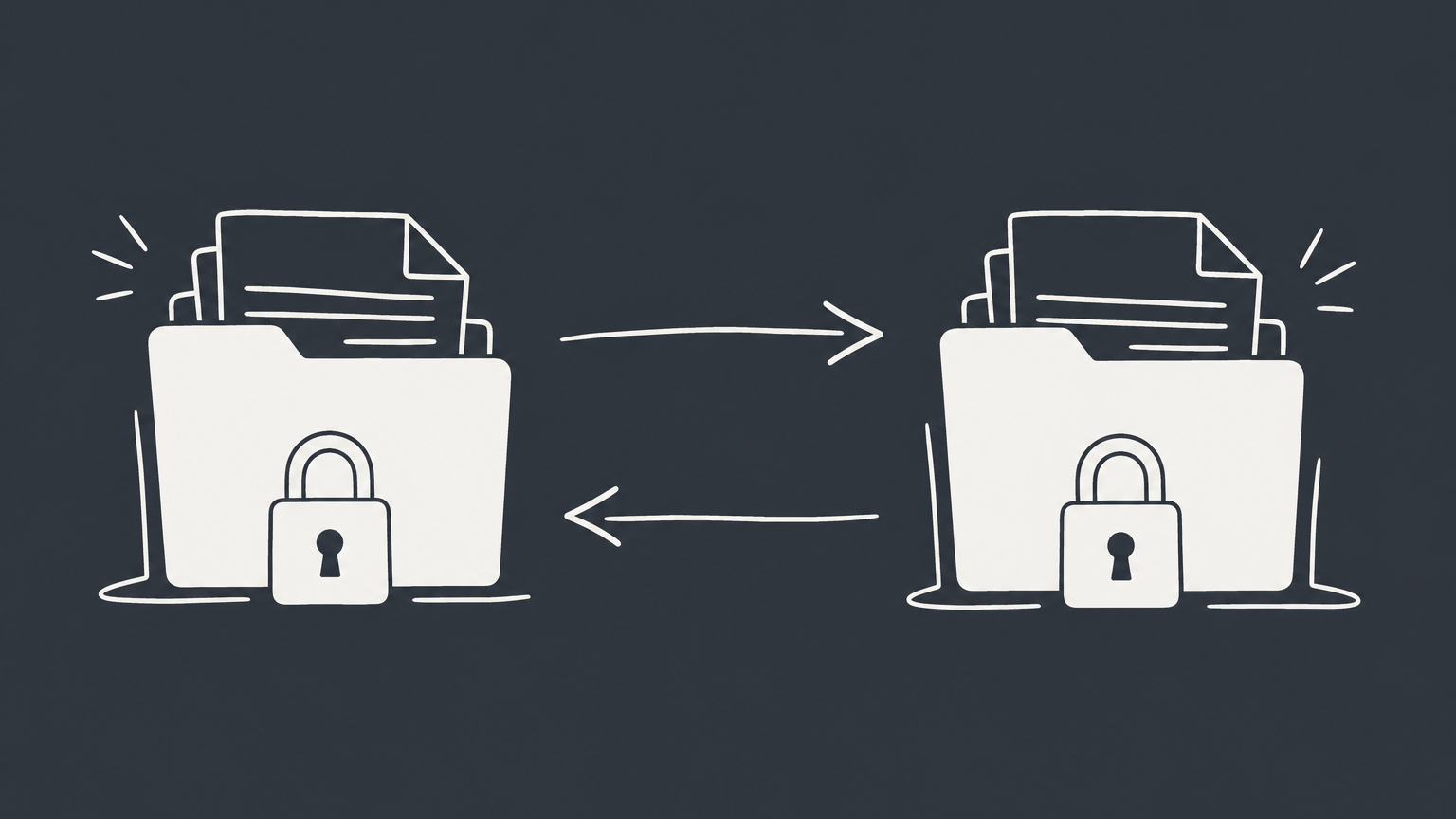
MNDA stands for mutual non-disclosure agreement. It is a contract under which each party may disclose confidential information and each party accepts duties concerning the other party's information. Depending on which direction information is moving, the same party may act as the disclosing party in one exchange and the receiving party in another.
An MNDA commonly appears before discussions involving a possible partnership, merger, acquisition, joint venture, licensing arrangement, investment, or other collaboration. The parties may need to exchange business plans, customer information, technical material, financial information, intellectual property, or trade secrets before deciding whether to proceed. The agreement sets rules for how that information may be used, disclosed, stored, and handled.
The term NDA is broader. It means non-disclosure agreement and can describe either a mutual agreement or a unilateral agreement. Calling a document an NDA therefore does not reveal which parties owe confidentiality duties. You must read the document. A formal agreement should state the parties' obligations clearly rather than relying only on its title.
This page uses MNDA in its business-contract sense. It does not concern motor neurone disease, a drug, or a gene. MDNA is also sometimes entered when a searcher intends MNDA, but MDNA is not the standard abbreviation for a mutual non-disclosure agreement. In a legal or commercial discussion, confirm the intended meaning before reviewing or signing the document.
MNDA vs. NDA: What Is the Difference?
The main MNDA vs. NDA distinction is scope. An MNDA is always mutual, while NDA is an umbrella term that may refer to a mutual or unilateral non-disclosure agreement. As a result, asking whether you need an MNDA or an NDA can create a false choice. The more precise question is whether your NDA should impose obligations on one party or both parties.
A unilateral NDA generally protects information flowing in one direction. One party discloses confidential information, and the other agrees to protect it and limit its use. A mutual NDA addresses information flowing in both directions. Each party receives protection for qualifying information it discloses and assumes obligations for qualifying information it receives.
| Issue | Mutual NDA or MNDA | Unilateral NDA |
|---|---|---|
| Who discloses information? | Both parties expect to disclose confidential information. | Primarily one party discloses confidential information. |
| Who receives protection? | Each party receives protection for its covered disclosures. | The disclosing party receives the principal protection. |
| How do party roles work? | Each party can be both a disclosing and receiving party. | The parties generally keep separate disclosing and receiving roles. |
| Common situations | Partnerships, mergers, joint ventures, and two-way commercial evaluations. | Contractor engagements, employee disclosures, and some vendor discussions. |
| Drafting focus | Balanced duties that account for each party's information. | Duties tailored to the information disclosed by one side. |
Mutual does not necessarily mean identical economic risk. One party may disclose far more valuable information or face greater harm from misuse. The agreement should reflect the actual disclosures instead of assuming that reciprocal wording automatically produces a balanced result.
How to Choose Between a Mutual NDA and a Unilateral NDA
Choose the agreement type by mapping who will disclose confidential information. If both parties will make meaningful disclosures, begin with a mutual structure. If information will flow primarily from one party to the other, a unilateral NDA may provide clearer and more focused protection.
Do not base the decision primarily on trust. NDAs establish permitted uses, disclosure rules, safeguards, and consequences if a problem arises. Even parties with a strong relationship benefit from documenting those expectations. Likewise, a mutual form should not be used merely to make an agreement appear fair if only one side will disclose protected information.
Consider the likely information flow in these situations:
- Partnerships and joint ventures: A mutual NDA often fits because both businesses may reveal strategies, technology, customer data, or operational plans.
- Mergers and acquisition discussions: Both sides may disclose financial, legal, technical, or commercial information, although the volume and sensitivity may differ.
- Contractor relationships: A unilateral NDA may fit when a company gives a contractor access to internal information. A two-way agreement may be appropriate if the contractor also contributes protected methods or technology.
- Vendor discussions: The correct structure depends on whether only the customer shares requirements and data or both parties exchange proprietary material.
The underlying transaction may require additional contracts. For example, a founder compensating a specialist with ownership may also need a consulting-for-equity agreement. Businesses planning a joint campaign may need a co-marketing agreement that addresses approvals, costs, branding, and campaign responsibilities beyond confidentiality.
Clauses That Determine What an MNDA Protects
The MNDA label does not determine the agreement's practical strength. Two mutual NDAs may allocate risk very differently because of their definitions, exclusions, permitted uses, safeguards, and remedies. Review the operative language rather than assuming mutuality resolves every issue.
A well-defined protected-information clause explains which information qualifies as confidential. It may cover written, oral, visual, electronic, or other disclosures. The language should also address whether information must be marked confidential or identified after an oral disclosure. An overbroad definition can make compliance difficult, while a narrow definition may leave valuable information uncovered.
Common exclusions address information that:
- Was publicly available without a breach of the agreement.
- Was already lawfully known to the receiving party.
- Was lawfully received from another source without a confidentiality duty.
- Was independently developed without using the protected information.
The non-use clause is separate from the non-disclosure clause. A recipient might avoid publishing information but still misuse it for competition, product development, solicitation, or another unauthorized purpose. The MNDA should limit use to a defined purpose, such as evaluating a proposed transaction or performing an approved project.
Other provisions may cover required safeguards, compelled disclosures, notice procedures, governing law, dispute resolution, and available remedies. If intellectual property will be licensed rather than merely evaluated, confidentiality language does not replace a brand licensing agreement or another license that defines ownership and authorized use.
Third-Party Access Under an MNDA Agreement
A receiving party may need to share confidential information with employees, consultants, accountants, lawyers, or financing sources. An MNDA should explain which representatives may receive information, why they may receive it, and what safeguards apply. Without clear permission, necessary business disclosures may conflict with the agreement's restrictions.
Permitted-disclosure language often limits access to representatives who need the information for the agreement's stated purpose. It may also require those representatives to have confidentiality duties. The exact mechanism can vary. A representative might sign a separate agreement, have an existing professional or employment duty, or become subject to confidentiality requirements through another enforceable arrangement.
The parties should also decide who bears responsibility if a representative makes an unauthorized disclosure. A disclosing party may want the recipient to remain responsible for breaches by people to whom the recipient gave access. The recipient may seek narrower responsibility or exceptions for certain professional advisers. These positions should be negotiated expressly rather than left uncertain.
If the recipient needs consent before sharing information, the agreement can define how consent will be requested and provided. It should also address legally compelled disclosures, including whether the recipient must give notice when legally permitted so the disclosing party can consider an appropriate response. These provisions matter in mutual agreements because each party may need to manage its own advisers while controlling access to the other party's information.
If both parties will exchange valuable intellectual property or business information, or if third-party access, residual knowledge, duration, or bargaining power complicates the terms, you can post your legal need on UpCounsel's marketplace. An attorney can determine whether the NDA should be mutual or unilateral, tailor protected-information definitions and exclusions, and negotiate each party's disclosure and use obligations. Responses typically arrive within a day.
Residual Knowledge, Return, and Information Handling
Residual knowledge is information that a person remembers after reviewing confidential material. A residuals clause may allow a recipient to use information retained in an individual's unaided memory, even if the underlying material remains confidential. That permission can create significant risk for a disclosing party, particularly when technical methods, product strategy, customer insights, or other valuable know-how can be remembered and applied.
Do not confuse a residuals clause with standard exclusions. An independent-development exclusion generally concerns information developed without using the discloser's confidential information. A residuals clause may authorize some use of remembered information that came from the disclosure. The parties should decide whether to prohibit residual use, permit it under stated limits, or omit the concept and rely on the agreement's ordinary non-use duties.
An MNDA should also address what happens to materials when discussions end or when the disclosing party requests their return. Depending on the arrangement, the recipient may be required to return or destroy documents, copies, notes, extracts, and electronically stored information. Practical exceptions may be needed for routine backups, legal retention requirements, or archival copies kept for compliance purposes. Any retained material should remain subject to the applicable confidentiality obligations.
Operational safeguards matter as much as drafting. Limit access to people with a legitimate need, avoid unnecessary copies, use reasonable security measures, and keep records of significant disclosures. An MNDA can establish legal duties, but it cannot retrieve a trade secret after uncontrolled distribution. Share only the information reasonably needed for the stated business purpose.
How Long Do NDA and MNDA Obligations Last?
There is no single duration that fits every NDA or MNDA. The appropriate period depends on the information, transaction, applicable law, and time during which disclosure or misuse could cause harm. The document should state the relevant periods clearly instead of leaving the parties to infer them.
Distinguish the agreement's term from the confidentiality period. The agreement might govern a limited evaluation or a longer business relationship, while confidentiality and non-use obligations may continue after that relationship ends. The contract should identify when each period begins, what event ends it, and which provisions survive termination.
Different categories of information may justify different treatment. Short-lived pricing, forecasts, or launch plans may lose sensitivity as business conditions change. Trade secrets may require protection tied to how long the information continues to qualify for protection under applicable law. Because trade secret rules and restrictions affecting some confidentiality agreements can depend on jurisdiction and context, check the governing state's current official instructions and law rather than adopting a universal period.
Duration also affects enforceability and commercial practicality. A provision that is disconnected from a legitimate need may invite resistance or dispute. On the other hand, an obligation that expires before the information loses value may fail to protect the disclosing party. The parties should also address remedies, governing law, venue, and dispute procedures. A contract may identify damages, injunctive relief, or other remedies, but the availability of any remedy depends on the agreement, the facts, and applicable law. Review the document periodically when the relationship or legal requirements change.
Frequently Asked Questions
What Is an MNDA?
An MNDA is a contract that creates two-way confidentiality duties. Before signing, identify each category of information you expect to provide and receive. That exercise can reveal one-sided definitions, disclosure procedures that are difficult to follow, or obligations that do not match how the parties will actually work together.
What Is a Mutual NDA?
A mutual NDA is another name for a mutual non-disclosure agreement or MNDA. It can be bilateral even when more than two individuals participate through the contracting entities and their representatives. The agreement should identify the legal parties precisely so employees, affiliates, advisers, and other participants are not unintentionally treated as direct parties.
Does Nolo's Encyclopedia of Everyday Law Include an NDA Template?
You should check the publisher's current edition and contents to determine whether it includes an NDA template. Publications and supplemental materials can change between editions. Even if a general form is available, confirm that its definitions, state-law terms, permitted disclosures, and remedies fit your transaction before relying on it.
How Long Are NDAs Typically Good For?
NDAs remain effective for the periods stated in their terms, subject to applicable law. Calendar reminders can help both parties track expiration dates, destruction deadlines, renewal decisions, and surviving duties. If the contract is silent or internally inconsistent, obtain legal advice before assuming that confidentiality ended with the underlying project.
Is MNDA a Drug, Gene, or Term for Motor Neurone Disease?
MNDA means mutual non-disclosure agreement on this legal-business page, not a drug or medical diagnosis. MND is a separate abbreviation associated with motor neurone disease, while similar letter combinations may appear in scientific contexts. Questions about MND's causes, treatment, or life expectancy require reliable medical information and advice from qualified health professionals.