Can you have multiple business bank accounts? Yes, but opening several accounts for one company is different from sharing one account among DBAs or separately formed businesses.
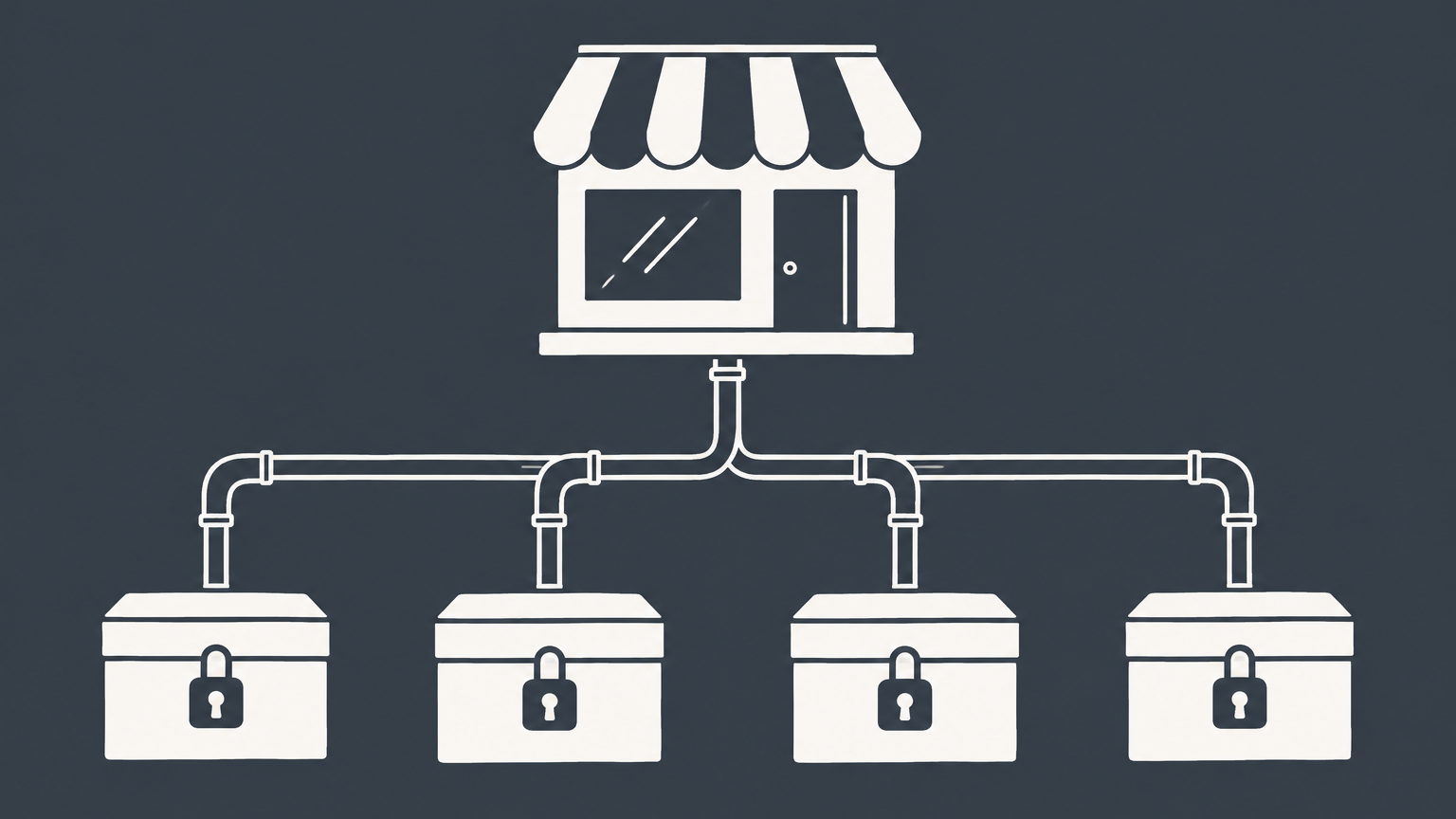
Key Takeaways
- One legal entity can generally maintain multiple business bank accounts, subject to each bank's eligibility rules and account terms.
- A DBA is another name used by the underlying business, not a new legal entity or an automatic source of liability protection.
- Multiple DBAs owned by one entity may be able to use one account if the bank approves the arrangement.
- Separately formed LLCs or corporations should not casually share an account because ownership, liabilities, contracts, and records may become confused.
- Opening multiple accounts does not itself create legal separation or guarantee liability protection.
- Your bookkeeping must identify the legal entity, DBA, purpose, and supporting document for each transaction.
Can You Have Multiple Business Bank Accounts?
Yes. A business can generally have more than one bank account, including multiple accounts at one bank or accounts at different banks. The bank must still approve each application, and its policies may determine which account titles, DBAs, authorized users, balances, and services it permits.
The first step is to identify which arrangement you are considering. There are three common possibilities. One company may open several accounts for different operational purposes. One company may also operate under several DBAs and use one or more accounts for those trade names. A third arrangement involves an account receiving or paying money for two or more separately formed LLCs, corporations, or other entities. That third option presents the greatest legal and bookkeeping concerns.
Bank account structure does not determine who owns a business or who is responsible for its obligations. Formation documents, ownership records, contracts, applicable law, and actual business practices remain central. Opening another account does not create a new company. Likewise, placing money from several entities in one account does not merge those entities into a single lawful business structure.
Before opening or combining accounts, list every legal entity, its tax identification information, its DBAs, and the revenue or expenses that belong to it. Then ask the bank how each account will be titled and which names may appear on deposits, checks, transfers, and customer payment instructions.
Multiple Accounts for One Legal Entity
Multiple bank accounts for one business can make sense when each account has a defined operational purpose. A company might use one account to receive customer payments, another for operating expenses, and additional accounts for payroll or reserves. There is no universal number that every business should maintain. The useful number depends on transaction volume, fees, minimum-balance terms, accounting capacity, and internal controls.
Using several accounts may make cash flow easier to monitor. It can also help prevent money intended for payroll, upcoming expenses, or reserves from appearing to be freely available. However, more accounts create more statements, transfers, access credentials, reconciliations, and possible fees. An account without a clear purpose can add administrative work without improving control.
You may hold two business accounts for the same business at one bank if that bank permits it. You may also apply at different banks. Compare account terms rather than assuming that every institution uses the same eligibility, naming, deposit, transfer, or fee rules. Confirm how the bank handles related accounts and whether it offers appropriate access controls for employees, owners, or bookkeepers.
Do not use multiple accounts to hide transfers or make the company's records harder to follow. Document movements between the company's own accounts as transfers, not revenue or expenses. If other people need access, review the difference between owners and authorized signers on business bank accounts before granting transaction authority.
Can One Bank Account Serve Multiple DBAs?
One bank account may be able to serve multiple DBAs when the same person or legal entity owns all of them and the bank accepts each trade name. Bank approval matters because the institution must know the legal account owner and may require evidence that each DBA has been properly registered.
A DBA, meaning "doing business as," is a name under which a person or entity conducts business. It does not automatically form a separate LLC or corporation. It also does not create separate liability protection merely because customers see a different name. If one LLC owns three DBAs, the LLC remains the underlying legal entity for all three operations. Business owners deciding between a legal name and a public-facing name can review how a business may use a name different from its LLC.
If the bank permits one DBA account to accept funds under several names, confirm the exact account title and deposit procedures. Checks or transfers payable to an unlisted DBA may create processing problems. Customer contracts, invoices, and payment instructions should also identify the correct legal owner, even when the DBA appears prominently.
One account may be practical for DBAs with common ownership and limited transaction volume. Separate accounts can be more useful when each DBA has substantial activity, different managers, distinct budgets, or separate performance reporting. Neither setup changes the fact that the DBAs belong to the same underlying business. Your ledger must still assign every receipt, expense, refund, and transfer to the correct DBA.
Can One Bank Account Be Used for Multiple Businesses?
Using one account for multiple separately formed businesses is materially different from using one account for several DBAs of the same entity. If two LLCs were independently formed, each is a separate legal entity even if the same person owns both. The same distinction applies to separately formed corporations and other entities.
As a sound operational practice, revenue and expenses should be attributed to the entity that earned or incurred them. An account titled to one LLC should not casually become a master account for another LLC. Combining funds can obscure which entity owns the cash, owes a vendor, employed a worker, signed a contract, or received a customer's payment. It can also make financial statements, tax records, audits, disputes, and dissolution more difficult.
Separate accounts do not automatically preserve liability protection, just as a shared account does not by itself decide every liability question. Courts and regulators may consider broader facts. Still, accurate entity-level banking and records help demonstrate that each business is operating according to its own ownership, contracts, and obligations.
Check each entity's operating agreement, bylaws, resolutions, ownership records, applicable state requirements, and bank agreement. If one entity pays costs for another, identify the transaction accurately as an intercompany payment, reimbursement, loan, or other appropriate entry, and retain supporting documentation.
If money is already moving among separately formed entities or ownership is unclear, you can post your legal need on UpCounsel's marketplace. An attorney can map the entities and DBAs, review governing and ownership documents, and recommend how accounts and intercompany transactions should be documented. Responses typically arrive within a day.
Do You Need a Separate Bank Account for an LLC?
An LLC should generally use a business account titled to the LLC rather than treating an owner's personal account as the company's operating account. This keeps company activity identifiable and supports accurate books, tax preparation, contract administration, and financial reporting. The exact legal and banking requirements depend on the applicable state rules, the LLC's governing documents, and the financial institution's policies.
A separate LLC account does not guarantee liability protection. Liability analysis can also involve formation status, contracts, capitalization, governance, recordkeeping, guarantees, and how the owners actually operate the company. Still, mixing personal and LLC transactions makes it harder to show which money and obligations belong to the company.
If one LLC operates several DBAs, it may use one LLC-owned account for those DBAs if the bank permits them on the account. It may instead maintain separate accounts for each DBA to improve budgeting and performance reporting. Those DBA accounts should still identify the LLC as the legal owner under the bank's naming procedures.
If you own multiple LLCs, do not assume that one account is appropriate merely because ownership overlaps. Review the reasons an LLC may need a separate business bank account and evaluate each entity independently. Owners who are preparing to open an account can also review common LLC bank account rules and setup considerations.
Comparing Business Bank Account Arrangements
The following comparison separates arrangements that business owners often treat as interchangeable. Start with legal ownership, then evaluate account naming, bookkeeping, and bank approval.
| Arrangement | Ownership | Account and Bookkeeping | Bank Considerations |
|---|---|---|---|
| Multiple accounts for one legal entity | The same entity owns every account. | Assign each account a purpose and record transfers between the entity's accounts correctly. | Confirm eligibility, fees, balances, users, and whether accounts may be held at one or several banks. |
| One account for multiple DBAs | One person or entity owns the DBAs. | The account belongs to the underlying owner. Track income and expenses separately for each DBA. | Confirm that the bank accepts each DBA and how deposits and account titles must identify the names. |
| One account for separately formed entities | Different legal entities own their respective funds, even when owners overlap. | Shared activity may obscure revenue, obligations, reimbursements, and intercompany transactions. | Verify the proposed structure against each account agreement and the documentation for every entity. |
Choose accounts based on functions rather than an arbitrary target. Ask where customer revenue arrives, which account pays ordinary expenses, how payroll is funded, and where genuine reserves are held. Then decide whether separate accounts will make those flows easier to control without creating unnecessary fees or reconciliation work.
Also distinguish account separation from user access. You may not need another account merely because an accountant, partner, or employee needs limited access. Ask the bank whether it supports separate credentials, transaction permissions, approval requirements, alerts, or view-only access. Do not solve an access problem by sharing a password or opening an account under the wrong owner.
Bookkeeping for Multiple Accounts and DBA Accounts
Good bookkeeping should show which legal entity owns every transaction and, when relevant, which DBA generated it. A bank statement alone may not provide enough detail. Build a repeatable workflow that connects each transaction to invoices, contracts, receipts, payroll records, deposit records, and other supporting documents.
- Create separate ledger categories. Use distinct classes, locations, departments, or equivalent categories for each DBA and operational purpose.
- Assign transaction identifiers. Add a customer number, invoice number, project code, or DBA code to receipts and payments when practical.
- Record account-to-account transfers correctly. A movement between two accounts owned by the same entity generally should not be entered as new income or a new expense.
- Reconcile every account. Match bank activity to the accounting ledger on a regular schedule and investigate unidentified items promptly.
- Document cross-entity activity. When one entity pays or receives money for another, retain records explaining the purpose, approval, amount, and repayment or allocation treatment.
- Review user access. Remove unnecessary access and ensure that each person has only the authority needed for that role.
Your reports should let you view both the entire legal entity and each DBA or business line. That combination helps you evaluate performance without mistaking a trade name for a separate company. It also helps accountants and attorneys determine which entity earned revenue or became responsible for a payment.
Keep personal spending outside the company's accounts. If you are considering a personal account because opening a business account is difficult, first review the risks of using a personal checking account for business purposes.
How to Choose and Open the Right Accounts
Begin with an ownership chart. List each sole proprietorship, LLC, corporation, partnership, and DBA. For every DBA, identify the person or entity that owns it. This exercise prevents a bank account from being opened under a trade name without a clear connection to its legal owner.
Next, define the purpose of each proposed account. Common functions include incoming revenue, operating expenses, payroll, or reserves. Estimate the account's transaction volume and determine who needs access. An additional account should solve a specific control, reporting, or cash-management problem.
Ask each bank what documents it requires. Depending on the business and account, the institution may request formation documents, tax identification information, ownership details, personal identification, governing documents, or DBA registration evidence. Requirements vary, so rely on the bank's current instructions rather than a generic checklist.
Before accepting an account, review its naming rules, authorized-user options, fees, balance conditions, transaction limits, deposit procedures, and closure terms. Confirm whether all DBAs can receive payments into the account and how the legal entity's name will appear. If you use more than one bank, create a central list of accounts, owners, authorized users, and reconciliation responsibilities. Review that list when ownership, personnel, business names, or entity status changes.
Frequently Asked Questions
Can You Have Multiple Business Bank Accounts?
Yes, you can generally apply for multiple business bank accounts. Approval is not automatic, and each application may be evaluated under the bank's current standards. Before applying, consider how additional accounts will affect credit inquiries, online access, deposit services, account monitoring, and the time required to detect unauthorized or mistaken transactions.
Can a Business Have More Than One Bank Account at the Same Bank?
Yes, a business may be able to hold more than one account at the same bank. Ask whether the accounts will appear under one online profile, who can view or transact through each account, and whether linked-account features affect transfers or fees. Administrative convenience should not replace separate records for each account's intended function.
Do You Need a Separate Bank Account for an LLC?
An LLC should maintain banking records that clearly identify the LLC's money and transactions. If an owner pays a company expense personally or takes a distribution, the books should classify that activity correctly rather than leaving it unexplained. Consult the LLC's governing documents and current state and bank instructions for requirements that apply to the specific company.
Can I Have One Bank Account for Multiple Businesses?
One account may work for multiple business names owned by the same underlying person or entity, subject to bank approval. It is a different matter when the businesses are separate entities. If a shared payment platform or banking dashboard displays several entities together, that interface does not change who legally owns each underlying account or its funds.
Do I Need Separate Bank Accounts for Each DBA?
No universal rule requires every DBA to have its own account. Separate DBA accounts may be worthwhile when managers need distinct spending authority, customers pay through different channels, or one line may later be sold. Before a sale or ownership change, determine which contracts, receivables, refunds, and account balances belong to the operation being transferred.
What Is the $10,000 Bank Rule?
Financial institutions generally report cash transactions exceeding $10,000 in a single business day, including related cash transactions that aggregate above that amount. This rule concerns cash reporting, not an overall limit on legitimate business account balances or ordinary transactions. Breaking up cash transactions to evade reporting, known as structuring, is illegal.


