What happens to stock when a company is acquired depends first on how the buyer will pay and whether the transaction closes. Target shareholders may receive cash, buyer shares, a combination of both, or different treatment under a private-company equity plan.
Key Takeaways
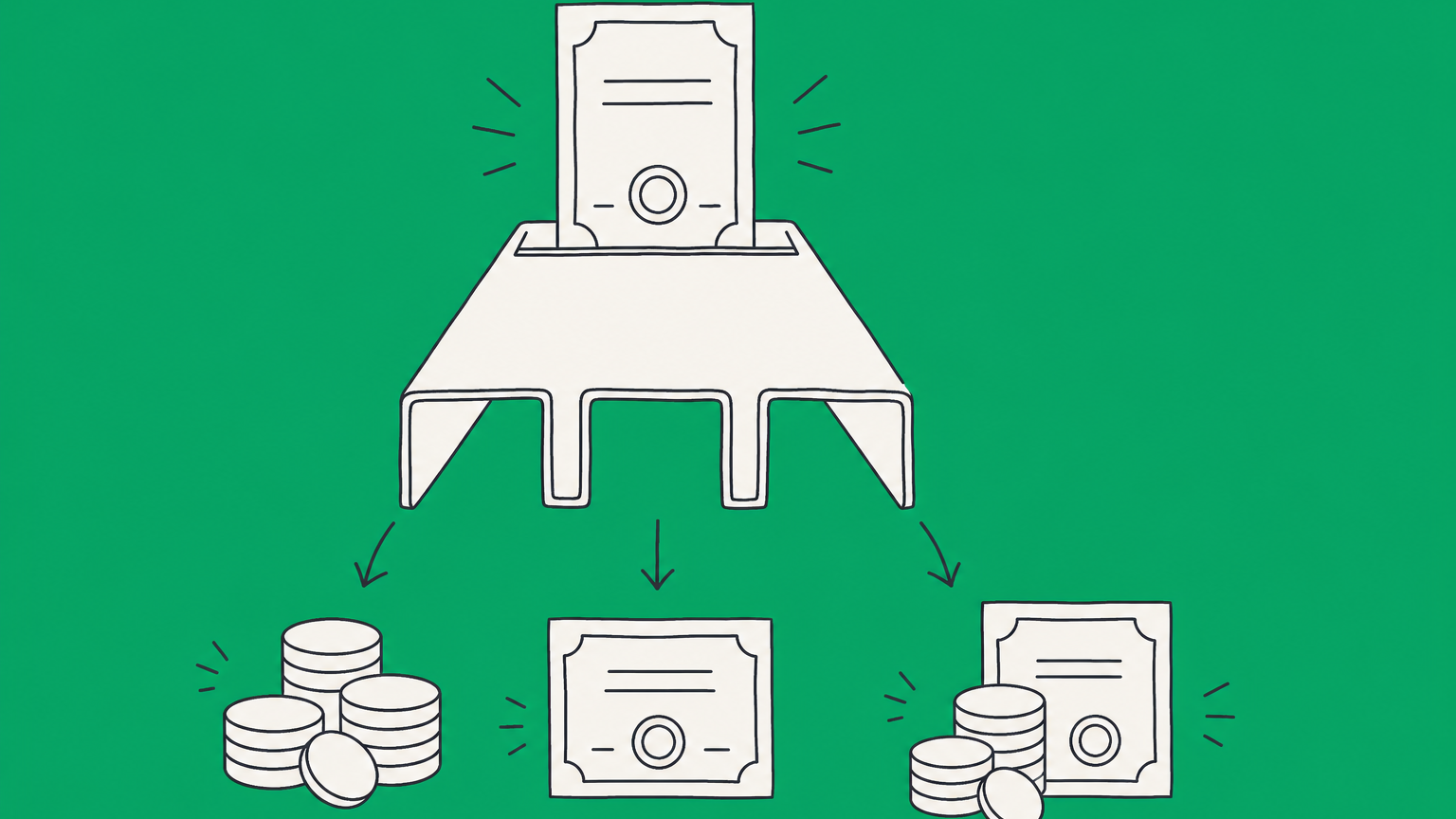
- In a cash acquisition, target shareholders generally receive a stated amount for each share covered by the transaction.
- In a stock acquisition, target shares generally convert into buyer shares according to an exchange ratio.
- The target's market price may approach the offer value after an announcement, but it can remain lower because the deal could fail or take time to close.
- The buyer's stock can rise or fall based on the price paid, financing, expected benefits, dilution, and integration risk.
- Your merger agreement, shareholder materials, equity plan, and award documents control the treatment of your particular holdings.
- Common stock, restricted shares, RSUs, employee options, and exchange-traded call options may receive different treatment.
What Happens to Stock When a Company Is Acquired?
If you own target-company common stock, start by identifying the form of payment. A stock buyout may provide cash, buyer stock, or both. The announced price does not automatically appear in your account on announcement day. Shareholders continue to own and usually can trade their target shares while the deal remains pending, subject to any applicable restrictions.
If the transaction closes, your broker or transfer agent generally processes the conversion required by the merger or acquisition documents. Target shares may disappear from your account and be replaced by cash, buyer shares, or a combination. If the target remains a separately traded company after a partial investment or purchase, its shares may continue trading.
| Deal Structure | What Target Shareholders May Receive | Documents to Check |
|---|---|---|
| All-cash acquisition | A fixed cash amount for each eligible target share | Merger agreement, proxy statement or tender-offer materials, and broker instructions |
| All-stock acquisition | Buyer shares based on a fixed or adjustable exchange ratio | Merger agreement, shareholder materials, and exchange-ratio provisions |
| Cash-and-stock acquisition | Cash plus buyer shares, sometimes subject to an election or allocation formula | Merger agreement, election materials, allocation rules, and award documents |
The result can differ in an asset purchase. The buyer may purchase the company's assets rather than acquiring shareholder stock directly. In that structure, the company receives the purchase price and applies the proceeds under the transaction terms and applicable law. Shareholders do not necessarily receive the stated asset-purchase price directly. Understanding what it means to own company stock can help you distinguish ownership of shares from ownership of corporate assets.
What Happens to the Target Company's Stock?
The target company's stock often rises after a credible acquisition announcement because buyers commonly offer more than the unaffected trading price. The stock may trade near the cash offer or implied stock value, but it is not guaranteed to reach that amount before closing.
A gap between the market price and offer value can reflect the time remaining before payment, required approvals, financing conditions, regulatory review, or uncertainty that the transaction will close. For example, shares might trade below a fixed cash offer because investors assign some probability to delay, renegotiation, or failure. A competing bid or improved offer could instead push the market price higher.
In an all-stock transaction, the target's price often moves with the buyer's price. If each target share will convert into a fixed number of buyer shares, a decline in the buyer's stock can reduce the deal's implied value. Some agreements use formulas, price collars, or other adjustments, so you should not assume that a headline valuation fixes your final payment.
Once the acquisition closes and the target shares are converted, public trading in those shares normally ends if the target is absorbed or taken private. Your account may temporarily display a reorganization entry while the broker processes the transaction. If you hold paper certificates or directly registered shares, the transfer agent may require additional steps. Procedures for canceling or replacing stock certificates may also matter if ownership records are incomplete.
What Happens to the Acquiring Company's Stock?
When a company buys another company, existing shareholders of the buyer normally keep their shares. Their investment remains tied to the acquiring company, but the market may immediately reassess what those shares are worth.
The buyer's stock can fall if investors believe the company is paying too much, assuming excessive debt, issuing too many new shares, or taking on difficult integration work. New share issuance can dilute the ownership percentage and voting power represented by each existing share, although dilution alone does not determine whether the acquisition will ultimately create or destroy value.
The buyer's shares can also rise. Investors may expect stronger earnings, valuable technology, new customers, reduced competition, or other strategic benefits. Market reactions can change as financing details, regulatory issues, or operating results become clearer.
Neither company's stock is guaranteed to increase after an acquisition announcement. The target's price reflects the proposed consideration and closing risk. The buyer's price reflects investors' view of the purchase price, financing, expected benefits, and execution risk. In a stock-for-stock deal, these effects become connected because changes in the buyer's share price may change the value target shareholders expect to receive.
Acquisition Timeline, Payment, and Deal-Failure Risk
An acquisition usually begins with negotiations or market rumors, followed by a public announcement once the parties sign a definitive agreement. Rumors can move both stocks, but they do not establish that a signed or enforceable transaction exists. The announcement should describe the payment form, headline value, expected process, and major conditions.
The transaction may then require shareholder approval, regulatory clearance, financing, or satisfaction of other closing conditions. The exact requirements and timetable appear in the merger agreement and shareholder materials. Tender offers follow a different process from mergers, so check the documents rather than relying on the announcement alone.
- Rumor or speculation: Prices may move even though no agreement has been signed.
- Signed agreement and announcement: The parties disclose the proposed consideration and key conditions.
- Review and approval: Shareholders, regulators, lenders, or other parties may need to act.
- Closing: The legal transaction becomes effective after the conditions are met or waived where permitted.
- Account processing: Brokers and transfer agents convert eligible shares and distribute the consideration.
Payment does not necessarily reach every account at the exact moment of closing. Brokerage processing, elections, fractional-share handling, certificate issues, or missing account information can affect when the consideration appears. Check official transaction materials and your broker's instructions for the applicable process.
If the deal fails, target shares remain outstanding unless another event affects them. The price may fall toward the level investors believe the standalone business supports, but no particular price movement is certain. Termination fees or other contractual rights usually belong to the companies under the agreement, not directly to individual shareholders.
Should You Sell Before the Stock Buyout Closes?
There is no universal answer to whether you should sell before closing. Compare the current trading price with the value you expect to receive, then account for the payment form, expected timing, taxes, transaction costs, and the possibility that the acquisition will not close.
In a fixed cash deal, selling early can provide immediate liquidity and remove deal-failure risk, but you may accept less than the stated acquisition price. Holding can preserve the right to the closing payment, but it exposes you to delay and a possible price decline if the transaction is terminated. In a stock deal, consider how changes in the buyer's share price affect the implied value and whether the exchange ratio is fixed or adjustable.
Also determine who receives the consideration. In a merger or share purchase, eligible selling shareholders generally receive the payment allocated to their shares. In an asset acquisition, the target company receives the asset-sale proceeds. Creditors, transaction expenses, taxes, and corporate distribution rules can affect what ultimately reaches shareholders. A headline purchase price is therefore not always the amount distributed to equity owners.
Review the merger agreement, proxy statement, tender materials, broker notice, and any election form before acting. Confirm how fractional shares, dividends, ownership disputes, and shares purchased shortly before closing will be handled. Record dates and eligibility rules depend on the transaction documents, so do not assume that the shareholder vote date determines who receives payment.
Private Equity, Private Shares, RSUs, and Stock Options
A private-equity acquisition often takes a public company private. If the buyer acquires all outstanding public shares for cash, eligible shareholders generally receive the merger consideration and stop owning the target after closing. Other structures may convert, roll over, or retain some equity. The buyer's identity does not determine the outcome by itself. The transaction terms do.
Private-company shareholders may face transfer restrictions, rights of first refusal, drag-along provisions, different stock classes, or required consents. Preferred and common shares can receive different amounts depending on the charter, liquidation preferences, and acquisition terms. Shareholders should verify the capitalization records and governing documents rather than applying the public-company offer price to every security.
Employee equity requires a separate review:
- Restricted stock: Vested and unvested shares may be purchased, converted, canceled, or subjected to continued restrictions.
- RSUs: Awards may be assumed by the buyer, replaced, cashed out, accelerated, or canceled according to the plan and transaction documents.
- Employee stock options: Treatment can depend on vesting status, exercise price, expiration terms, and whether the buyer assumes or cashes out the award.
- Exchange-traded call options: These are contracts rather than employee awards. Adjustment rules may change the deliverable after a merger. See what happens to call options in a buyout for a focused explanation.
If you hold restricted or private shares, dispute ownership or payment, or cannot determine how employee equity will be treated, a securities or M&A lawyer can review the merger agreement, shareholder materials, equity plan, and award documents. The lawyer can identify your rights, deadlines, elections, and required actions. You can post your legal need on UpCounsel's marketplace, and responses typically arrive within a day.
Documents, Taxes, and Other Events to Check
The signed transaction documents control your legal treatment, not news reports or the headline purchase price. Gather your brokerage statements, stock certificates, grant notices, option agreements, equity plan, amendments, and shareholder communications. Confirm the number and class of securities you own, your vesting status, and whether any transfer or exercise restrictions apply.
Acquisition consideration can create tax consequences. Cash, buyer stock, mixed consideration, employee compensation, and option exercises may receive different treatment. Your basis, holding period, residence, and the transaction's structure can also matter. Keep the closing statement and transaction records, and ask a qualified tax professional about your circumstances instead of assuming every stock exchange is immediately taxable or tax-free.
An acquisition is not the same as bankruptcy, dissolution, or a company simply closing. An acquisition involves a buyer and negotiated transaction terms. Bankruptcy applies legal priority rules to a financially distressed debtor, and common shareholders may receive little or nothing after higher-priority claims. For a related business-owner perspective, review what can happen when an LLC declares bankruptcy. A dissolved company also follows winding-up rules rather than acquisition payment terms.
Finally, monitor official shareholder communications until your account is settled. Respond to valid election or transfer-agent requests, verify the consideration received, and preserve copies of every submission. Contact your broker, plan administrator, transfer agent, or legal adviser if the number of shares, ownership name, payment amount, or award treatment does not match your records.
Frequently Asked Questions
What Happens to Stock When a Company Is Acquired?
The stock is handled according to the acquisition agreement after the deal closes. Eligible target shares may convert into cash, buyer shares, or both, while some securities may be canceled or treated under separate award terms. Fractional buyer shares are often handled differently from whole shares, so review the transaction materials for rounding or cash-in-lieu provisions.
What Happens to My Stock When a Company Is Bought?
Your stock remains yours while the acquisition is pending unless you sell it or another restriction applies. After closing, your account should reflect the conversion specified by the deal. If the shares are registered directly rather than held through a broker, you may need to follow transfer-agent instructions before receiving payment or replacement shares.
When a Company Buys Another Company, What Happens to Your Stock?
The answer depends on which company you own. Target shareholders may surrender or convert their shares, while shareholders of the acquiring company generally retain their existing stock. If you own both companies, each position is processed separately, and the value of the stock consideration may change with the buyer's market price.
Should I Sell My Stock If the Company Is Being Acquired?
You should decide based on your objectives and the transaction's risk rather than assuming one choice is always better. Consider how much the market price differs from the offer value, when you need liquidity, the likelihood of closing, tax effects, and your willingness to own the buyer's stock if shares form part of the payment.
Do Stocks Go Up After Acquisitions?
Stocks do not always go up after acquisitions. A target may trade below, at, or occasionally above the announced value depending on closing risk and competing bids. The buyer may rise if investors expect strong benefits or fall if they are concerned about price, debt, dilution, regulation, or integration.
How Long After an Acquisition Do Shareholders Get Paid?
Shareholders generally receive acquisition consideration after the transaction legally closes and their broker or transfer agent completes processing. There is no single timeline for every deal. Elections, paper certificates, fractional shares, ownership discrepancies, or incomplete account information can cause additional processing time, so consult the official instructions for the transaction.
Who Gets the Money When a Stock Is Bought?
The shareholder selling or converting an eligible share generally receives the consideration assigned to that share. However, if the buyer purchases corporate assets instead of shareholder stock, the company receives the proceeds first. The company may then pay liabilities and distribute any remaining amount according to governing documents, transaction terms, and applicable law.


