DBA filing lets a person or existing business operate under a name different from its legal name. Because the responsible agency and requirements vary, start with the rules for your entity type and business location.
Key Takeaways
- A DBA may also be called a trade name, assumed name, or fictitious business name.
- You may need to file with a secretary of state, another state agency, a county clerk, or more than one office.
- Most forms request the legal owner, proposed DBA, business address, entity type, contact information, and signatures.
- Online DBA filing is available in some jurisdictions, but notarization, publication, or county requirements may still apply.
- A DBA does not form an LLC, provide liability protection, change tax classification, or create federal trademark rights.
- DBA cost, payment methods, renewal periods, and amendment procedures depend on the jurisdiction.
DBA Filing: Find the Correct Office and Form First
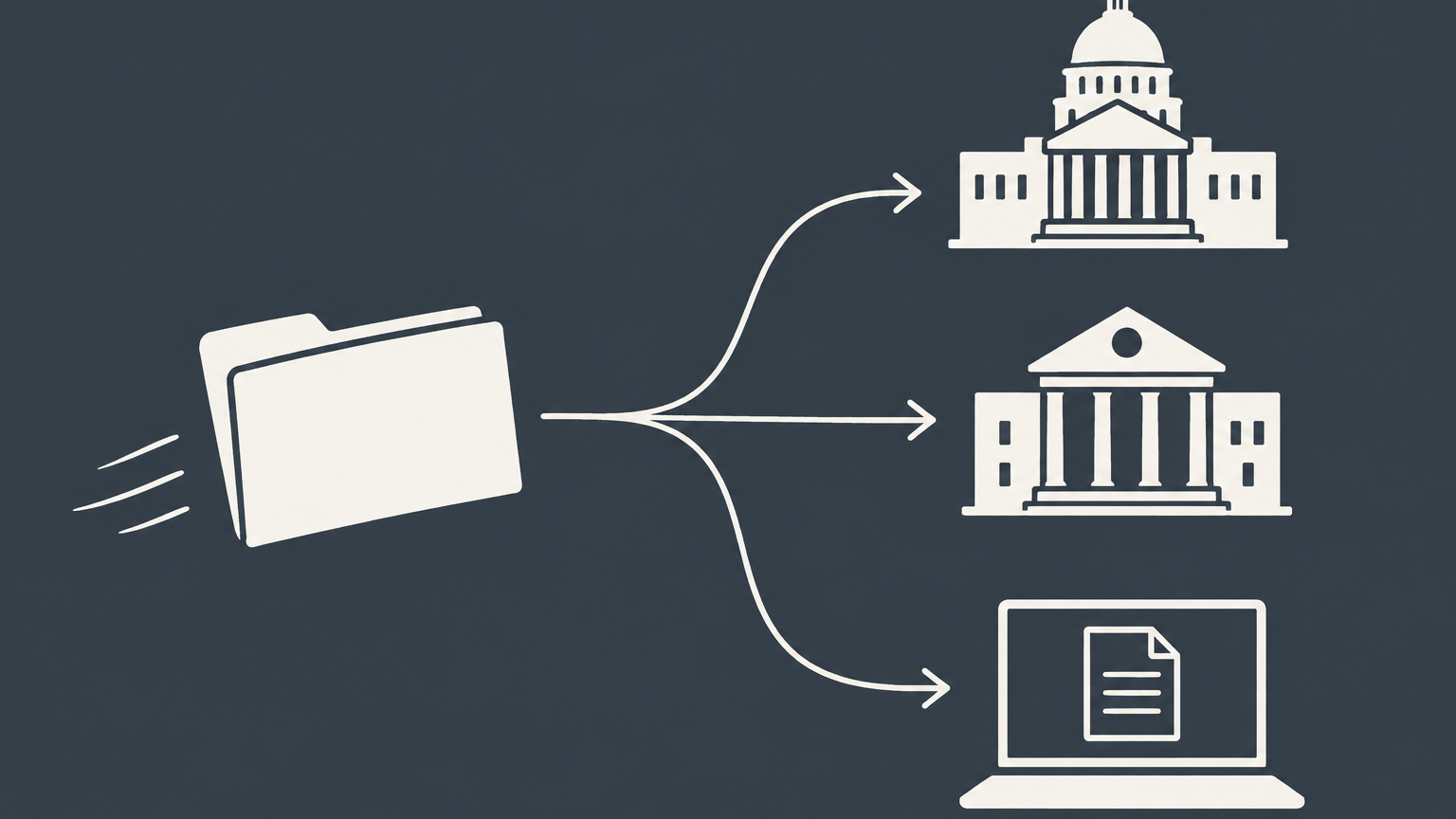
Before downloading a DBA filing form, determine which government office handles your application. There is no single national DBA registry. Depending on your state, business structure, and principal business address, the filing authority may be a secretary of state, division of corporations, superior court clerk, county clerk, or city office.
Start by identifying the DBA's legal owner. A sole proprietor generally files under the owner's legal name. A partnership identifies the partners or the partnership required by the form. An LLC or corporation normally identifies the existing entity as the owner. This distinction matters because one state may process entity-owned assumed names at the state level while sending sole proprietors to a county clerk.
Next, check every jurisdiction where you will use the name. Search the official agency's instructions for terms such as "assumed name," "trade name," or "fictitious name" in addition to DBA. Confirm all of the following before completing a form:
- The correct filing office for your entity type and location
- The current form and acceptable filing methods
- Name restrictions and search procedures
- The filing fee and permitted payment methods
- Signature, identification, and notarization requirements
- Newspaper publication or public-notice requirements
- Renewal, amendment, and cancellation rules
County-specific searches such as Clayton County DBA filing or DBA filing NYC often indicate that a statewide portal is not the full answer. For another example of jurisdiction-specific procedures, review the steps for filing a DBA in Virginia.
How to Apply for a DBA Step by Step
Once you identify the correct authority, use this jurisdiction-first process to apply for a DBA. Do not rely on a generic form or assume that rules from a neighboring county apply to your business.
- Confirm that you need a DBA. You may need one when your public-facing name differs from the legal name of the owner or registered entity. You generally do not need a DBA merely to use the exact legal name of your LLC, corporation, or sole proprietorship, subject to local rules.
- Choose and investigate the name. Search the filing office's business-name records. Also consider similar names, restricted terms, entity designators, and possible trademark conflicts. Availability in a DBA database does not establish trademark clearance.
- Download or open the official DBA application. Confirm that the form applies to your entity type. Check its revision date and compare it with the agency's current instructions.
- Gather supporting information. You may need formation details, the principal business address, owner or officer information, a description of the business, and proof that an entity remains active or in good standing.
- Complete and review the form. Enter names exactly as they appear in formation or identification records. Check spelling, addresses, dates, and the capacity of each signer.
- Complete formalities. Sign before a notary if required. Arrange publication or other public notice when the jurisdiction requires it.
- Submit the application and fee. Follow the office's online, mail, or in-person instructions. Use only an accepted payment method and retain the receipt.
Creating a DBA does not end with sending the form. Track the application until it is accepted, then save the certificate, stamped filing, publication affidavit, and renewal information.
How to Fill Out a DBA Form Without Delays
DBA forms differ, but several fields appear frequently. Read the definitions on your form before answering because terms such as "registrant," "owner," and "applicant" may refer to a person, partnership, LLC, or corporation.
- Legal business name: Enter the full legal name of the owner. For an LLC or corporation, copy the name from its formation record, including the correct entity ending. A sole proprietor normally uses the individual's legal name.
- Proposed DBA: Enter the trade name exactly as you intend to present it to customers. Keep spelling, spacing, and punctuation consistent across the application.
- Entity type: Select the actual structure, such as sole proprietorship, partnership, LLC, or corporation. A DBA does not change that structure.
- Business activity: Give a clear description of the products or services offered if the form requests one. Avoid using a vague label that does not answer the field.
- Business and mailing addresses: Follow the form's instructions on street addresses, principal offices, and mailing addresses. Do not substitute a mailing address when a physical location is required.
- Owner and contact details: List the people or entity information requested by that jurisdiction. Some filings become public records, so review the agency's disclosure information.
- Effective date or first-use date: Provide a date only if requested and use the definition in the instructions. Do not guess when the form distinguishes intended use from actual first use.
- Signature and title: The proper owner, partner, member, manager, officer, or authorized person must sign in the stated capacity. Complete notarization only when required.
Review the completed DBA application against the instructions line by line. An omitted owner, inconsistent entity name, unauthorized signature, or unpaid fee can delay processing. If you are forming an entity rather than registering a name for an existing one, the process is different. See how to fill out an LLC form before treating a DBA as a substitute.
Can You Apply for a DBA Online or Use a Filing Service?
You can apply for a DBA online when the responsible government office provides an electronic filing system for your filing type. Begin on the official state or county website, not with a search advertisement. Confirm that the portal covers your entity type, because an online state process for an LLC may not replace a county filing required from a sole proprietor.
Before starting an online DBA filing, prepare the legal owner's exact name, business address, proposed fictitious name, entity information, email address, and an accepted electronic payment method. Review the filing before paying. Save the confirmation page and receipt, then monitor the email address associated with the application for a rejection, request for correction, or approval.
Electronic submission does not necessarily eliminate offline requirements. A jurisdiction may still require newspaper publication, proof of publication, notarized supporting documents, or a separate local registration. If the system offers certificates or certified copies, decide whether your bank or licensing agency requires one before ordering extras.
A private DBA filing service can prepare or transmit an application, but the service is not the government filing authority. Compare its service charge with the government fee and identify what the package excludes. Publication, certified copies, county filings, and renewals may cost extra. A service also cannot guarantee trademark rights or resolve uncertainty about ownership. If you prefer to file directly, use the official portal and current agency instructions.
DBA Georgia, Florida, and New York Filing Comparison
The examples below show why you must identify the filing authority before choosing a form. Verify current requirements with the agency and relevant county because procedures can change.
| Location | Name Used | Primary Filing Authority | Online Availability | County-Level Considerations |
|---|---|---|---|---|
| Georgia | Trade name or DBA | Superior court clerk in the county where the business is located, as described by Georgia.gov | Availability depends on the county | County filing and local publication steps may apply. Clayton County and Fulton County filers should follow their applicable superior court clerk's instructions. |
| Florida | Fictitious name | Florida Division of Corporations | Online registration is available through Sunbiz | The applicant must address Florida's newspaper-advertisement requirement in the county of the principal place of business. |
| New York | Assumed name | New York Department of State for covered business entities; county clerk for sole proprietors and general partnerships | Availability depends on the filer and filing route | Entity type determines whether the filing goes to the state or a county clerk. In New York City, the relevant county corresponds to the borough. |
Georgia illustrates a county-centered system, while Florida offers a statewide fictitious-name registration process. New York divides responsibility based on business structure. These differences also affect payment, signatures, copies, and amendments. Businesses filing elsewhere should not borrow instructions from these examples. Consult the agency serving the location where you conduct business. State-specific guides for New Jersey DBA filing and Colorado trade name filing provide additional comparisons.
If your filing spans states, lists unclear owners, conflicts with another business name, or raises trademark concerns, you can post your legal need on UpCounsel's marketplace. An attorney can identify the correct state and county authorities, review the DBA application, assess name-related risks, and coordinate required submissions. Responses typically arrive within a day, which can help when a launch, contract, or bank request depends on an accepted filing.
Adding a DBA to an LLC or Sole Proprietorship
An existing LLC or corporation can generally operate under a DBA if it completes the filing required by the applicable jurisdiction. The DBA application should identify the existing entity as the owner or registrant when the form requires that information. The assumed name does not become a subsidiary or a separate company. Contracts, debts, and business activity remain connected to the underlying entity.
A sole proprietor may also apply for a DBA to use a business name instead of the owner's personal legal name. That registration does not convert the proprietorship into an LLC or shield personal assets from business obligations. If liability protection is a goal, evaluate business formation separately before deciding how the DBA should be owned.
Keep these legal distinctions clear:
- Business formation: A DBA registers the use of a name. It does not create an LLC or corporation.
- Liability: Filing an assumed name does not add liability protection. Protection depends on the underlying structure and how the business is operated.
- Taxes: A DBA does not create a new federal tax classification. The individual or entity behind the name continues to handle the applicable tax reporting.
- Trademark rights: Acceptance of a DBA does not equal federal trademark registration or guarantee exclusive rights to the name.
- Licenses: A DBA is not a business, professional, zoning, or occupational license. Separate approvals may still be required.
An LLC may use more than one DBA for different brands, but each name may require its own application, fee, and maintenance. Keep contracts and invoices clear about the legal entity behind each name. If the LLC's legal name or ownership information changes, check whether the jurisdiction requires an amendment or a new assumed-name filing.
DBA Cost, Renewals, Banking, and Post-Filing Steps
DBA cost varies by state and county. Your total may include a government filing fee, notarization, newspaper publication, certified copies, and service charges if you hire a private filing company. Check the official fee schedule immediately before submission. Do not assume that an amount charged in one county applies statewide or that an online service's advertised price includes government fees.
After approval, complete these practical steps:
- Save the official record. Retain the accepted application, certificate, receipt, and proof of publication. Keep digital and physical copies where authorized staff can find them.
- Contact your bank. Ask which DBA certificate, formation record, tax identification document, and identification the bank requires. A DBA does not automatically add the name to an existing account.
- Use the name consistently. Match the approved spelling on invoices, signs, websites, and payment records. Contracts should make the underlying legal party identifiable.
- Calendar maintenance dates. Some registrations expire, while others require action after specified changes. Follow the renewal period printed on the approval or stated in current agency instructions.
- Update changed information. A new address, legal owner, entity name, or business structure may require an amendment, cancellation, or new filing rather than a simple online edit.
- Register additional names separately when required. Do not assume approval of one brand covers every other name used by the business.
- Check other states. Filing a DBA in one state does not authorize an entity to conduct business in another state or replace foreign qualification requirements.
A DBA itself does not file a federal tax return. Tax obligations belong to the underlying sole proprietor, partnership, LLC, or corporation. Consult IRS.gov for federal tax and employer identification guidance. Florida LLC owners should also distinguish fictitious-name maintenance from Florida LLC annual compliance.
Frequently Asked Questions
How Do I Fill Out a DBA Form if a Field Does Not Fit My Business?
Follow the form's definitions and contact the filing office rather than entering information that is not accurate. Ask whether the field may be left blank, marked not applicable, or addressed in an attachment. Government offices may reject handwritten alterations or incomplete answers, so obtain instructions before signing and keep a record of any written guidance you receive.
Can I Get a DBA Online?
Yes, if the responsible state or county offers online filing for your entity type. An online database search alone does not register the name, so complete the transaction and confirm that the filing was accepted. Download the acknowledgment and determine whether you must separately obtain a certified copy for banking, licensing, or another business purpose.
Can I Add a DBA to My LLC?
Yes, an LLC can register an assumed name while remaining the same legal entity. Consider adopting an internal approval that documents the company's decision to use the name, especially when an operating agreement assigns naming or branding decisions to particular members or managers. This internal record is separate from the government application and may help establish who authorized the filing.
Can I Add a DBA to My Personal Bank Account?
Only your financial institution can determine whether it will add a DBA to a personal account. A bank may instead require a business account, an approved DBA certificate, identification, and tax documentation. Ask for its requirements before receiving payments under the trade name, since depositing checks made payable to an unrecognized name can create processing problems.
Can You File a DBA in Another State?
Yes, but a DBA filing in another state may be only one part of the process. An LLC or corporation may first need authority to conduct business there, and a local assumed-name filing may also apply. Review where the company has business activity, not merely where customers can view its website, when assessing registration obligations.
Can You File a Trademark for a DBA?
Yes, a business may seek trademark registration for a DBA used as a source identifier, but the trademark application is separate from the DBA registration. Eligibility depends on trademark law, actual or intended use, and conflicts with existing marks. A name used only as a company identifier may require different analysis from a brand used on particular goods or services.
Does a DBA Need to File Taxes?
No, a DBA normally does not file taxes independently because it is a name rather than a separate taxpayer. Tax forms should identify the responsible person or legal entity as required by the applicable tax instructions. Keep records that connect DBA revenue and expenses to that taxpayer, particularly when one entity operates several brands or lines of business.