The most common franchise definition is a business arrangement in which a franchisor authorizes a franchisee to operate under its brand and system. The word can also refer to a right granted by a government, so context matters.
Key Takeaways
- A franchisor owns or controls the brand and business system, while a franchisee operates a business under agreed standards.
- The franchisee usually pays initial and ongoing fees in exchange for brand rights, operating methods, and support.
- A franchise is not the same as an ordinary business license, government permit, or independently created business.
- Government franchise meaning refers to a special right or privilege, such as authority to provide certain public services.
- Federal disclosure rules and applicable state requirements may regulate the offer and sale of a business franchise.
- Prospective franchisees should examine fees, territory, exclusivity, renewal, transfer, and termination before signing.
What Is a Franchise? A Plain-Language Definition
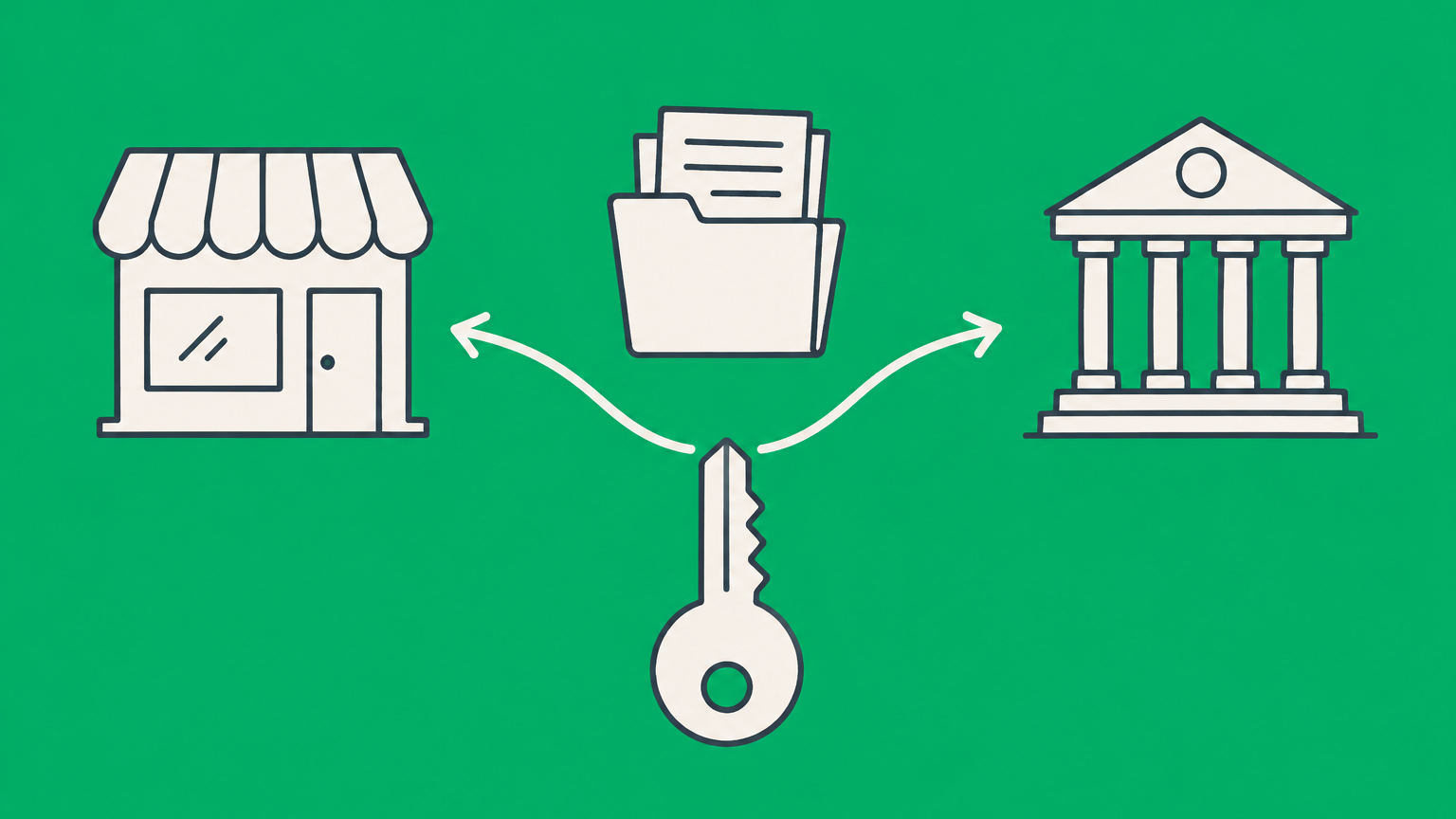
In business, a franchise is a legal and commercial relationship between a franchisor and a franchisee. The franchisor owns or controls a trademark, brand, business method, or operating system. The franchisee receives permission to use those assets when operating a business, subject to a contract and defined standards.
The franchisor may provide training, advertising programs, operating procedures, approved products, site guidance, or continuing support. In return, the franchisee commonly pays an initial franchise fee, ongoing royalties, marketing contributions, or other required charges. The exact arrangement depends on the disclosure materials and franchise agreement.
The franchisee normally owns the local business but does not own the franchisor's brand. The franchisee also does not become an employee merely by purchasing a franchise. Instead, the franchisee runs a separate business while accepting contractual limits on branding, products, suppliers, quality, hours, reporting, and other operations.
A franchise is not itself a particular type of legal entity. A franchisee might conduct business through a corporation, limited liability company, partnership, or another permitted structure. The distinction is explained further in corporate versus franchise structures. The governing agreement, not the entity's name alone, establishes the parties' franchise rights and obligations.
Franchise Meaning in Government and Other Contexts
The franchise meaning in government differs from the everyday business definition. In government, a franchise can mean a special right or privilege granted by a public authority. For example, a government may authorize an organization to provide a public service, operate along a route, or use public property for a defined purpose.
Government-granted franchises have historically included rights involving public utilities, transportation services, taxi operations, and access to public facilities. The term can also refer to a constitutional or statutory right, particularly the right to vote. These meanings concern public authority rather than a private company's branded operating system.
A government franchise is not automatically the same as a general business license or permit. A business license typically confirms that a person or entity may conduct specified activities under applicable law. A government franchise generally conveys a more specific privilege or operating authority. The language of the law, ordinance, grant, or contract controls the distinction. A government contract is also different because it ordinarily involves an agency purchasing goods or services rather than granting franchise rights.
Other industries use the word differently. A media franchise is a group of related films, books, games, or other works built around connected characters or settings. In professional sports, a franchise can mean a team and its operating organization. Franchise tax is another separate concept. It is a tax imposed under state law, not a payment for joining a branded system. Tax-focused readers can review how corporate franchise tax works.
How Does Franchising Work?
Franchising starts when a franchisor develops a brand, operating model, and standards that other owners can use. A prospective franchisee evaluates the opportunity, reviews the required disclosures, negotiates any provisions that are open to negotiation, and signs a franchise agreement. The franchisee then establishes and operates the local business.
The relationship generally follows this flow:
- Authorization: The franchisor grants limited rights to use its trademarks, trade name, products, and operating system.
- Investment: The franchisee pays required fees and funds the location, equipment, inventory, employees, and working capital described by the arrangement.
- Training and setup: The franchisor may provide initial training, operating manuals, site assistance, vendor requirements, or opening support.
- Operation: The franchisee runs the business while following brand, quality, reporting, and operational requirements.
- Ongoing payments and support: The franchisee may pay royalties or advertising contributions, while the franchisor may provide marketing, system updates, and continuing assistance.
Franchise ownership can reduce some of the work involved in creating a brand and operating method from scratch. It does not eliminate business risk or guarantee profits. The franchisee remains responsible for managing the location, complying with applicable laws, controlling expenses, and meeting the agreement's performance standards.
The parties' rights come primarily from the franchise agreement, disclosure materials, intellectual property licenses, and applicable law. Promises made during sales discussions should be compared carefully with the written documents before the franchisee commits money.
Types of Business Franchises and Ownership Structures
Business franchises commonly fall into two broad models. A business format franchise gives the franchisee access to a broader operating system. That system may include trademarks, training, marketing methods, store design, quality requirements, technology, approved suppliers, and ongoing support. Restaurants, service businesses, and branded retail locations often use this model.
A product distribution franchise focuses more heavily on selling products manufactured or supplied by the franchisor. The franchisee may use the franchisor's trademark and logo, but the franchisor does not necessarily provide the complete operating system associated with a business format franchise. This arrangement can resemble a supplier-dealer relationship, although the trademark rights and level of assistance may make it a franchise.
Franchises can also differ by the number of locations and development rights granted:
- Single-unit franchise: The franchisee receives the right to operate one location.
- Multi-unit franchise: The franchisee operates more than one unit under the applicable agreements.
- Area development arrangement: The franchisee agrees to develop multiple locations within an area and schedule.
- Master franchise: The franchisee may receive broader territorial rights, sometimes including authority to recruit or support other franchisees.
Labels do not resolve every legal issue. The actual rights, required payments, level of operational control, and assistance provided determine how the relationship functions. Each location or development right may also have separate fees, deadlines, and default consequences.
Franchise vs. Independent Business
A franchise is a business, but not every business is a franchise. An independent owner creates or acquires a business without receiving another company's branded operating system. A franchisee owns and manages a local business while operating under rights and restrictions supplied by the franchisor.
| Issue | Franchise | Independent Business |
|---|---|---|
| Ownership | The franchisee owns the local operation, subject to the franchise agreement. | The owner controls the business without a franchisor relationship. |
| Brand use | The owner receives limited permission to use the franchisor's brand. | The owner creates or separately acquires branding rights. |
| Operating control | The franchisor may impose detailed system and quality standards. | The owner usually sets operating methods directly. |
| Support | Training, marketing, manuals, or vendor support may be provided. | The owner develops or purchases support independently. |
| Fees | Initial fees, royalties, marketing charges, and other payments may apply. | There are no franchise fees, although ordinary business costs still apply. |
| Governing documents | A franchise agreement and disclosure materials define the relationship. | Formation, purchase, lease, licensing, and vendor documents govern operations. |
The best choice depends on your goals, available capital, preferred level of control, and tolerance for contractual restrictions. A recognized system may offer useful support, but an independent business gives its owner more freedom to change branding, products, vendors, and operating methods.
Franchise Disclosure Documents and Government Regulation
In the United States, the offer and sale of franchises may be regulated under federal and state law. The Federal Trade Commission's Franchise Rule requires covered franchisors to provide prospective franchisees with a Franchise Disclosure Document, commonly called an FDD. The franchisor generally must provide it at least 14 days before the prospect signs a binding agreement or pays money relating to the proposed franchise sale.
The FDD provides structured information about the franchisor and the opportunity. It addresses subjects such as the franchisor's background, litigation and bankruptcy history, initial and ongoing costs, operational restrictions, assistance, territory, intellectual property, renewal, termination, financial information, and existing franchisees. Financial performance information is included only when the franchisor chooses to make a permitted financial performance representation.
The FDD does not replace the franchise agreement. The FDD discloses information about the system and proposed relationship, while the agreement creates binding contractual rights and duties. You should read them together and investigate inconsistencies, missing information, or oral statements that do not appear in writing.
The FTC offers a free Franchise Rule compliance resource. States may impose additional registration, filing, disclosure, relationship, or termination requirements. For example, the Wisconsin Department of Financial Institutions provides state-level business and franchise resources. Check the current instructions from the regulator responsible for each state connected to the offer or sale.
A commercial arrangement does not avoid franchise regulation merely because the contract calls it a license, dealership, distributorship, or business opportunity. Regulators consider the arrangement's actual characteristics, including trademark use, required payments, and significant control or assistance.
Franchise Agreement Checklist: Fees, Territory, and Termination
The franchise agreement controls how you may operate and how the relationship can end. Before signing, compare the agreement with the FDD and review these topics:
- Intellectual property: Identify the trademarks, trade names, software, manuals, and confidential information you may use.
- Initial and ongoing fees: List the franchise fee, royalties, advertising contributions, technology charges, renewal fees, transfer fees, and other required payments. Review how to calculate and account for franchise fees and how franchise royalty fees are structured.
- Operating standards: Determine what the franchisor can require concerning products, services, suppliers, pricing recommendations, technology, staffing, appearance, and reporting.
- Training and support: Confirm what assistance is mandatory, optional, included in the fees, or available at extra cost.
- Territory and exclusivity: Identify the protected area, if any, and whether the franchisor may open competing locations, sell online, or use other distribution channels.
- Term and renewal: Check the agreement's duration, renewal conditions, renovation obligations, new contract requirements, and renewal fees.
- Transfer and termination: Review when you may sell, when the franchisor may withhold approval, what defaults can be cured, and what happens after termination.
If you are preparing to sign or commit substantial money, you can post your legal need on UpCounsel's marketplace. A franchise attorney can review the FDD and agreement, identify financial and operational obligations, evaluate territory and exclusivity language, and explain renewal or termination risks. The attorney can also help negotiate provisions that the franchisor is willing to change. Responses typically arrive within a day.
Do not assume an exclusive territory is included. Exclusivity exists only if the governing documents grant it, and it may contain exceptions. Also examine post-termination duties involving trademarks, confidential information, de-identification, inventory, customer records, and noncompetition restrictions. State law can affect the enforceability of particular provisions, so check the law governing the agreement and the states where the business will operate.
Frequently Asked Questions
What Is a Franchise?
A franchise is permission to operate a business using another company's brand, products, or system under a contract. The term may describe the legal right, the local business receiving that right, or the broader branded network. Its precise meaning depends on the commercial arrangement and the context in which the word appears.
What Is a Franchise in Government?
A franchise in government is a special right or privilege granted by a public authority. It may authorize an organization to provide a service or use public property for a stated purpose. In constitutional usage, the franchise can also mean the right to vote, rather than a privately owned branded business.
What Is a Simple Definition of Franchise?
A simple definition of franchise is the right to use an established name and method to sell goods or services. The person granting the right sets conditions, and the recipient agrees to follow them. In business arrangements, payment, brand standards, training, and continuing support often form part of the relationship.
What Is a Franchise vs. a Business?
A franchise is one way to own and operate a business, while business is the broader category. A franchise uses rights supplied by a franchisor and follows a shared system. Other businesses develop their own identity and procedures or acquire assets without entering a continuing branded relationship with a franchisor.
How Does Franchising Work?
Franchising works by dividing roles between a system owner and a local operator. The system owner protects and develops the brand, while the operator serves customers in an authorized location or territory. Their contract allocates costs, decision-making authority, quality obligations, support, and the consequences of failing to meet required standards.
Is McDonald's a Franchise?
McDonald's is a well-known example of a business that uses franchising. A local restaurant may be operated by a franchisee that licenses the brand and follows the company's system, although the company also operates restaurants itself. The ownership of a particular location should therefore be confirmed rather than assumed from its signage.


