Duly signed meaning is straightforward: a document has been signed properly, usually by the correct person and according to the requirements that apply to it. The phrase does not automatically mean that every document needs witnesses, notarization, or a stamp.
Key Takeaways
- "Duly signed" generally means properly signed by a person with authority to sign.
- "Dually signed" is usually a spelling mistake, not a separate legal term.
- Witnesses, notarization, stamps, and delivery are necessary only when the governing requirements call for them.
- A duly signed document is not necessarily a fully executed or legally enforceable agreement.
- Authority matters when an employee, corporate representative, or attorney-in-fact signs for someone else.
- Check the document, applicable law, and official instructions instead of relying on the word "duly" alone.
Duly Signed Meaning in Plain English
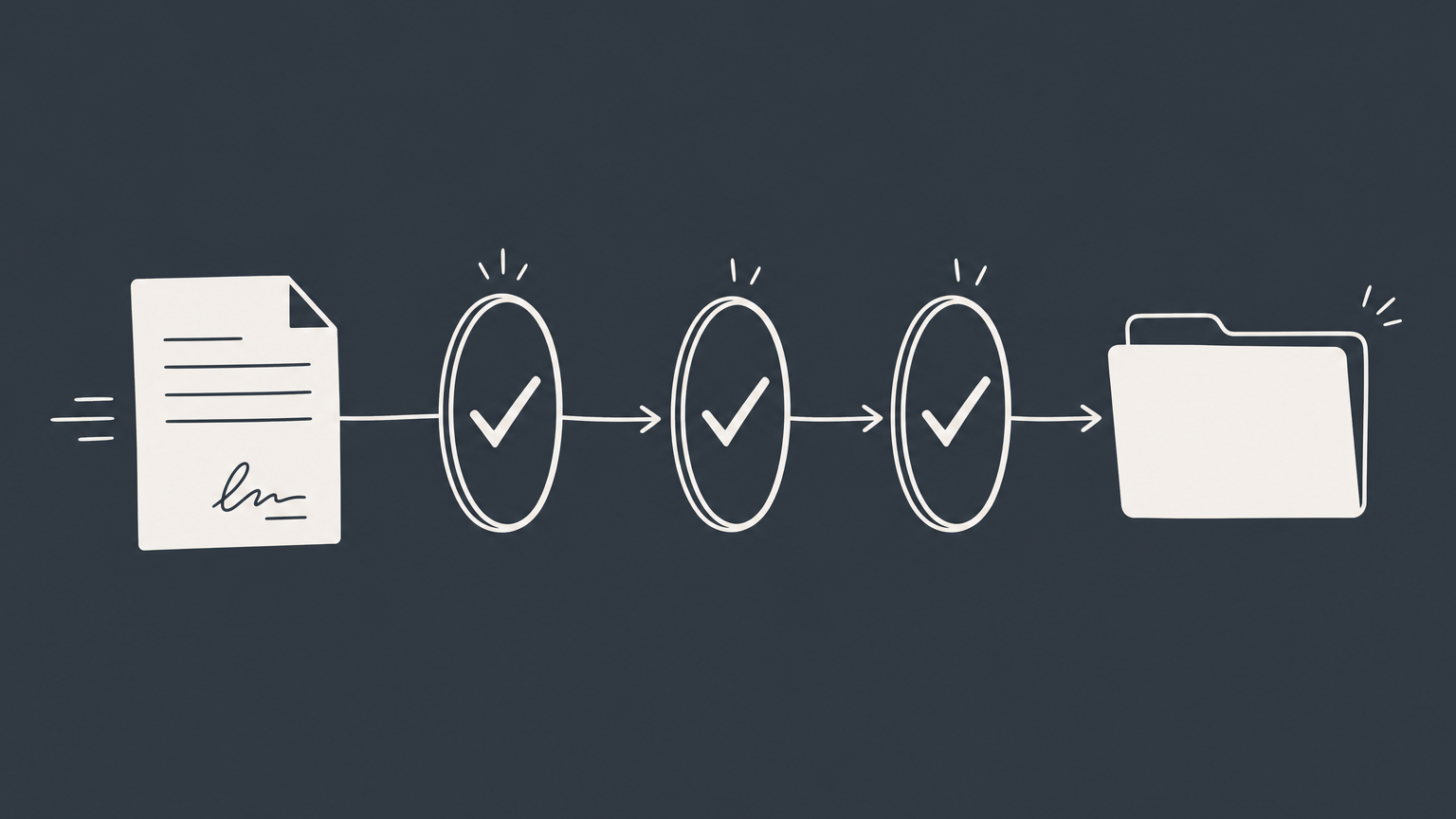
"Duly" means properly, appropriately, or according to applicable requirements. A duly signed document is therefore one that has been signed in the required manner. Depending on the context, this may mean that the correct person signed, the signature appears in the correct place, and any document-specific signing procedure was followed.
The phrase often appears in contracts, consent forms, applications, corporate records, letters, and administrative instructions. A request to "return the duly signed form" usually asks you to complete the required signature process before returning the document. You should read the form's instructions because they may identify who must sign, where to sign, and whether a date, witness, notary, or supporting document is needed.
Not every signature requirement is the same. An ordinary business letter may need only the sender's signature. A corporate declaration may require an officer or another specifically authorized person. Certain documents may require witnessing or notarization under applicable law, while others do not. A stamp or seal is relevant only if the document, organization, agency, or governing requirements call for one.
Calling a document duly signed also does not resolve every question about its legal effect. Enforceability can depend on the parties' agreement, authority, consent, required formalities, and other legal rules. For more about what a signature may establish, review the requirements and implications of a signed agreement.
Duly or Dually Signed: Which Spelling Is Correct?
"Duly signed" is the correct phrase when you mean signed properly or in accordance with requirements. "Dually signed" is usually a spelling error in this context. The words sound similar, but they have different meanings.
"Duly" is an adverb describing an act performed properly. In legal and business writing, you may see phrases such as "duly signed," "duly authorized," "duly appointed," or "duly delivered." The phrase "duly authorized" means that authority was properly granted under the applicable process. It does not identify the source or scope of that authority, so you may still need to examine a delegation, resolution, power of attorney, or governing document.
"Dually" relates to something occurring in two ways or involving a dual capacity. It does not ordinarily describe a properly completed signature. A document signed by two people is better described as "signed by both parties" or "signed by two authorized representatives," not "dually signed." Specific wording avoids uncertainty about who had to sign.
Legal writers sometimes consider "duly" redundant because "signed" or "authorized" may already imply proper action. Even so, the phrase remains common. If you draft the document, stating the exact requirements is clearer. For example, write "signed by the company's chief financial officer and witnessed by one adult" instead of merely saying "duly signed" when those are the actual requirements.
Signed, Duly Signed, and Duly Executed Meaning Compared
Related terms overlap, but they do not always communicate the same thing. Their meaning can also change under a contract's definitions section. If an agreement expressly defines "duly signed" or "execution," that definition should guide how the phrase applies within that agreement.
| Term | Main Focus | What It Usually Indicates | What It Does Not Necessarily Prove |
|---|---|---|---|
| Signed | The signature | A person placed or adopted a signature on the document. | Authority, completion by every party, or compliance with other formalities. |
| Duly signed | Proper signing | The appropriate person signed according to applicable instructions or requirements. | That the agreement is enforceable or that every party has signed. |
| Duly executed | The required execution process | The steps required to execute that type of document were properly completed. | That no separate condition, approval, or delivery requirement remains. |
| Fully executed | Completion by the required parties | All parties whose signatures are required have generally signed the agreement. | That every underlying term is lawful or that performance has occurred. |
| Duly authorized | The signer's authority | The person received authority through the proper process. | That the person stayed within the scope of that authority. |
"Executed" sometimes means signed, particularly in ordinary contract usage. In other settings, execution includes additional acts such as witnessing, notarization, acknowledgment, delivery, or approval. A document can therefore contain a signature yet still raise questions about whether execution was completed. See how these distinctions apply to a fully executed contract.
Duly Signed Examples in Common Documents
The practical meaning of duly signed depends on the document and its instructions. These examples show why you should not assume that every signature needs the same formalities:
- Contract: "The parties returned a duly signed contract." This may mean each required party signed through an authorized individual and followed the contract's execution instructions.
- Consent form: "Submit the consent form duly signed by the participant." The form may require the participant's signature and date. A parent, guardian, or witness may also be required in a particular setting.
- Corporate declaration: "The declaration must be duly signed by an authorized officer." You may need to confirm the officer's position, delegated authority, and any approval required by corporate records.
- Signed letter: "Please provide a duly signed letter confirming the change." This usually calls for a completed letter bearing the appropriate sender's signature.
- Instruction bearing a signature: A request for a "duly signed instruction with your signature appended" generally means that you must place your signature on the instruction as directed. Identity verification may also apply.
- CV or resume: A request for a duly signed CV usually asks the applicant to sign the document, often to confirm its contents. Follow the recipient's stated instructions about placement and dating.
- Signed and stamped document: "Duly signed and stamped" means the recipient expects both a proper signature and the specified stamp or seal. Confirm whose stamp is required and where it must appear.
These phrases do not independently establish enforceability. For example, an agreement signed by only one side may require a separate analysis of acceptance, conduct, and the parties' requirements. The rules are discussed further in contracts not signed by one party.
How to Check Whether a Document Is Duly Signed
Start with the document itself. Review its signature block, definitions, signing instructions, and any provision governing notices, counterparts, electronic signatures, approvals, or delivery. Then check the law and official agency instructions that apply to the particular document. Not every item below applies in every case.
- Identify the correct signer. Confirm which individual, party, officer, guardian, trustee, or representative must sign.
- Verify authority. If someone signs for another person or business, check the source and scope of that person's authority.
- Confirm all required parties. Determine whether one signature is sufficient or multiple parties, directors, officers, or witnesses must sign.
- Use the correct signature location. Sign the designated block and identify the signer's name, title, and represented entity when requested.
- Add required dates. Distinguish the signature date from an effective date if the document uses both.
- Check witness and notary rules. Do not assume they apply to every document. Verify the applicable state statute, agency instructions, or contractual requirement.
- Confirm any stamp or seal requirement. A stamp may be an administrative or organizational requirement, but it is not automatically required merely because a document says "duly signed."
- Follow delivery instructions. Check whether the signed original, a copy, or an electronic version must be delivered to a particular person or address.
- Preserve records. Keep the final document and evidence of authority, approval, transmission, and receipt when relevant.
Review the final version before and after signing. Changing material terms after signature can create serious authenticity and consent issues. If a change is necessary, follow an agreed amendment process rather than silently editing the document. Read more about the risks of altering a document after signing.
Authority, Power of Attorney, and Signature Disputes
A person's physical ability to sign does not necessarily give that person authority to bind someone else. This issue commonly arises when an employee signs for a company, an officer acts outside normal responsibilities, or an attorney-in-fact signs under a power of attorney.
For a business signature, check the entity's governing documents, applicable resolutions, delegations, approval policies, and the agreement's signature requirements. A job title may suggest authority, but it does not always establish the scope of that authority. Some transactions may require board approval, signatures from multiple officers, or another internal process.
When an attorney-in-fact signs, review the actual power of attorney. Determine whether it is effective, whether it covers the transaction, and whether it imposes limits or special signing instructions. Do not assume that a general description of authority covers every corporate or personal document. The other party may also request evidence of the authorization.
A signature dispute can involve more than authority. Parties may disagree about identity, missing signatures, witnesses, notarization, delivery, later alterations, or whether the signer acted voluntarily. A signature obtained through improper pressure can present a different issue from an unauthorized signature. Evidence relevant to a claim involving a contract signed under duress may include communications and circumstances surrounding execution.
If a signature is challenged, authority is unclear, or required formalities may be missing, you can post your legal need on UpCounsel's marketplace. An attorney can review the document, governing agreement, corporate records, power of attorney, and applicable requirements, then advise whether the issue can be corrected or should be disputed. Responses typically arrive within a day, which can help when a transaction or filing is on hold.
How to Use Duly Signed Clearly
You can use "duly signed" to describe a completed signing process or to request a properly signed document. Common examples include "The agreement was duly signed by both parties" and "Please return the duly signed consent form." The phrase works best when everyone already understands the applicable requirements.
If the signing process matters, use precise wording instead. "Signed by an authorized representative" identifies an authority requirement. "Signed and dated by the applicant" identifies two required actions. "Signed before a notary" or "signed by both directors" states the expected formality without forcing the reader to interpret "duly."
Possible alternatives include "properly signed," "completed and signed," "signed by all required parties," and "signed in accordance with the instructions." These are not interchangeable in every situation. "Endorsed," "approved," "ratified," and "authenticated" can refer to different legal or procedural acts, so avoid using them as automatic synonyms.
When you receive a request for a duly signed document, ask for clarification if the signer, signature method, witness, notary, stamp, or delivery method is unclear. For an agency form, consult the issuing agency's current official instructions. For a transaction, check the agreement and governing law. Clear requirements reduce the risk that a recipient rejects the document or that a party later challenges how it was signed.
Frequently Asked Questions
What Does Duly Signed Mean?
Duly signed means signed in the manner required for the particular document. The phrase usually indicates procedural regularity, but it is not an independent guarantee that the document is authentic, enforceable, or immune from challenge. Its effect depends on the surrounding language and the rules governing the transaction.
What Is a Duly Signed Document?
A duly signed document is one presented as having completed its applicable signature requirements. If the document will be filed or submitted, the receiving organization may still review identity information, attachments, certifications, formatting, or filing fees separately from the signature itself.
What Does Duly Executed Mean?
Duly executed means that the legally or contractually required execution process was properly completed. The phrase can cover signatures and other required acts, but it does not necessarily mean that contractual duties have been performed or that every condition to effectiveness has occurred.
Does Executed Mean Signed?
Executed can mean signed, but the intended meaning depends on the document and context. For example, a contract may use an "execution date" as the date of signature while assigning a different effective date. Definitions, signature provisions, and closing requirements can clarify which event the parties intended.
What Does Duly Mean in Law?
In law, duly generally means properly or in accordance with applicable legal requirements. It often creates an assumption that the necessary procedure was followed, but that assumption can be questioned with contrary evidence. The word should be read alongside the specific statute, contract, order, or organizational rule involved.


