A brandmark is a symbol, image, or other nonverbal design that visually identifies a brand. Understanding this term can help you choose an effective design, distinguish it from a logo, and determine whether trademark protection may be appropriate.
Key Takeaways
- A brand mark is generally the nonverbal visual identifier used to represent a brand.
- A logo may contain a brand mark, words, or a combination of both.
- A wordmark relies on stylized words or letters rather than a separate symbol.
- A trademark is a source identifier protected under trademark law, not simply another name for a logo.
- Effective brand marks are distinctive, recognizable, versatile, relevant, and usable at different sizes.
- Legal clearance should occur before you invest heavily in launching a new mark.
What Is a Brandmark or Brand Mark?
The basic brand mark definition is a visual symbol or design that identifies a brand without relying on the business name. It can be abstract, such as a geometric shape, or pictorial, such as an image of an animal, object, or person. A company may use the mark by itself after customers begin associating it with a particular source.
People often write the term as either "brandmark" or "brand mark." In general branding discussions, "brand mark" is the more descriptive two-word form, while "brandmark" frequently appears in informal usage and in the names of particular businesses or products. The spelling does not change the basic brand mark meaning when the term refers to visual identity.
A brand mark is one part of a broader brand identity. That identity may also include the business name, colors, typography, packaging, messaging, and customer experience. A color or typeface can support recognition, but it is not necessarily a standalone brand mark. The mark normally functions as a distinct visual identifier that consumers can connect to one source.
Recognition usually develops through repeated and consistent use. An attractive design does not automatically become valuable or legally protectable. Customers must encounter it in connection with the business, and the design must avoid conflicts with existing marks. If you are also selecting a company name, review the difference between a trade name and a brand name before building the rest of your identity around it.
Brand Mark vs. Logo, Wordmark, and Trademark
Brand mark, logo, wordmark, and trademark describe related but different concepts. A logo is the broadest design term. It may consist of a symbol, stylized text, or both. A brand mark usually refers only to the nonverbal symbol. A wordmark uses words or letters as the central design. A trademark is a word, phrase, symbol, design, or combination that identifies and distinguishes the source of goods or services.
| Term | Symbols or Text | Branding Role | Legal Designation? |
|---|---|---|---|
| Brand mark | Primarily a symbol or image without words | Provides a nonverbal visual identifier | No, not by itself |
| Logo | May use symbols, text, or both | Serves as a broad visual signature for the brand | No, although it may function as a trademark |
| Wordmark | Words, letters, or numbers in a particular presentation | Identifies the brand through its name or initials | No, although it may function as a trademark |
| Trademark | May include words, phrases, symbols, designs, or combinations | Identifies the source of particular goods or services | Yes, it is a legal source-identification concept |
For example, a company might have a combined logo containing its written name beside a symbol. The symbol used alone is the brand mark, while the written portion may be a wordmark. Either element, or the combined logo, could potentially function as a trademark if consumers recognize it as identifying the source of goods or services.
Trademark protection does not cover every possible use of a symbol in every field. Rights relate to how the mark is used, the relevant goods or services, and the likelihood that consumers would be confused. Business owners should also distinguish a visual mark from a legal business name or assumed name. A review of legal business names and DBAs explains those naming concepts.
Types and Examples of Brand Marks
Brand marks take several forms. Classifying a proposed design can help you decide whether it will work independently or must remain paired with your company name. Common categories include:
- Abstract marks: Original shapes or geometric designs that do not directly depict a physical object. The Nike swoosh is a familiar example.
- Pictorial marks: Recognizable objects used as identifiers, such as Apple's apple or Target's bull's-eye.
- Character or mascot marks: Illustrated people, animals, or fictional characters that represent a brand.
- Emblems: Text and imagery enclosed within a badge, seal, or other unified shape. Because they include words, emblems are often combined logos rather than pure symbol-only brand marks.
- Lettermarks: Initials or abbreviations presented as a design. These are usually classified as word-based logos, although highly stylized versions may also operate visually.
A useful way to classify your design is to remove its written elements. If the remaining symbol can represent the business independently, it functions as a brand mark. If removing the words leaves no identifier, you probably have a wordmark. If words and imagery must stay together, you have a combined logo.
Well-known examples should guide classification, not imitation. The golden arches can function as a symbol-only brand mark, while a logo that displays a company's full name in a distinctive font is word-based. A design that places an icon next to the name combines both approaches. Your own mark should reflect your brand rather than reproduce another company's distinctive features.
A brand mark may also support partnerships, licensed products, or joint promotions. If another company will use your visual identity, a written brand partnership agreement can establish permitted uses, approval procedures, ownership, and quality controls.
How to Create an Effective Brand Mark
Start with strategy rather than illustration. Identify what your business offers, who it serves, and what qualities the design should communicate. A mark for a financial service may require a different tone from one created for a children's product, even if both businesses want a simple and memorable image.
- Define the intended message. List the ideas, values, and personality the mark should support. Avoid forcing too many concepts into one symbol.
- Review the market. Examine how competitors present themselves. The objective is not to follow their designs, but to identify crowded themes and potential confusion.
- Choose an appropriate format. Decide whether an abstract symbol, pictorial image, character, wordmark, or combined logo best fits the business.
- Keep the design clear. A simple mark is often easier to recognize and reproduce. Remove decorative details that disappear at small sizes.
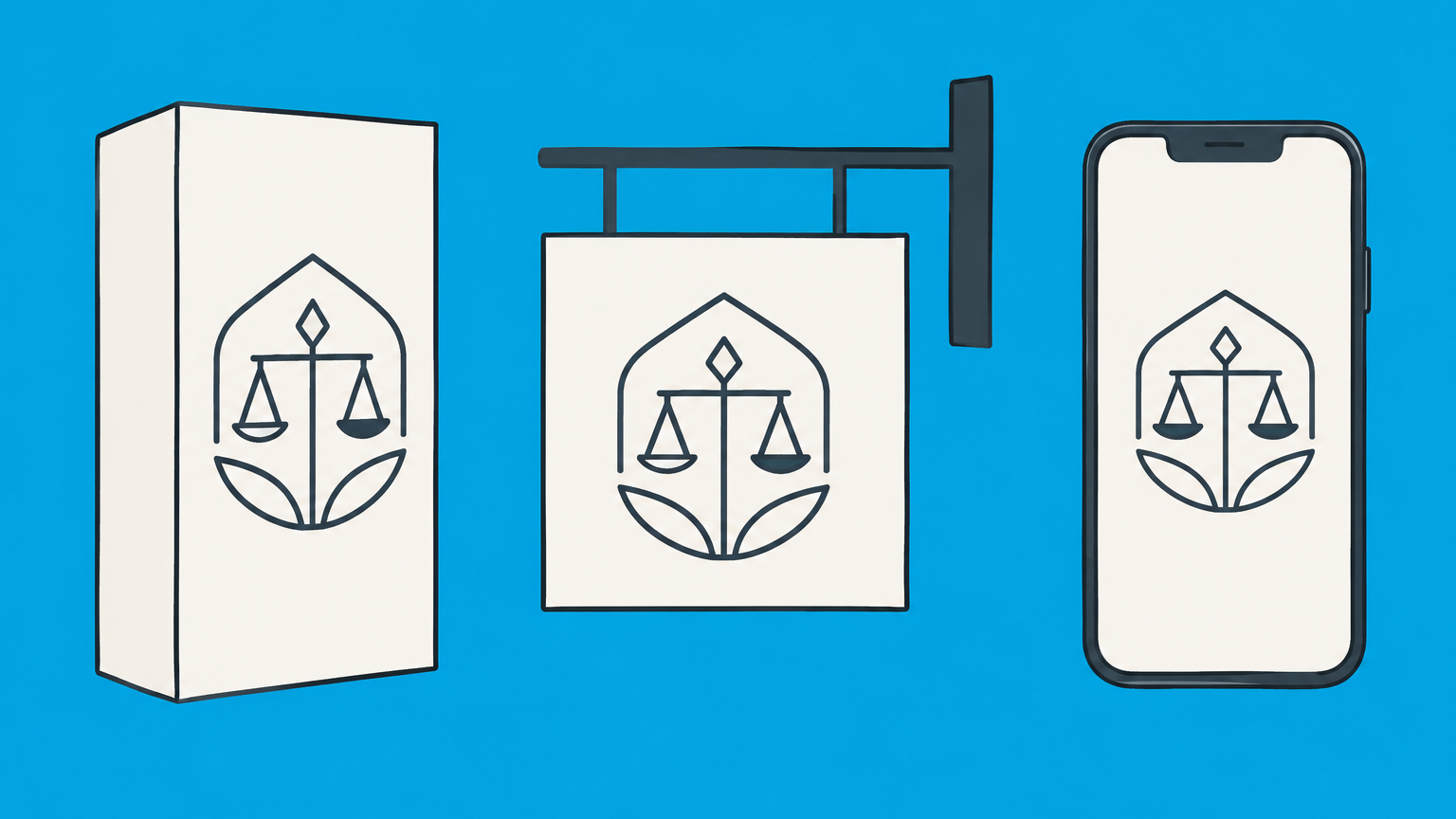
- Test different applications. Review the mark in color and black and white. Test it on websites, mobile icons, documents, signs, packaging, and promotional materials.
- Collect useful feedback. Ask members of the intended audience what they notice and what the image suggests. Do not rely only on personal preference.
- Investigate availability. Search for similar designs and names before finalizing the mark or paying for a large rollout.
A strong design should be recognizable, relevant to the business, and versatile enough for consistent use. It should also remain legible against different backgrounds and at different sizes. Trendy visual effects may look current but can make reproduction difficult or require frequent redesigns.
If the mark includes a new business name, check the name separately. State entity-name availability does not establish trademark rights, but it can affect your ability to register an entity. These business name availability steps explain practical checks to perform before adopting a name.
Trademark Protection for a Brand Mark
Designing a distinctive visual identity and obtaining trademark protection are separate tasks. A designer focuses on appearance and communication. Trademark clearance examines whether the proposed mark may conflict with earlier marks used for related goods or services. A visually original mark can still create legal problems if it is confusingly similar to an existing source identifier.
Before launch, conduct a search that considers more than exact copies. Relevant issues may include similar visual elements, meanings, commercial impressions, and related goods or services. Searching federal trademark records is useful, but a broader review may also be appropriate because trademark rights can arise through use even without federal registration.
Federal registration can provide legal benefits, but registration is not automatic. The United States Patent and Trademark Office examines an application under federal trademark law. Potential problems include a likelihood of confusion with an existing mark and designs that do not function as source identifiers. The appropriate application strategy depends on the mark, owner, goods or services, and current use.
You may use the TM symbol to claim rights in a mark, but the federal registration symbol, ®, should be used only after the USPTO registers the mark and only in connection with covered goods or services. Forming a company, registering a domain, or obtaining state approval for a business name does not by itself create a federal trademark registration.
Before investing in packaging, advertising, or a public launch, you can post your legal need on UpCounsel's marketplace. A trademark attorney can conduct or evaluate clearance work, assess protectability and ownership, identify potential conflicts, and prepare a filing strategy for the appropriate mark and goods or services. Responses typically arrive within a day, helping you evaluate risk before committing more resources to the design.
Ownership and Use of a Brand Mark
Confirm ownership before accepting final design files. Paying a designer does not necessarily resolve every intellectual property issue. Your written agreement should identify what the designer created, what rights are being transferred or licensed, when any transfer occurs, and whether preexisting materials remain subject to separate terms.
Stock icons, templates, fonts, and logo-generator assets may carry license restrictions. Review the applicable terms before using them as a central brand identifier. A right to use an asset in marketing does not necessarily mean you can claim exclusive rights or register it as a trademark. You should also verify that the designer did not incorporate third-party material without permission.
Create practical rules for using the completed mark. A basic brand guide can specify approved colors, proportions, spacing, backgrounds, minimum sizes, and acceptable variations. Consistency helps customers recognize the same source across websites, products, signs, invoices, and social media. It also reduces the risk that employees or partners will distort the design.
When outside parties use the mark, contracts should address approval and quality control. This is especially relevant for licensees, distributors, franchisees, collaborators, and merchandise vendors. Keep organized records of first use, dated examples, design agreements, licenses, trademark filings, and enforcement communications.
Your business name may require its own legal strategy even when the brand mark is symbol-only. Despite common phrasing, you do not patent a name. Protection usually involves trademark law, as explained in this overview of protecting a business name with a trademark.
Brandmark Companies, Products, and Websites
The generic branding term should not be confused with businesses, websites, or software products that use Brandmark in their names. Context matters. A discussion of visual identity usually refers to the brand mark definition, while a reference containing a domain name, location, login, or product feature may point to a specific entity.
Brandmark.io is a logo-making and branding product. Its official site describes tools for generating and customizing logos and related assets, including social media graphics, business cards, brand guides, and file exports. That service is different from the generic meaning of a brand mark. Searches for a Brandmark.io login, logo maker, or generated design concern that product rather than branding terminology.
Names such as Brandmark USA may refer to a particular organization rather than a recognized category of visual identifier. The name alone does not establish which entity a searcher means, what services it provides, or where it operates. Verify the exact business through its official website and relevant public records before relying on company information.
Likewise, questions about brandmark.bg concern a particular domain, not the definition of a brand mark. A country-code domain does not by itself verify the operator's legal company name, industry, services, or publication activity. Check the website's current company disclosures, terms, contact information, and official registry records. Avoid assuming that Brandmark.io, Brandmark USA, and brandmark.bg are affiliated merely because they share similar wording.
Frequently Asked Questions
What Is the Industry of brandmark.bg?
The industry of brandmark.bg cannot be determined reliably from the domain name alone. A .bg address indicates a Bulgarian country-code domain, but it does not establish the operator's business activities. Review the site's current legal disclosures and service descriptions, then compare the identified entity with official Bulgarian business records before making commercial or legal decisions.
What Is the Company Name for brandmark.bg?
The legal company name behind brandmark.bg should be confirmed through the website's current disclosures or official registry records. A website's brand or domain can differ from the registered entity that owns or operates it. Look for an entity name, registration details, terms, privacy notices, or invoicing information rather than treating the domain itself as the legal company name.
What Is a Brandmark?
A brandmark is a nonverbal symbol or image used to identify a brand. It can help customers recognize a source when space is limited, such as on an app icon, product label, or social profile. The term can also appear as a product or company name, so surrounding context determines which meaning applies.
Does brandmark.bg Have a Blog?
The current website should be checked directly to determine whether brandmark.bg has a blog. Publication sections may be labeled blog, news, insights, articles, resources, or another term, and a site's structure can change. A search result or third-party directory may be outdated, so verify any publication section through the domain's own navigation.
Is Brandmark One Word or Two Words?
Both spellings appear, but "brand mark" is commonly used for the generic visual-branding concept. "Brandmark" often appears informally or as part of a product, website, or company name. Use the spelling adopted by a named entity when referring to that entity, and use one style consistently in your own business materials.
What Is the Difference Between a Brand Mark and a Trademark?
A brand mark is a design category, while a trademark is a legal source identifier. A visual symbol may be both if it identifies the source of goods or services and qualifies for protection. Trademark rights depend on use, distinctiveness, related goods or services, and possible conflicts, not simply on labeling a design a brand mark.


